
Information Bulletin RLCF-008: How to Complete a Carbon Intensity Application
 Last updated on October 8, 2026
On this page:
1 Introduction
This guidance document describes how to complete a Carbon Intensity (CI) Application under Section 21 (3) (a) of the Low Carbon Fuels Act (LCFA).
This information bulletin is intended for fuel producers or suppliers that wish to manufacture, sell or import low carbon fuels into British Columbia (B.C.). Fuels supplied in B.C. are reported under the LCFA and its regulations, which are together known as British Columbia’s Low Carbon Fuel Standard (LCFS). For more information on the LCFS please see the LCFS Requirements webpage.
Under Section 13 of the LCFA, recorded carbon intensities (RCIs) calculate the quantity of compliance units issued. There are four types of RCIs:
- Base Fuel CIs: Carbon intensities prescribed in the regulations that are automatically applied to all fossil-derived diesel, gasoline, and jet fuel and their fossil-derived components.
- Approved CIs: Carbon intensities for alternatives to base fuels calculated using facility-specific information. Approved CIs create a competitive advantage for low carbon fuel producers and suppliers. Fuel producers must submit a Carbon Intensity Application to obtain an Approved CI. Approved CIs are assigned a fuel code and published in RLCF-012: Approved Carbon Intensities. If the fuel is B.C. grid electricity, it is not possible to obtain an Approved CI; B..C grid electricity is automatically assigned the default CI for electricity.
- Default CIs: Prescribed carbon intensities for alternatives to base fuels. Default CIs are used when a fuel code has not been assigned. The electricity and natural gas default CIs represent the average carbon intensity for the B.C. electrical grid and natural gas distribution system, respectively. All other default CIs are conservative estimates.
- Proxy CIs: Carbon intensities for alternatives to base fuels, which are available for specific fuels provided the applicant submits the required documentation. See RLCF-024: Proxy Carbon Intensities for details.
2 Application Procedure
To obtain an Approved CI, fuel suppliers or producers must submit a CI Application Form and a Technical Report. The CI Application form can be found on the LCFS Carbon Intensities webpage. Applicants must complete the CI Application Form in full. The Technical Report substantiates information provided in the CI Application Form. The required content and format for the Technical Report are outlined in the Section 6.
Multiple fuels can be included on a single application provided they are for products from the same fuel production facility.
The CI Application Form and Technical Report may be authored by the fuel producer or by a consultant/third-party. A Notification of Representation Agreement Form is required for a third-party to sign and/or make amendments to a CI Application on behalf of the Applicant. The form is available on the Low Carbon Fuel Standard credit market webpage.
2.1 Submission
The CI Application Form and Technical Report must be submitted electronically to lcfs@gov.bc.ca. Both documents must be an attachment in .PDF file type. Include ‘CI Application’ and the production facility name, location and fuel type in the email subject line (e.g. CI Application – XYZFuels Plant – Vancouver – Ethanol). Additional documentation, like GHGenius excel files, may be submitted but is not required. Confirmation of receipt by the Ministry will be sent to the applicant via email. The Ministry does not require a physical copy of the application.
Guidance on renewing existing fuel codes is covered in Section 2.6, below.
2.2 Review
Ministry staff will evaluate the application to ensure the methodology and assumptions made are acceptable, and that the carbon intensity can be reproduced. If an error or omission is identified in the application, the applicant will be asked to submit additional information. If the CI changes when correcting the error/omission, the applicant is required to submit a revised Carbon Intensity Application and Technical Report (a resubmission). Applicants must respond to requests for additional information and/or corrections within 8 weeks. Failure to respond within this period may result in rejection of the application, requiring the applicant to restart the application process and resulting in a deferred Effective Date (described in Section 2.4, to follow).
2.3 Approval / Rejection
The director will inform the applicant when they have made a decision regarding the Carbon Intensity Application. If approved, the applicant will receive a unique fuel code (e.g. BCLCF301.0, C-BCLCF302.4). Fuel codes for products manufactured in Canada are assigned a “C“ prefix. The Approved Carbon Intensity and fuel code will be posted in RLCF-012: Approved Carbon Intensities.
If the director does not approve the application, staff will contact the applicant and provide the opportunity to address areas of concern to address the issues and/or resubmit the application.
2.4 Effective Date
The Effective Date for a fuel code is the earliest date the Approved CI can be used in compliance reporting. In most cases, the Effective Date is the date the application was received by the Ministry.
Fuel codes cannot be backdated past the date of application receipt by the Ministry. To use an Approved CI in compliance unit calculation, the CI Application must be submitted prior to the first date of intended supply.
2.5 Fuel Code Expiry
Fuel codes are assigned a 1-year or 3-year Expiry Date.
Approved applications based on design data, a trial run, or less than 1 year of operational data are eligible for a 1-year fuel code. Those based on 12+ months of operational data gathered within the last 3 years are eligible for a 3-year fuel code. See Section 4.3.1 for additional details. An exception is made in the case of coprocessing, see RLCF-019: Co-processing Methodology.
The Expiry Date for a fuel code is the last day the Approved CI can be used to calculate compliance units. If fuel is purchased prior to or on the Expiry Date, the fuel code remains valid even if delivery occurs after the Expiry Date.
For example, on December 25, 2024, a fuel with a fuel code Expiry Date of December 31, 2024, is purchased. The fuel is transported to the purchaser’s storage facility on January 2, 2025. Because the purchase occurred before the Expiry Date, the fuel code remains valid for that fuel.
In accordance with Section 20 (7) of the LCFA, the director may expire a fuel code early if they become aware that the carbon intensity is inaccurate. If a person who manufactures, supplies or exports fuel with an Approved CI becomes aware that the carbon intensity of the fuel has changed or will change, the person must immediately provide written notice to the Ministry.
2.6 Fuel Code Renewal
A renewal application is required for expired fuel codes even when the fuel pathway has not changed. To avoid a gap in approval, a renewal application must be submitted the day after the Expiry Date or sooner.
For example, if a fuel code expires on November 14, 2025, to avoid a gap in approval, a renewal application must be received on or before November 15, 2025. If the renewal application is received on November 26, 2025; the updated fuel code (if approved) is effective November 26, 2025. There would be an 11-day gap in approval during which the fuel supplier is required to use the default CI for this fuel type for compliance unit calculation.
When a renewal application is received prior to expiry, the Effective Date may be set to the application date, or the days following expiry of the existing fuel code provided the latter is no more than 90 days after the application date. If an alternate Effective Date is sought, contact Ministry staff. In no circumstances can the Effective Date be set prior to the application date.
A renewal application requires submission of a CI Application Form and Technical Report. The submission and review procedures are the same as for new CI Applications. When applying for a renewal, applicants must include the previous fuel code on the CI Application Form and must include a comparison and explanation of all changes to the inputs and results compared to the previous application.
An approved renewal application results in the creation of a decimal fuel code. For example, BCLCF101.0 becomes BCLCF101.1. The Approved Carbon Intensity and fuel code will be posted in RLCF-012: Approved Carbon Intensities.
3 Updates to Approved Carbon Intensities
3.1 Carbon Intensity Adjustments
In accordance with section 20 (6) of the LCFA, if a person who manufactures, supplies or exports fuel with an Approved CI becomes aware that the carbon intensity of the fuel has changed or will change, the person must immediately give written notice to the Ministry. This may occur if an error is discovered in the data that supported the original application, if there are changes in the fuel production pathway, or changes to transportation modes and distances of feedstock or fuel, among other reasons.
A new application is required if the carbon intensity of a fuel has changed or will change. When applying for an update, applicants must ensure that the previous fuel code is stated on the CI Application Form and include a comparison and explanation for changes to the inputs and results when compared to the previous application.
In some cases, a fuel producer may prefer to apply for a second fuel code to reflect the development of a new or alternate process. For example, if a company producing ethanol using grain from Saskatchewan changes to a grain supplier from Iowa, the company could apply for an update to the existing fuel code if the change is permanent, or the company could apply for a second fuel code to allow flexibility to revert to their original supplier.
3.2 Updates due to Audit
Fuel producers may be audited to verify the accuracy of their carbon intensity claims. If an Approved Carbon Intensity is found not to accurately represent the lifecycle emissions of the fuel, the carbon intensity may be updated immediately by the director.
3.3 Updates due to Government Policy
When a carbon intensity update is required due to a change in legislation or a change in the approved version of GHGenius (see Information Bulletin RLCF-011: Approved Version of GHGenius and Global Warming Potentials), the director will notify fuel suppliers of the intent to change and will conduct consultations, as appropriate, regarding the expiration of fuel codes.
4 CI Calculation
4.1 GHGenius
GHGenius is the life cycle assessment (LCA) model applicants must use to calculate carbon intensity in the LCFS. Refer to RLCF-011: Approved Version of GHGenius and Global Warming Potentials for the correct version of GHGenius.
Consult the GHGenius model website and the Low Carbon Fuel webpage for additional information on how to use the GHGenius model to determine the carbon intensity of a fuel. GHGenius User Guides are also available to assist applicants in modelling specific fuel pathways.
4.2 Feedstocks
Fuel producers manufacturing fuel from multiple feedstocks must obtain a separate fuel code for each feedstock pathway. Feedstocks originating in different regions must be modelled as separate feedstocks. Applicants must be as specific as possible when selecting Regions in the GHGenius model (e.g. use “Alberta” rather than “Canada West”). Although each feedstock pathway must have its own fuel code, facility operating data using mixed feedstocks may be used as inputs in the fuel production stage.
4.3 LCA Model Inputs
4.3.1 Eligibility Requirements for 1 vs. 3-year fuel codes
Eligibility for 1 or 3-year fuel codes is determined by the extent of operational data available for the fuel production stage. Applicants must use the most recent, representative operational data available. Applicants may use design or trial run fuel production data when no operational data is available. Use of design and trial run data is restricted for renewal applications. The eligibility requirements and limitations on the use of design and trial run data are discussed below and summarized in Table 4.1.
- If the applicant has 12+ months of operational data collected within 3 years of the application date, this operational data must be used to determine the modelling inputs, and the fuel pathway is eligible for a 3-year fuel code (Please note that co-processed fuels are subject to alternate 3-year fuel code requirements; see RLCF-019: Co-processing Methodology). The applicant may request a 1-year fuel code if preferred.
- If the applicant has less 12 months of operational data, this data must be used to determine the modelling inputs, and the fuel pathway is eligible for a 1-year fuel code.
- If the applicant only has operational data available for a subset of the modelling inputs, they must use operational data where possible and may use design or trial run data to inform the remaining modelling inputs. Fuel pathways relying on a combination of design, trial run, and operational data are eligible for a 1-year fuel code.
- If no operational data is available, the applicant may use design or trial run data to determine modelling inputs, and the fuel pathway is eligible for a 1year fuel code.
- Renewal applications for fuel codes that rely on design or trial run data are subject to the following conditions:
- If fuel is supplied to B.C. using a fuel code, modelling inputs for all subsequent renewal applications must be determined using operational data. Renewal applications that rely on design data will be rejected if fuel has been supplied to B.C. under a prior fuel code.
- If no fuel was supplied to B.C. under a fuel code before renewal, applicants may use design or trial run data for the renewal application. Applicants must include an explanation for why no fuel was supplied under the prior fuel code, and a declaration that no material changes to the design of the facility have occurred since the design data was produced or the trial run data collected.
| Fuel Production Data Available | Eligibility | Restrictions |
|---|---|---|
| 12+ months of operational data | 1-year or 3-year | Applicants must use 12+ months of operational data. |
| <12 months of operational data | 1-year | Applicants must use the available operational data. |
| Operational data for some modelling inputs | 1-year |
Applicants must use the available operational data. The Technical Report must clearly state which inputs are based on operational data, design/trialrun data, and model defaults. |
| No operational data | 1-year |
New applications may use design/trial-run data. Renewal applications may use design/trial-run data if no fuel was supplied to B.C. under a prior code. Rationale for why no fuel was supplied must be provided. Renewal applications must use operational data if fuel was supplied to B.C. under a prior code. |
4.3.2 Model Defaults Vs. Pathway Specific Data
GHGenius comes prepopulated with default data. Applicants must replace default values with data specific to their fuel pathway. This may be operational, design, or trial run data, subject to the restrictions outlined in section 4.3.1.
If using operational data, applicants must set the target year and base year in GHGenius to reflect the year the data was collected. If the data was collected over multiple calendar years, applicants must set the year to the latest year represented by the dataset. If applicants use design data, they must set the target and base year to the year the application was submitted.
4.3.3 Data Quality
Applicants must apply the following data quality principles for all data used to inform the modelling inputs of their proposed fuel pathway:
- Completeness & Reproducibility – All changes made to the model from its default state must be documented such that results are reproducible by Ministry staff. All assumptions and estimation methods must be documented with rationale provided.
- Conservativeness – Conservative assumptions, values and procedures must be used in modelling and data selection to ensure that GHG emissions reductions are not over-estimated.
- Consistency – Methodologies used should be consistent to allow for meaningful comparisons over time.
- Relevance – Documentation must outline how the carbon intensity was determined and be clearly understandable by those with an understanding of the principles of life cycle assessment and working knowledge of GHGenius.
- Representativeness – The data should be assessed and selected to best represent the fuel pathway considering geographical, temporal, and technological contexts.
- Transparency – Input data and methodologies must be documented in a factual and coherent manner. Assumptions and references for methodologies and data sources must be disclosed. Estimates made must be explained, with evidence of how bias was avoided such that the resulting carbon intensity accurately represents the fuel in question.
- Uncertainty – Data uncertainty must be minimized and documented wherever possible.
4.3.4 Dealing with Data Gaps
Applicants may encounter difficulty collecting data. If fuel-path-specific values cannot be obtained, applicants should use the default values from GHGenius and explain why fuel-path-specific data was not available in the Technical Report.
Other non-operational data may be used if it is more representative than the default values provided the applicant includes sufficient justification in the Technical Report. The rationale must explain the representativeness and conservativeness of the data used.
An example of where this may occur is when instrumentation for measurement does not exist at the production facility in the application, but the applicant has instrumentation readings for the same process at another similar production facility.
4.3.5 Additional Guidance on Data Requirements
For information on the data requirements for co-processing, supplying liquified or compressed natural gas to B.C., the use of Proxy CIs, and avoided emissions refer to the following Information Bulletins & User Guides:
- RLCF-019: Co-processing Methodology
- RLCF-023: Supplying Liquified or Compressed Natural Gas (LNG/CNG) in B.C.
- RLCF-024: Proxy Carbon Intensities
- GhGenius 5.02b User Guide - Renewable Natural Gas (RNG)
4.4 Alternative Methods
Section 21 (3) (b) of the LCFA allows for the determination of a carbon intensity by alternative methods accepted by the director. Refer to information bulletin RLCF025: Use of Alternative Methods for Determining Carbon Intensities for further information on alternative methods.
5 Confidentiality
Carbon Intensity Applications are confidential and will not be posted on the Ministry website.
The Low Carbon Fuels (General) Regulation allows publication of proposed and approved alternative methods. This allows alternative method proposals to be published for public review prior to use by the applicant and allows the alternative method to be used by other fuel manufacturers, once approved. This helps to ensure fairness of methods used for quantifying the carbon intensity between fuel manufacturers using similar technologies or pathways.
6 Technical Report – Required Content
The Technical Report must explain and provide rationale for all input values used in the model. It must address all fuel path-specific information requirements outlined in the GHGenius user guides and relevant information bulletins (e.g. RLCF-019 Coprocessing Methodology), as applicable. The report must explain all assumptions, calculations, derivations, analysis, and operational data collection methods used to obtain the model input data. When model defaults are used, the author must explain why pathway-specific data was not available.
Excel worksheets used to calculate model input data may be submitted with the application; however, all calculations must be referenced and explained in the Technical Report. Information should be clear and concise:
- Acronyms must be defined – either in a glossary or upon first use
- Data sources, external resources, and references must be cited
- Figures, tables, and charts must be labelled
- Headings and subheadings must be representative of section content
- Data tables and/or lengthy calculations must be included in an appendix and referenced in relevant sections
The following information is not required:
- Description of the B.C. Low Carbon Fuel Standard
- Generic explanation of life cycle analysis
- Description of the GHGenius model
If applying to renew a previously approved fuel code, the Technical Report must:
- State that the application is for renewal of one or more fuel code(s) and provide the previous fuel code(s) in the introduction
- Include a comparison and explanation of all changes to the inputs and results compared to the original application
Report Sections
The following report sections must be included. Additional sections may be added as needed.
1. Roles & Responsibilities
- Provide contact information for consultant, report author, and applicant
- Outline consultant, applicant, and facility owner (if different from applicant) responsibilities
2. Introduction
- Overview of the fuel pathway
- System boundaries
- Pathway-specific description of lifecycle analysis stages
- Data collection period used in the model/report
- If data is not the most recent data, explain and justify the choice of data collection period.
- For renewal applications, state the application is for a renewal and provide the existing fuel code
- Overview of the fuel production facility and process
- City, State/Province, and Country of production facility
- GHGenius modelling region used to model the production facility
- Nameplate capacity
- kg per year for LNG and hydrogen
- m3 per year for CNG
- kWh per year for electricity
- million litres per year for other fuels (e.g. biodiesel, propane and ethanol)
- Fuel production method(s)
- High level description of unique features or technologies. For example:
- Use of resources from adjacent industrial facilities (e.g. steam from adjacent thermal power plants)
- Use of carbon capture and sequestration (CCS)
- Co-processing of biogenic feedstocks with fossil feedstocks
- Use of unique or uncommon biogenic feedstocks (e.g. tall oil)
- Use of unique/uncommon energy sources, such as combustion of corn stover, wood, or other biomass to produce process heat
- Description of quality assurance & quality control procedures implemented during modelling, analysis and report preparation
3. Feedstock Production and Transportation
- Type of feedstock(s) described as specifically as possible (e.g. “green bin compost and commercial fats, oils and greases” is acceptable where “organics” is not)
- Feedstock origin(s)
- City, State/Province, Country, and GHGenius modelling region
- Mode of transportation for each feedstock and distance for each mode
- How the distance for each mode was determined. This may include:
- Maps and/or written descriptions of highways, railways, shipping routes
- Software/applications used (e.g. google maps)
- Assumptions, approximations, or calculations used to determine transport distances with explanation and rationale
- If data on emissions from growing crops is not available, the applicant must state that the data is unavailable and use the default values in GHGenius
- If feedstock pre-processing occurs at a location other than the fuel production facility, describe the pre-processing activities and locations (e.g. corn kernel separation and crushing)
- For renewal applications, include a comparison of the feedstock input data for the renewal application and the previous application (may be omitted if default values are used in both the original and renewal application)
4. Fuel Production and Transport of Finished Fuel
- Process flow diagram or block diagram of the fuel production process
- Data acquisition methods for material, energy, and feedstock inputs
- Describe metering methods, measurement frequency, meter accuracy and location for data collected at the production facility
- Include citations for external data sources
- Describe any input data obtained from within the GHGenius model
- State all assumptions made and provide rationale
- Explain estimation methodologies
- Explanation of all out of model calculations or derivations performed
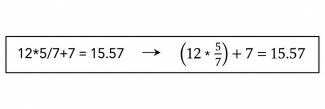
- Include simple calculations (e.g. unit conversions)
- Provide rationale/justification for the calculation method
- Use Microsoft Equation Editor (or equivalent) to present calculations
- Description of coproducts
- Explanation of how modelling inputs were calculated/determined
- State the allocation method selected with rationale
- Coproducts that can be used as transportation fuels under the LCFS must use energy allocation. Examples of transportation fuel co-products include:
- Renewable Naphtha
- Renewable Diesel • Alternative Jet Fuel
- Renewable Gasoline
- Liquified Petroleum Gasoline (LPG) that meets Canadian General Standards Board (CGSB) standard for Grade 1 propane: CAN/CGSB-3.14-2023
- All other co-products must use the default allocation method in GHGenius unless prescribed otherwise in pathway-specific guidance documents
- Coproducts that can be used as transportation fuels under the LCFS must use energy allocation. Examples of transportation fuel co-products include:
- Provide composition data if using an allocation method other than displacement Information Bulletin RLCF-008
- Description of any coproducts that have been combined into one category for modelling purposes
- Justification for any placeholder coproducts used
- Justification and supporting evidence for any non-default emission factors used
- Post-modelling calculations for energy allocated coproducts where fuel production occurs in a different region than feedstock production
- Detailed description of Carbon Capture and Sequestration (CCS) for emissions from the fuel production
- A comprehensive methodology for CCS is under development - check the LCFS Website for updates and follow the guidance on CCS when it become available
- For co-processed fuels, explain how each requirement in the Co-Processing Methodology Checklist is achieved (see RLCF-019 Co-processing Methodology)
- Fuel transportation methods and distance calculations
- Transport distance must be calculated to the final distribution centre or blending facility in B.C.
- Map and/or written description of highways, railways, shipping routes
- Software/applications used (e.g. google maps)
- Assumptions, approximations, or calculations used to determine transport distances with explanation and rationale
- For renewal applications, include a comparison of the fuel production and transport inputs for the renewal application and the previous application For renewal applications, include a comparison of the fuel production and transport inputs for the renewal application and the previous application
5. Distribution, Dispensing and Use in B.C.
- Applicants must include 80 km of truck transportation in the fuel dispensing stage unless data on specific points of distribution is available (e.g. hydrogen being dispensed from a limited number of locations). If using a distribution distance other than 80 km, applicants must provide evidence confirming the precise distribution locations, and an explanation of how the alternate distance was calculated (e.g. a list of locations and a weighted average distance calculation).
6. Material Balance – Fuel Production Stage
- Provide a material balance input table and output table based on one unit (L, MJ, GJ, etc.) of the primary fuel product. The tables must include all material inputs (feedstocks, hydrogen, chemicals, etc.) and outputs (fuel produced, coproducts, waste streams, losses, etc.) for the fuel production stage. The material balance tables must demonstrate that material inputs are balanced with material outputs within normal measurement and estimation. uncertainty. Data must comply with the principles outlined in Section 4.3.3. See User Guides for fuel path specific examples.
- Material flows contributing <1% to the total mass of inputs/outputs may be excluded.
- Where an output stream is partially consumed within the fuel production system boundary, applicants report only the amount that crosses the system boundary (e.g. for naphtha produced during production that is partly reformed to produce hydrogen for internal use, and partly sold as a coproduct, only the portion sold as a coproduct is included in the material balance).
- For natural gas or other fuel streams, include only the amounts used as a feedstock. Exclude fuels that are combusted for process heat or power.
- Where metered/measured data is not available, applicants may use theoretically derived values based on material balance, stoichiometry or other reasonable estimation methods. Indicate how theoretically derived values are calculated or estimated in the Notes column.
The tables must include the following columns at minimum:
Stream name: Name/describe the flow (e.g. canola oil, make-up hydrogen, renewable diesel, renewable naphtha, off-gas).
Moisture content: For streams where moisture content is variable, include a column for moisture content.
Inputs/Outputs: Provide quantity both in g/unit and in the units entered in GHGenius, where applicable (e.g. naphtha coproduct quantity is listed in grams and litres per unit of the main fuel). Where streams have variable moisture content, provide the inputs and outputs on a dry-mass basis. Unit conversion must be done using conversion factors from GHGenius. If alternate conversion factors are used, state them in the notes column and provide rationale for using alternate conversion factors.
Function: List the type of flow/material (e.g. renewable feedstock, fossil feedstock, chemicals/additives, main product, co-product, captured CO2).
Notes: This column contains composition or property information where relevant, and any other important information about the stream. Examples of information to be included are listed below:
- Indicate whether the stream quantity is measured or estimated.
- Glycerol content of glycerine co-product
- Indicate if natural gas is included as a feedstock for hydrogen production
- Destination or source of the flow (e.g. purchased feedstock, to export pipeline, flare, to on-site hydrogen plant, to geological storage)
- Description of how the values were measured, calculated or estimated
- For streams which are partially consumed within the fuel production system boundary, explain the purpose and quantity of the fuel used internally.
| Input Stream | GhGenius Location | GhGenius Input | Input (g/LHDRD) | Function | Notes |
|---|---|---|---|---|---|
| Canola oil & soy oil | Input CD248 | 0.95 kg/LHRD | 950 | Renewable feedstock | |
| Hydrogen | Alt Fuel Prod CM44 | 0.015 kg/LHRD | 150 | Feedstock | |
| Total Input | 1100 | ||||
| Output Stream | GhGenius Location | GhGenius Input | Output (L/HDRD) |
Function | Notes |
|---|---|---|---|---|---|
| HDRD | N/A | N/A | 782 | Main Product | |
| Naphtha | Coprods BC137 | 0.150 L/LHRD | 102 | Coproduct | ρnaptha: 678g/L (GHGenius value) |
| LPG | Coprods BC135 | 0.806 L/LHRD | 41 | Coproduct | ρLPG: 509g/L (GHGenius value) |
| Fuel gas | Coprods BC141 | 0.012 kg/LHRD | 12 | Coproduct | |
| Waste gasses |
N/A |
N/A | 163 | Waste | Unmetered streams. Calculated using material balance. |
| Water | N/A | N/A | Waste | ||
| Total Output | 1100 | ||||
7. Modelling Results
- Provide results table for each fuel pathway
- See sample in Table 1 on the following page
- Additional sample tables are available in pathway specific User Guides
- Results are typically copied directly from the ‘B.C. LCFS’ GHGenius model tab, but may be sourced from other tabs or from out of model calculations in certain situations
- If results are attained from multiple columns of the B.C. LCFS tab for different lifecycle stages, from B.C. LCFS tab columns other than the proposed finished fuel type, or through outside of model calculations, applicants must clearly identify where the results are from
- For renewal applications, include a comparison of the results for the renewal application and the previous application
| Modelling Outputs for: New Code 1 | |||||
|---|---|---|---|---|---|
| Result Location (Column ##, or out-of-model calc.) |
Source of Emissions | Feedstock Production | Fuel Production | Fuel Use & Distribution | Total |
|
- |
Analysis Region | US Central | US West | BC | |
| - | Fuel | HDRD | HDRD | HDRD | |
| - | Feedstock | Tallow | Tallow | Tallow | |
| AK | Direct land use change | 0 | 0 | ||
| AK | Feedstock production or cultivation |
0 | 0 | ||
| AK | Feedstock upgrading | 19,248 | 19,248 | ||
| AK | Feedstock transport | 2,442 | 2,442 | ||
| AK | Feedstock coproduct production | -10,460 | -10,460 | ||
| AK | Avoided emissions | 0 | 0 | ||
| AK | Fuel production | 11,285 | 11,285 | ||
| AK + out-of-model calc. | Fuel coproduct production | -961 + (-573) | -1,524 | ||
| AK | Fuel distribution and storage | 838 | 395 | 1,233 | |
| AK | Fuel dispensing | 82 | 82 | ||
| AK | Vehicle or vessel operation | 1,524 | 1,524 | ||
| - | Total (gCO2e/GJ) | 23,819 | |||
| - | Total (gCO2e/GJ) | 23.82 | |||
8. Appendices
- Relevant raw data
- Lengthy calculations
- All appendix information must be referenced in the main body of the report
This information is for your convenience and guidance only and does not replace or constitute legal advice. It is recommended that parties who may be a fuel supplier review the Low Carbon Fuels Act, Low Carbon Fuels (General) Regulation and the Low Carbon Fuels (Technical) Regulation and seek independent legal advice to confirm their status, legal obligations and opportunities.