
Tŝilhqox Qay Naguten Wildlife Management Area
 Last updated on August 19, 2026
Date Designated: July 8, 2024
Purpose: In partnership with the Tŝilhqot’in Nation, conserve the critical fish and wildlife habitat values, including spawning grounds for sockeye and chinook salmon and a vital feeding area for grizzly bears, through careful management of public and commercial use.
Size: 1,402 hectares
Region: Cariboo
Nature and culture
Fish and wildlife: The headwaters of the Tŝilhqox (Chilko) River are important both culturally and ecologically. The area includes key spawning grounds for Tŝilhqox salmon which are a keystone species that Tŝilhqot’in people continue to rely on for sustenance. The Tŝilhqox (Chilko) River is also important habitat for grizzly bears. Each fall, grizzly bears travel from near and far to feed on spawning salmon, raise their cubs and fatten up prior to winter. The wildlife management area (WMA) is also home to a wide diversity of wildlife including black bear, American mink, Canada lynx, cougar, gray wolf, moose, mule deer, red fox, snowshoe hare, fisher and more.
Cultural heritage: The Tŝilhqox Qay Naguten WMA is of great cultural significance to the Tŝilhqot’in Nation, once housing extensive winter villages and still containing important sacred and traditional sites. The name comes from the Tŝilhqot’in language and means Tŝilhqox (river) Qay (nature) Naguten (management). The Tŝilhqot’in people take their name from the Tŝilhqox, and it is central to Tŝilhqot’in identity and livelihood.
The Tŝilhqox Qay Naguten WMA is within the Tŝilhqot’in Aboriginal title area as recognized by the Supreme Court of Canada in 2014 in Tsilhqot’in Nation v. British Columbia 2014 SCC 44.
The area has long been a destination for nature enthusiasts, and to this day tourists come from far and wide to see grizzly bears in their natural habitat. West Chilcotin residents also enjoy the area, which is adjacent to Ts'ilɂos Park and the Gwe Da Ts’ih campground.
Physiography, climate and vegetation: The Tŝilhqox Qay Naguten WMA lies at the interface of two broad landscape zones: the Chilcotin Plateau and the Chilcotin mountains. The biogeoclimatic designations are Interior Douglas-Fir dry warm (IDFdw) to the south and Sub-Boreal Pine – Spruce very dry cold (SBPSXc) to the north.
The WMA includes diverse mixed forest and grassland ecosystems, encompassing some old growth forest, streams and pockets of wetlands.
Planning and management
The Tŝilhqox Qay Naguten WMA was established with the consent and support of the Tŝilhqot’in Nation and is cooperatively managed under an agreement between the Tŝilhqot’in Nation and the government of B.C. A key management goal is to balance access to the area for grizzly bear viewing while ensuring all fish and wildlife continue to thrive and that the Tŝilhqot’in people can exercise cultural and harvesting activities.
For more information email conservationlands@gov.bc.ca for provincial staff or consult the contacts page for the Tsilhqot’in National Government.
Image
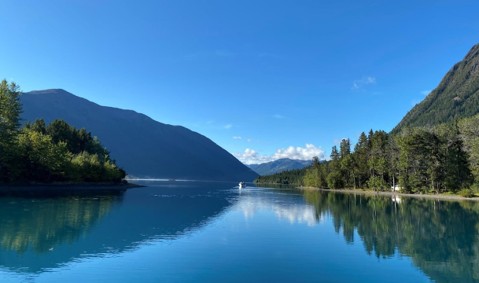
Photo credit James Lulua Jr.
Tŝilhqox Qay Naguten is located about 150 kilometres southwest of Williams Lake: