
Go Electric research and development program
 Last updated on June 22, 2026
Go Electric supports zero-emission vehicle research and development projects in B.C.
Advanced Research and Commercialization Program
The Advanced Research and Commercialization (ARC) Program supported the development of companies in the zero-emission vehicle (ZEV) sector. It also encouraged international investment in B.C.’s ZEV sector. The ARC Program is a response to the Economic Opportunities Assessment report.
Dates active
- 2018 funding call
- 2020 funding call
Who could apply
Eligible companies operating across all aspects of the zero-emission vehicle supply chain.
How it worked
- Participants provided progress and final reports that outlined project progress and economic contributions to the BC ZEV sector
- Approved applicants could get up to 50 percent of total project costs covered
Program highlights
The goal of the ARC Program was supporting research, development and demonstration of B.C. based technology. The intention was to build on strengths and remove barriers for companies in the ZEV sector.
ARC program funding helped to:
- Address B.C. specific ZEV sector challenges
- Showcase B.C. technologies with potential for international market demand
- Support pre-commercial ZEV sector technologies
- Show commercial success for ZEV sector technologies
ARC funded projects
ARC 2020 funded projects
Passenger vehicle infrared (IR) transmitter and diagnostic receiver
Status: Complete
Fuel type: Hydrogen
Location: Richmond
IRDI Systems Inc. aims to make an IR transmitter for hydrogen fuelling in passenger vehicles. They will also make a handheld IR receiver for diagnostics. The project includes:
- Mechanical design
- Electrical hardware design
- Software development
- Prototype build and testing
Funding committed: $72,940
Medium, heavy-duty dispenser design for gaseous hydrogen vehicles
Status: Approved
Fuel type: Hydrogen
Location: Surrey
Powertech Labs Inc. developed a B.C. based service to test the quality of hydrogen. This makes Powertech the only gas testing lab in Canada certified to the SAEJ2719 standard.
Funding committed: $394,201
Fuel cells for heavy duty zero-emission trucks: A made in B.C. clean transportation solution
Status: Complete
Fuel type: Hydrogen
Location: Burnaby
Ballard Power Systems made cost-effective, high-power density fuel cell membrane electrodes. These are designed for zero-emission heavy-duty vehicles. The project figured out new ways of pre-commercial research and development around:
- Oxygen/water vapour transport resistance
- Gas diffusion layer thermal/electrical resistance
Funding committed: $325,000
Modular EV powertrain platform
Status: Complete
Fuel type: Electric
Location: Vancouver
Damon Motors Inc. designed a multi-capacity powertrain system that can be digitally power reduced. The project included:
- Validating the energy density and power delivery in a small multi-purpose form factor
- Optimizing a controlled thermal runaway management system for high density battery packs
- Validating proven high density battery interconnect manufacturing technique
Funding committed: $400,000
Hydrogen back-up dispenser
Status: Complete
Fuel type: Hydrogen
Location: North Vancouver
HTEC made a back-up dispenser (BUD) for fuelling hydrogen fuel cell vehicles. The BUD module is fully based in B.C. to support the hydrogen fuelling network in the province. The product is ready for commercialization. It’s also ready for distribution to the global market.
Funding committed: $100,000
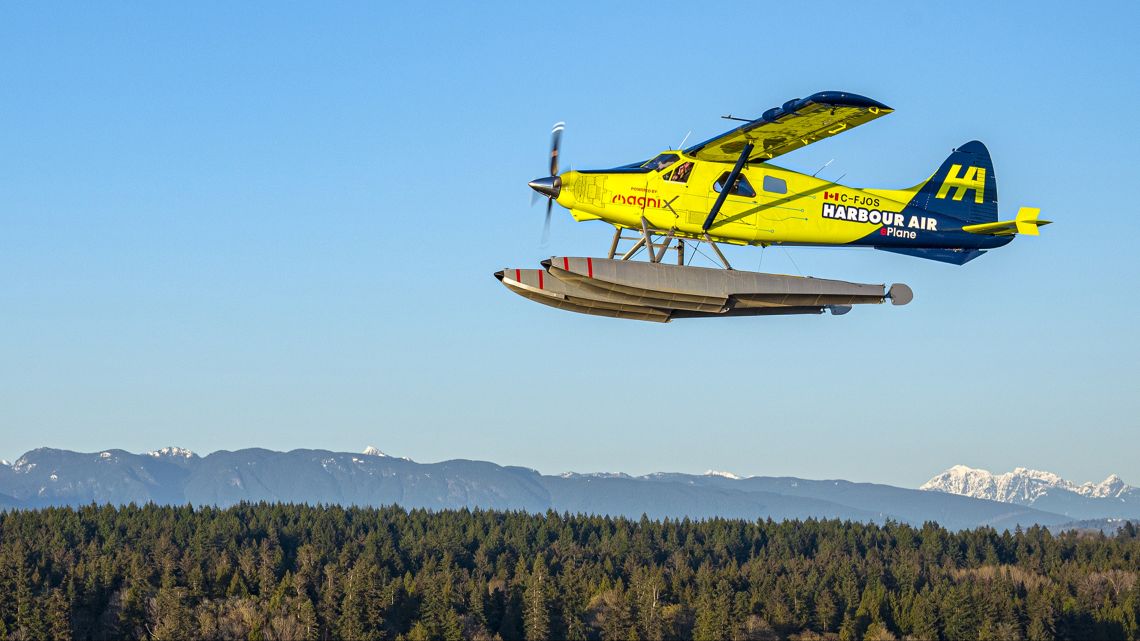
Electrification of the DHC – 2 Mk1 D3 Havilland Beaver
Status: Approved
Fuel type: Electric
Location: Richmond
Harbour Air Seaplanes LLP converted an existing aircraft to be fully electric powered. This resulted in one certification level prototype aircraft.
Funding committed: $1,595,000
40 ft electric utility catamaran demonstration project
Status: Complete
Fuel type: Electric
Location: Vancouver
Gregory C. Marshall Naval Architect Ltd. built an electric catamaran that is:
- High efficiency
- Low weight
- Zero-emission
Funding committed: $948,227
Scale up of Grin’s all axel electric motor building on success to capture market potential
Status: Complete
Fuel type: Electric
Location: Vancouver
Grin Technologies Ltd. scaled up their facility used to make front all-axel light electric vehicle motors. This helps meet the market demand.
Funding committed: $348,333
Robust, low-cost humidifier components for hydrogen fuel cell electric vehicle applications
Status: Complete
Fuel type: Hydrogen
Location: Vancouver
Core Energy Recovery Solutions developed a next generation humidifier for automotive fuel cells.
Funding committed: $389,638
100 kWh repurposed electric vehicle battery pack for a diesel dependant B.C. community
Status: Complete
Fuel type: Electric
Location: Port Coquitlam
Moment Energy Inc. developed an energy storage system made from repurposed EV batteries.
Funding committed: $320,500
Hydrogen fuel cell cruise vessel
Status: Complete
Fuel type: Hydrogen
Location: North Vancouver
Capilano Maritime Design Ltd. designed a hydrogen fuelled harbour cruise boat.
Funding committed: $178,145
Advanced exchange membranes for hydrogen fuel cell vehicles and hydrogen productions. Pilot manufacturing and testing for continued commercialization
Status: Complete
Fuel type: Hydrogen
Location: Vancouver
Ionomr Innovations Inc. continued the development and commercialization of advanced ion exchange membranes.
Funding committed: $205,780
Enhancement of zero-emission vehicle route energy modelling tool
Status: Complete
Fuel type: Electric
Location: Vancouver
Zen and the Art of Clean Energy Solutions created a proprietary physics-based model in Excel. It predicts the performance of battery electric and fuel cell electric buses. Zen plans to continue this work for ongoing improvements.
Funding committed: $133,526
High voltage charger for commercial and industrial electric vehicles
Status: Complete
Fuel type: Electric
Location: Burnaby
Delta-Q Technologies Corp. developed an onboard battery charger for commercial and industrial EVs. It is high power and high voltage.
Funding committed: $300,000
ARC 2018 funded projects
Integrated fuel cell performance, degradation and cost model for automotive series development applications
Status: Complete
Fuel type: Hydrogen
Location: Burnaby
AVL built a tool that can predict how a fuel cell will perform, wear out over time and cost.
Funding committed: $146,750
Might-E Truck – product enhancement and diversification
Status: Approved
Fuel type: Electric
Location: Parksville
Canadian Electric Vehicles (CANEV) released the next generation Might-E Truck low speed vehicle.
Funding committed: $296,610
CAN-SAEJ2799 controller
Status: Complete
Fuel type: Hydrogen
Location: Richmond
IRDI Systems Inc. made a controller that lets trucks and buses use hydrogen more effectively.
Funding committed: $54,990