
Small to medium-sized scale greenhouse solutions for Indigenous communities
 Last updated on June 12, 2026
Small to medium-sized greenhouses come with unique considerations for setup and ongoing care. These resources were created to support those growing food to nourish their people through sharing, trading, or selling. Rooted in Indigenous knowledge and values, they reflect a commitment to sustainability, self-determination, and community well-being.
 Greenhouse Checklist: Essential Considerations for the Purchase and Operation of Community Greenhouses
This Greenhouse checklist (fillable PDF, 1.7 MB) consists of a series of self-assessment questions, with related information and tips covering key considerations when planning to purchase, build, and ultimately operate a small to medium-sized greenhouse.
 Small-Scale Greenhouse Training Guide for Indigenous Communities in British Columbia
Greenhouse farming involves growing crops in protected environments to enhance growing conditions and improve yields. As weather patterns become increasingly unpredictable, greenhouse systems offer a more reliable and resilient approach to food production. When effectively managed, greenhouses can extend the growing season, improve crop quality, and increase overall harvests.
For Indigenous communities, greenhouse farming can be a powerful tool in reclaiming and revitalizing food sovereignty. By integrating greenhouse operations into broader community strategies, it becomes possible to strengthen local food systems in ways that will be explored throughout this document. This training program manual has been created specifically to support small-scale greenhouses.
Factsheets
- Greenhouse Business Planning and Management (PDF, 1.1 MB)
- Greenhouse Crop Selection and Management (PDF, 1.6 MB)
- Greenhouse Internal Infrastructure Systems (PDF, 2 MB)
- Greenhouse Planning and Design (PDF, 1.3 MB)
- Management, Staffing, and Capacity Building (PDF, 1 MB)
- Native Food Plant Propagation (PDF, 1.4 MB)
- Sustainable Growing (PDF, 1.1 MB)
Indigenous greenhouse training: Workshops and materials
Supported by the B.C. Indigenous Advisory Council on Agriculture and Food and the B.C. Ministry of Agriculture and Food, Sustainable Canadian Agriculture Partnership, Julian Napoleon, P.Ag. of Amisk Farm led interactive virtual workshops focused on the Small-Scale Greenhouse Training Guide for Indigenous Communities in British Columbia. The recording of these sessions and supportive materials are available below. These sessions follow the Small Scale Greenhouse Training Guide (PDF, 3.4 MB) and have a complementary workbook that consists of series of self-reflective questions that are based upon each module.
|
Intro to Greenhouse and Greenhouse Growing An introductory workshop on greenhouse fundamentals, covering Indigenous food sovereignty principles, greenhouse types, and key considerations for defining project goals and users. |
|
Greenhouse Planning and Design A session on greenhouse planning and design, covering site selection, utilities, soil prep, orientation, and practical tools for long‑term maintenance. |
|
Greenhouse Crop Selection and Management A workshop on greenhouse crop selection and management, focusing on tomatoes, cucumbers, and peppers aligned with project goals and greenhouse design. |
|
Sustainable Growing Practices A session on sustainable growing practices, highlighting soil health, nutrient management, and integrated pest management. |
|
Native Plant Nursery and Propagation Techniques An introduction to native plant nursery and propagation techniques, emphasizing the role of greenhouse growing in supporting Indigenous‑led restoration and cultural revitalization. |
|
Business Planning, Management and Capacity Building A breakdown of business structures and planning strategies that strengthen Indigenous food sovereignty efforts, from values and mandates to funding and long‑term governance. |
|
Crop Planning A practical look at crop planning, using spreadsheets, calendars, and standardized beds to streamline decisions and boost production. |
|
Passive Solar Greenhouses: Tools for Food Sovereignty in Indigenous Communities An overview of passive solar greenhouses, highlighting how smart design enables year‑round growing in northern climates with zero energy inputs. |
|
Holistic Approaches to Indigenous Food Sovereignty This final workshop of the greenhouse training program explored holistic approaches to Indigenous food sovereignty, sharing insights on seasonal rounds, traditional land management practices, and the importance of protecting Indigenous knowledge. |
Workshop materials
- Greenhouse checklist (fillable PDF, 1.7 MB)
- Small Scale Greenhouse Training Guide (PDF, 3.4 MB)
- Small Scale Greenhouse Training for Indigenous Communities Workbook (PDF, 613 KB)
- Crop Planner Tool (XLSX, 15 KB)
Small-scale Controlled Environment Agriculture system
Controlled Environment Agriculture (CEA) refers to the production of food, medicinal plants, or other crops inside a structure where key environmental conditions, such as light, temperature, humidity, and ventilation, are intentionally managed to support plant growth.
Although CEA includes a wide range of systems, from greenhouses to small indoor shelf units, recent attention has focused on containerized CEA, typically housed in repurposed shipping containers or purpose-built modules of similar size. While this technology has advanced commercially over the past decade, it remains relatively new and not yet fully proven at scale.
CEA units are often marketed as simple, turn key solutions capable of producing high volumes of fresh food year round. In practice, they are technically complex, and yields can fluctuate, particularly during the start up phase. Successful operation requires more than just the equipment: a suitable site, stable access to power and water, and, most importantly, people with the right skills, knowledge, attitudes, and supports to manage the system effectively.
The Planning for Controlled Environment Agriculture in Indigenous Communities guide was created as a decision making tool to help communities think through key questions and considerations before investing in CEA infrastructure.
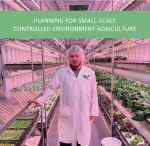 Planning for Controlled Environment Agriculture in Indigenous Communities (November 2024)
This guide is based on first-hand interviews with individuals working in communities who have invested in or considered investing in shipping container-type growing systems, sharing what they have learned through the process. It is intended to assist communities and organizations in their local food and agriculture planning processes and support informed decision-making.
Other ministry links of interest
- Greenhouse floriculture - Province of British Columbia
- Greenhouse vegetables - Province of British Columbia
- Greenhouse vegetable and floriculture crops - insects and plant diseases- Province of British Columbia
- Agrifood business management - Province of British Columbia
- Running an agrifood or farm business - Province of British Columbia
- Market readiness - Province of British Columbia
Contact us
To learn more about these resources or to access the B.C. Indigenous Pathfinder Service email us at IndigenousFoodSystems@gov.bc.ca or call 236-426-5024.
Subscribe to receive the latest Indigenous Food Systems news, initiatives, and resources from the B.C. Indigenous Pathfinder Service.