
Karst Management Handbook training
 Last updated on April 9, 2026
This web-based forest practices course will help you understand the contents of the Karst Management Handbook for British Columbia. The handbook is intended to assist in the development of appropriate management practices when conducting forest operations on karst terrain.
On this page
- Why is it important to be aware of karst?
- Objectives of the course
- How will I be evaluated?
- How much time will the course take?
Why is it important to be aware of karst?
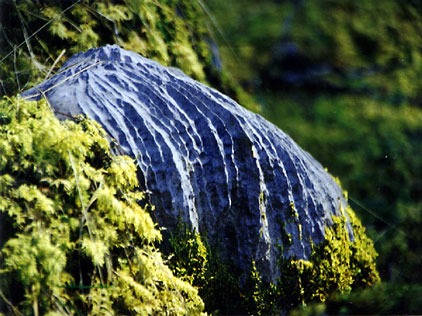
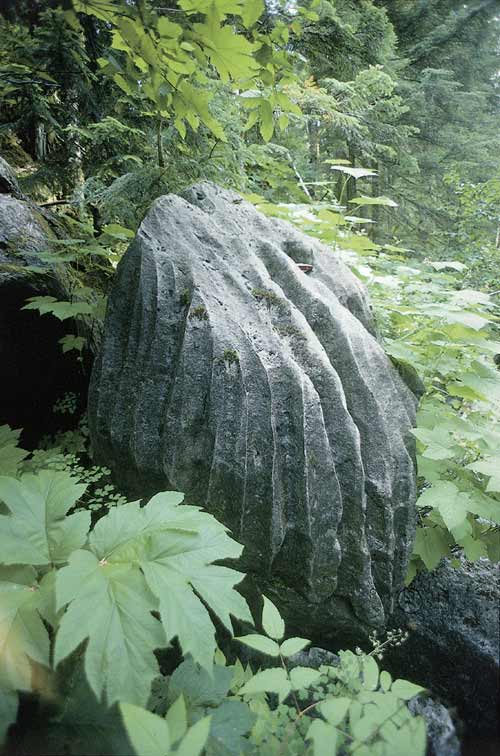
Karst management in British Columbia has traditionally focused on the management of caves, particularly with regard to recreational use. In recent years, however, the focus has expanded to consider the entire karst ecosystem – both surface and subsurface components. Karst is now recognized as a valuable, non-renewable resource that can be highly sensitive to disturbances.
In response to increasing concerns over the impacts of forestry on karst terrain in British Columbia, the Chief Forester initiated the development of best management practices for forestry operations on karst. The intent of these best management practices is to provide recommendations for protecting natural karst systems and processes, while integrating the management of karst resources with the management of forest lands.
The recommended best management practices contained in the handbook are designed to effectively manage both surface and subsurface karst resources, primarily through appropriate management activities on the surface.
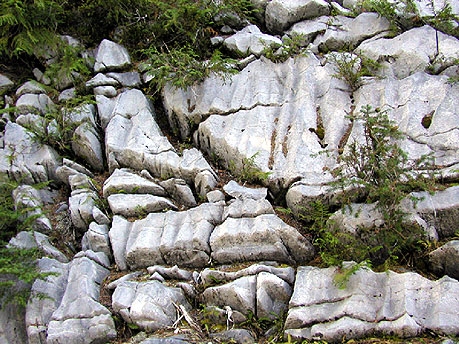
Karst features are irreplaceable resources that can be very vulnerable to disturbances caused by forestry operations.
Objectives of the course
The course is intended for foresters, forest managers and technical staff who need to understand best management practices for karst resources and integrate them into land management plans. The course is a self-directed tutorial comprised of 10 lessons or modules. Each lesson contains summarized information from the handbook. You will also find many images presented to help you understand concepts.
Upon successful completion of the course, you will be able to:
- Define karst and understand its importance
- Understand the different levels of karst inventories and how they relate to karst management
- Identify the management objectives and recommended best management practices for significant karst features
- Understand the management objectives and recommended best management practices for sinking and losing streams/sinking watercourses
- Understand how to apply the recommended best management practices based on the assessed vulnerability of the karst
- Apply recommended best management practices to road building
- Apply recommended best management practices to timber harvesting
- Apply recommended best management practices to post-harvest operations
- Understand the management objectives and recommended best management practices for the non-karst portion of karst catchments
- Understand the safety issues associated with karst terrain
How will I be evaluated?
All evaluation is in the form of optional self-check exercises. To get the most out of the course, you are encouraged to complete these exercises.
How much time will the course take?
Although you are encouraged to set your own pace through the material, it is anticipated that you will need between four to six hours to complete the course, depending on your prior knowledge and the level of detail you need. The modular design of the course means that you can create your own learning path through the lessons, depending on your requirements. For example, you may only need specific information on post-harvesting operations, or you may want to review information that you have learned previously.