
Lesson 5: Applying karst best management practices to harvesting operations
 Last updated on April 9, 2026
This lesson describes how to apply karst best management practices to harvesting operations.
On this page
Learning objectives
In Lesson 2 you were introduced to the karst inventory process and vulnerability assessments. In this lesson you will learn how to apply specific best management practices to karst areas with different vulnerability ratings. By working through this lesson you will understand that:
- Different best management practices are recommended for different levels of karst vulnerability
- As the level of karst vulnerability increases, so do the protective measures of the recommended best management practices
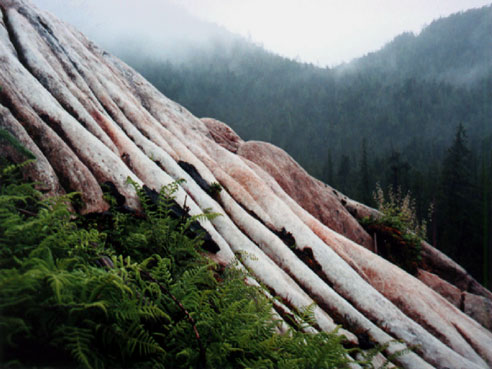
As the level of karst vulnerability increases, so do the protective measures of the recommended best management practices.
Vulnerability ratings
The vulnerability of any karst area to potential damage falls under one of four categories:
- Low
- Moderate
- High
- Very High
Are there any vulnerability categories where timber harvesting is not recommended?
Karst areas classified as very high vulnerability contain sensitive, high resource values. In most cases, it is recommended that very high vulnerability areas be excluded from harvesting operations. Limited exceptions to this may occur in special situations where some form of site-specific intervention is required to help protect forest or karst resources (e.g., forest health issues such as insect infestations).
Any forest management activities that may be required on very high vulnerability karst areas should be conducted in consultation with a karst specialist, the Ministry of Forests, and/or other relevant resource agencies.
How do vulnerability categories affect harvesting operations?
Harvesting operations can occur on low, moderate, and high vulnerability karst areas. As the level of karst vulnerability increases, so do the protective measures of the recommended best management practices.
How are the recommended best management practices linked to the assessed vulnerability of the karst?
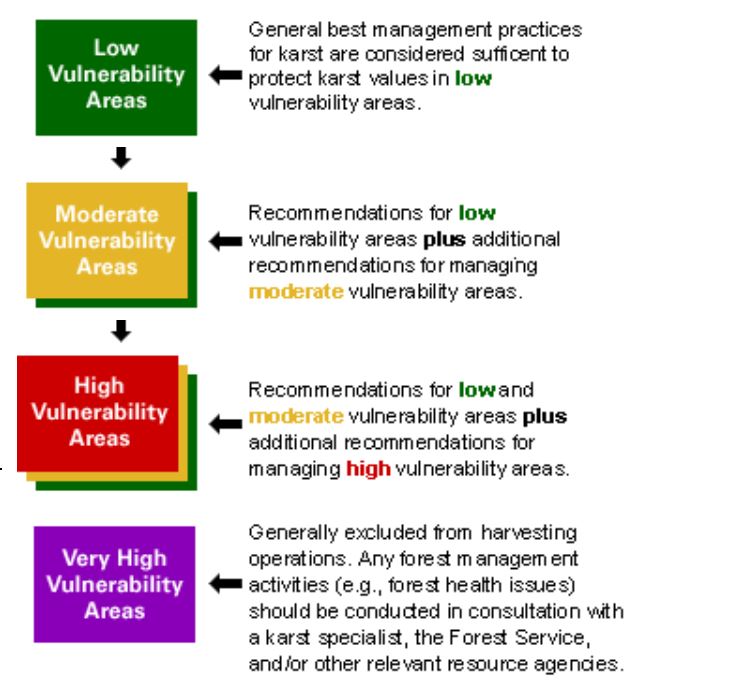
Recommended best management practices are linked to the assessed vulnerability of the karst area: Additional recommendations apply as vulnerability increases:
- Low vulnerability areas follow general best management practices for karst which are considered sufficient
- Moderate vulnerability areas follow recommendations for low vulnerability areas plus additional recommendations for managing moderate vulnerability areas
- High vulnerability areas follow recommendations for low and moderate areas plus additional recommendations for high vulnerability areas
- Very high vulnerability areas are generally excludes from harvesting operations. Any forest management activities (e.g. forest health issues) should be conducted in consultation with a karst specialist, the Ministry of Forests and / or other relevant resource agencies
Test your knowledge
Answer the self-evaluation questions with a true or false
Harvesting is recommended on very high vulnerability areas.
False
Best management practices for high vulnerability areas include recommendations for both low and moderate vulnerability areas.
True