
Silvicultural interventions
 Last updated on July 21, 2026
Silvicultural interventions are specific activities that influence and shape a forest stand along a pathway from an existing state to a future desired state. The interventions change the character and composition of a stand to meet the goals and objectives determined by the silvicultural pathway.
On this page
- Interventions along a pathway
- Site preparation
- Reforestation
- Cultural or prescribed burning
- Fertilization
- Density management
- Harvest
Interventions along a pathway
While the goal of a silvicultural pathway stays constant on a journey from a current state to a desired future state, silvicultural interventions may change or adjust to accelerate the journey or counter-act unexpected external events. If a wildfire or other forest disturbances pose a threat to a desired future state, intervention changes may mitigate the extent of the potential damage. While potential uncertainties may alter the type and sequence of silvicultural interventions employed along the pathway, the end goal remains the original desired future state.
Silvicultural interventions can begin at any stage of forest management depending on the current state of a stand. However, it may be easiest to view interventions chronologically on a pathway that begins prior to first planting and ends with final harvest.
Site Preparation
Site preparation can include a variety of mechanical and non-mechanical activities that prepare a site for regeneration. The goal of site preparation is to provide seedlings with a local environment best suited for their success. As with all interventions, consideration is given to a site's microclimate, overall climate, slope and aspect as each often contributes to the type of preparation used at a specific location.
Different site preparation methods can increase soil moisture levels, increase the temperature at seedling height and reduce plant competition. An example of mechanical preparation is trenching which can create a specific microsite planting location beneficial to seedling growth.
Non-mechanical site preparation may include manual cutting or prescribed burning to clear competing vegetation from a planting area. Burning may require other activities that control fuel load and other risks that can lead to unintended results.
Learn more about site preparation research
Reforestation
Reforestation is vital to sustainable forest management. A reforestation plan becomes a legal obligation following the harvest of a forest stand. The two important reforestation methods in British Columbia are tree planting completed by human effort and natural regeneration which relies on natural forces including retained seed trees. Each method can have advantages depending on site conditions and the type of silviculture system being planned for the site.
Learn more about reforestation
Fertilization
Fertilization is a proven nutrient management intervention to temporarily increases nutrient availability which can increase tree growth, address timber supply challenges in un-even age class stand and increase long term harvest levels. As the benefits to growth of fertilization taper off about 10 years after planting, fertilization must be an early intervention. Fertilization most often occurs following spacing to ensure the benefits of additional nutrients are gained by trees that will be harvested.
Research in forest fertilization continues to provide insight and knowledge regarding the use and benefits of fertilization in forest management.
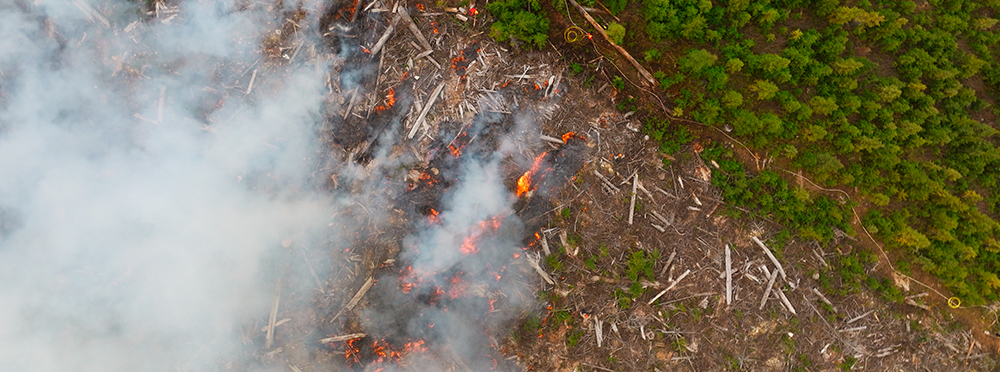
Cultural or prescribed burning
As an intervention, cultural or prescribed burning can serve several purposes within a silvicultural pathway. Controlled burning can reduce fuel load and understory mass, instigate regeneration, and encourage biodiversity and the growth of significant non-invasive species. First Nations implement cultural burning as a tool to encourage the establishment of traditional food resources and promote new growth within a forest stand.
Learn more about cultural and prescribed burning.
Density management
Silvicultural interventions intended to reduce stand density are important in any silvicultural system.
Early density management interventions can limit competition in juvenile stands to aid seedling growth and adjust species composition. Later spacing and commercial thinning interventions remove individual trees while leaving targeted retained trees to benefit from newly available growing space. Retention preference is often given to trees with desired characteristics of species, distribution and quality.
In the broadest of applications, density management interventions can be used to restore complex stand structures and accelerate forest succession. The goal of these activities is the promotion of diverse uneven-aged stands that allow for silvicultural systems that move beyond clearcut harvesting.
Density management interventions include brushing, spacing, pruning, and commercial thinning.
Learn more about stand density management.
Brushing
As a density management activity, brushing removes competing vegetation within a young stand to allow the target species with future marketable value more access to sunlight, nutrients and water. The composition of a young stand can be altered and adjusted during brushing interventions to move the stand towards a future desired state.
Spacing
Spacing, also called pre-commercial intervention, manages density in juvenile stands. This intervention focuses on individual trees of the desired stand species and gives preferences to those with characteristics considered beneficial at final harvest.
Learn more about spacing, or pre-commercial thinning and spacing research
Pruning
From a harvesting perspective, the pruning of lower branches can benefit stand value by increasing the amount and proportion of valuable clear (knot free) wood and may improve lumber value by speeding the change from lower value juvenile wood to higher value mature wood and by reducing stem taper. Pruning can also be beneficial to wildfire mitigation efforts by removing the fuel ladder between the understory and a tree crown. Used in this way, pruning can slow the spread of a wildfire.
Learn more about pruning and pruning research.
- Pruning Guidebook
- Land Based Investment - Pruning Activity
- Pruning Training
- Clear Wood Values from Pruning (PDF, 569KB)
Commercial thinning
Commercial thinning is a late intervention that occurs prior to a final harvest. This intervention removes marketable timber while creating a more productive growing environment for trees retained for final harvest. Commercial thinning has economic, growth and forest value benefits.
Learn more about commercial thinning and commercial thinning research.
Harvest
Harvesting removes the forest cover in varying ways depending on the silvicultural system being used. A conventional clearcutting silvicultural system removes all the trees, while partial cutting silviculture systems (seed tree, shelterwood, selection, variable retention and clearcutting with reserves) leave trees behind to achieve a variety of goals including seeding and natural regeneration, wildlife habitat, scenic value and waterway protection.
Harvesting is not an endpoint in the cyclical process of sustainable forest management. The harvesting of a stand initiates the process of silviculture activities and responsibilities required by law including a plan for reforesting the harvested site.