
Reforestation
 Last updated on February 24, 2026
Reforestation is vital to sustainable forest management and is one of the three primary tasks in any successful silviculture system: reforestation (or regeneration), stand tending and harvest.
On this page
Reforestation is an obligation
Reforestation is a legal obligation and a government funded activity in British Columbia. A reforestation or regeneration proposal is an important component of a licencee 's plan for forestry activities and becomes a required activity after harvesting a site. Each year nurseries around British Columbia supply the Province with up to 250 million seedlings for tree planting activities. Seedlings of many species are grown in nurseries throughout the province to ensure successful future forests can be stocked with appropriate species based on climate, location, and resistance to disease and pests.
Several branches of the Ministry of Forests are integral to the successful reforestation of public land. The Forest Improvement and Research Management Branch is responsible for protecting, managing and conserving British Columbia's forest genetic resources through cone and seed services, research and tree breeding.
Support for reforestation efforts
Each year the province and partners invest $95 million to promote the health and resiliency of British Columbia's forest. Through the Forest Investment Program, these activities advance partnerships with First Nations, enhance forest resiliency, mitigate climate change, restore ecosystems and wildlife habitat and improve accountability to the public and program partners.
Read the current FIP strategy (PDF, 515KB).
Reforestation methods
Reforestation happens by two primary methods. Tree planting occurs through human effort and planning while natural regeneration relies on seeding via seed trees and natural forces.
Natural regeneration
Natural regeneration, a foundational strategy for modern forestry, is the process by which forests renew themselves through natural seed fall or vegetative reproduction without direct planting or seeding by humans. It is a cornerstone of ecological resilience in forest ecosystems and maintaining diversity across landscapes.
Beyond its ecological strengths, natural regeneration also offers significant economic benefits as it is often more cost‑effective than artificial regeneration.
Planting
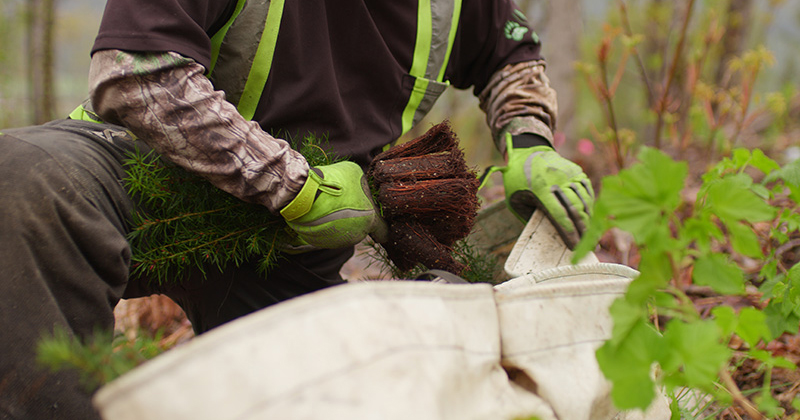
Each year the province plants millions of seedlings across the province. Each seedling is selected to succeed within a specific environment.