
Tree planting
 Last updated on February 24, 2026
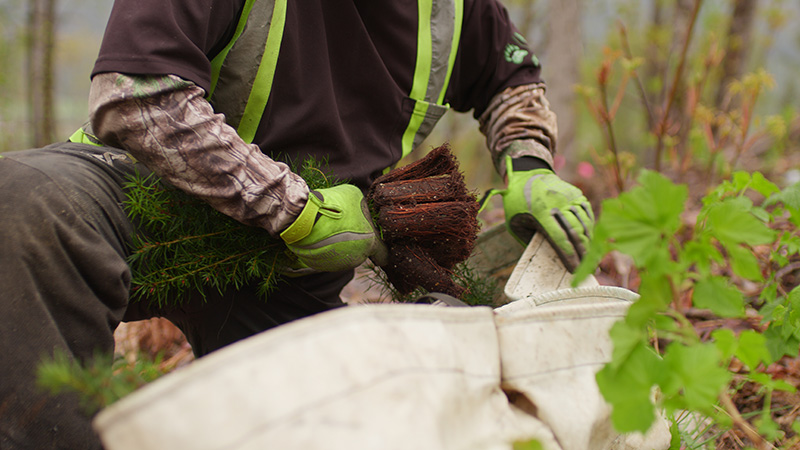
A successful tree planting program is important in sustainable forest management. The planting of seedlings can accelerate the rate of regeneration, adjust species composition based on both the current climate and a changed future climate, and address anticipated market demands.
On this page:
Stock type selection
Stock type selection, based on species, site conditions and experience, determines what seedling characteristics will best suit each planting site. The selection of stock types is important in the regeneration process and is best considered during the development of a silviculture system.
Stock type selection has its greatest influence on the establishment and early growth of seedlings. With time, however, site conditions will typically assume a more important role in determining stand performance. Selection of an appropriate stock type can minimize the effects of site limiting factors on the establishment and early growth of seedlings. Choice of stock type can also significantly impact the length of time to achieve free growing obligations.
Tree species
British Columbia's varied forest ecosystems support a great number of tree species. The provincial planting program reflects the many species of harvestable trees with a variety of tools to help foresters select the tree species most likely to succeed at any given site across the province. Consideration is given to both the current climate and potential climate changes within the lifetime of the tree. The most advanced tool to assist in selecting species with the ability to succeed in a changing climate is the Climate Change Informed Species Selection Tool (CCISS)
The B.C. government established the Future Forest Ecosystems Centre (FFEC) to forecast ecological disruptions that may affect the health of the forest. By better understanding and anticipating climate change and its potential impacts, we can improve our response and select the best species for any given site.
Climate-based Seed Transfer
Climate change can occur rapidly and often outpaces the ability of plants to migrate successfully to new growing areas. Climate-based Seed Transfer (CBST) is a science-based methodology and framework that uses climate variables to match seed sources to climatically suitable planting sites.
CBST in British Columbia also includes the use of assisted migration as a climate change adaptation strategy. The assisted migration used under CBST accounts for both historical climate change (commonly referred to adaptation lag) and future climate change.
Learn more about climate-based seed transfer.
Microsite selection
A microsite is the small area surrounding a seedling prior to planting. While small, the microsite can have a dramatic effect upon the success of a seedling and its ability to grow and thrive.
The documents below illustrate how choosing and preparing the best possible planting spot for each seedling can improve the likelihood of successful growth.
- Microsite Planting Seedling Requirements And Growth Limiting Factors (PDF, 282KB)
- Planter's Guide to Recognizing Optimum Microsites (PDF, 110KB)
- Microsite Selection and the Informed Planter (PDF, 750KB)
Occasionally growth limiting factors are so severe that even the best planting spots do not provide the conditions for good seedling growth. Foresters may decide to create better microsites with mechanical site preparation (MSP). MSP is done after logging but before planting, with machines that dig, plow, scrape, or mix the soil.
Planting quality
Planting quality inspections are carried out to ensure that planting contractors meet the agreed-upon contract specifications, and to determine contractor payment for each planting unit. These inspection procedures standardize the process and thereby enable a fair and equitable evaluation.
Learn more about planting quality inspections (PDF,595KB) and planting quality inspection procedures (PDF, 205KB)