
Nutrient application plans
 Last updated on June 23, 2026
A Nutrient Application Plan (NAP) is a technical document that outlines the annual nutrient applications for each field on the farm to reduce high levels of post-harvest soil nitrate or soil test phosphorus. NAPs can help producers apply optimal amounts of nutrients to their crops, reducing fertilizer and nutrient costs while maintaining crop productivity and quality.
Who must complete a Nutrient Application Plan?
Under the AEM Code, B.C.’s nutrient management regulations, Nutrient Application Plans are required for fields that meet all of the following:
- The farm is 5 ha (12 acres) or more,
- The field is not located in either a vulnerable aquifer recharge area or a phosphorus-affected area
- Post-harvest nitrate soil test results are 150 kg/ha (134 lb/ac) or more, or a soil test phosphorus concentration of 300 ppm or more (using the Kelowna method)
Soil test results can be reported using different units or extraction methods. Soil nitrate results can be converted from a concentration (in parts per million, or ppm) to kg/ha using the BC Post-Harvest Nitrate Test Calculator. Soil test phosphorus can be converted from one extraction method (such as Bray, Mehlich, or Bicarbonate/Olsen) to the Kelowna method using the BC Soil Test Phosphorus Converter.
What is in a Nutrient Application Plan?
Developing an NAP requires:
- Determining the crop nutrient requirements for the field,
- Planning nutrient applications to meet, but not exceed, the crop nutrient requirement
- Demonstrating how planned nutrient applications will reduce high soil nutrient concentrations.
As a technical document, Nutrient Application Plans include information outlining:
- The field size
- The crop yields of the field
- The field’s soil test results
- The crop nutrient requirements of the field
- Information on nutrient application:
- Nutrient application rate
- Nutrient application timing
- The nutrient source (such as dry or liquid fertilizers or other nutrient sources, such as manure or compost)
- Nutrient application method
- An agronomic balance that shows that all available nitrogen applied to the crop does not exceed the crop’s nitrogen requirement
- For fields with high soil test phosphorus (300 ppm Kelowna-P or more): A crop removal balance that shows that more phosphorus is not added to the field than is removed (i.e. a negative crop P removal balance or a crop P removal balance of zero)
Producers can address the three components of Nutrient Application Plans by including all of the applicable information above.
What resources are used to develop a Nutrient Application Plan?
A Nutrient Application Plan can be developed using the BC Nutrient Management Calculator and will produce a summary report containing all the necessary information required in an NAP.
The calculator allows the user to determine the crop nutrient requirements for a field by inputting the field’s location, crop, and soil test results. Using the calculator’s nutrient balances and nutrient application tools, the user can determine appropriate nutrient application rates based on several factors, such as nutrient source and it’s expected availability to the crop.
In the BC Nutrient Management Calculator, the Nutrient Application Plan for each field can be found in the Field Summary section of the summary report.
What records need to be kept?
Producers required to have a Nutrient Application Plan for their field(s) must implement the plan, keep a copy of the plan itself, and keep records of their nutrient applications. If the plan is revised during the growing season, keep a copy of the updated plan.
How does a Nutrient Application Plan differ from a Nutrient Management Plan?
Like Nutrient Application Plans, Nutrient Management Plans (NMPs) are technical documents that help farmers efficiently meet their production objectives and protect the environment. However, NMPs are required for certain operations located within high-risk areas, have more required components, and have requirements regarding who is qualified to develop the plan. Nutrient application plans can be self-prepared by producers.
Producers who have a Nutrient Management Plan for their operation are not required to have a Nutrient Application Plan.
Explore a nutrient management planning tool online:
Nutrient Management Calculator
The calculator can help make the most of manure and fertilizer to grow crops and keep nutrient losses to the environment to a minimum.
Soil post-harvest nitrate levels may trigger a Nutrient Management plan (NMP) on farms located over a Vulnerable Aquifer Recharge Area. The specific areas and types of farms that require NMPs are gradually phased in over time. Interactive map of Vulnerable Aquifer Recharge Areas
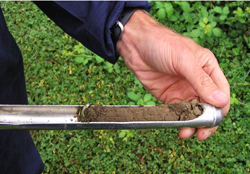
Good monitoring is part of good planning. Learn more about soil sampling and testing.
Contact information
AgriService BC
Have a question? Call or email and request a nutrient management or soil specialist to assist you.
Phone:
1 888 221-7141
Email:
AgriServiceBC@gov.bc.ca