
Ticks in British Columbia
 Last updated on May 22, 2026
There are more than 20 species of ticks in British Columbia, but only three species normally bite humans. Although the bites are sometimes painful and slow healing, there is little danger of disease as long as they are removed promptly. Adult ticks have eight legs, unlike insects, which have six. Learn more about ticks that are commonly found in B.C., how to remove attached ticks, and how to prevent tick bites.
On this page:
- Why ticks matter to you
- Types of ticks found in B.C.
- Other Ticks
- Symptoms to watch for after a tick bite
- Signs of tick paralysis
- When to see a doctor
- Remove a tick safely
- Prevent tick bites
- Reduce ticks in outdoor areas
- Other tick safety guidance
Why ticks matter to you
Most tick bites are not serious, but problems can happen if a tick stays attached too long. Some ticks can spread disease or cause paralysis. Knowing what ticks look like, where they live, and when they are active helps you reduce risk and act quickly.
Types of ticks found in B.C.
More than 20 tick species live in B.C., but only a few commonly bite humans. Ticks do not jump or fly and they do not drop from trees. They attach when people or animals brush against vegetation where ticks are waiting.
The Rocky Mountain wood tick
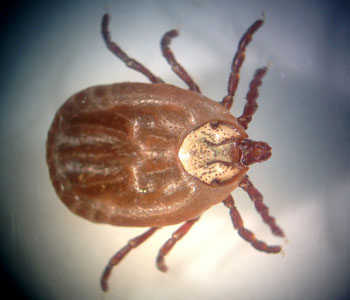 |
Rocky mountain wood tick
|
The Rocky Mountain wood tick lives mainly in the dry interior of B.C., east of the Coast Mountains. It is found from the U.S. border north toward Williams Lake and into Alberta. This tick is most active from March to June and is common in open, grassy, and rocky areas.
This tick needs three blood meals over one to three years to complete its life cycle. It feeds on small animals when young and larger animals later.
What to know about this tick
- Most common in interior and southern B.C.
- Often found in spring
- Feeds on rodents, wildlife, pets, livestock, and people
- Can cause tick paralysis if attached for several days
- Rarely spreads disease in Canada
Adult females are reddish‑brown with a light‑coloured shield near the head. Males are grey and mottled. Both wait on grass and low shrubs for a host to pass by. After attaching, ticks move upward on the body, which can make it seem like they fell from above.
This tick can carry diseases in other countries, but serious illness is rare in Canada. In B.C., the main concern is tick paralysis, which is caused by a toxin in the tick’s saliva.
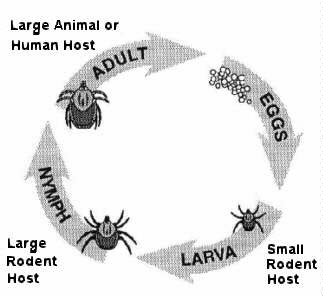 |
Life Cycle of Dermacentor andersoni |
The western black-legged tick
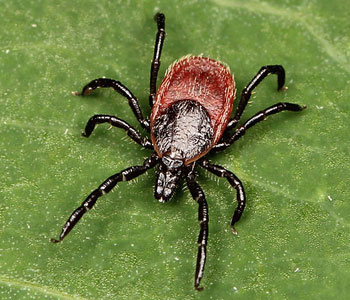 |
Western black-legged tick (Ixodes pacificus) Photo: Creative Commons, by Ryan Kaldari, licensed under CC0 1.0 |
The Western black‑legged tick is common in coastal and moist areas of British Columbia, such as:
- Vancouver Island and the Gulf Islands
- Coastal mainland areas from the U.S. border north to Powell River
- Along the Fraser River as far inland as Yale and Boston Bar
It lives on low plants in forests, along trails, and in brushy areas. This tick is active mainly in spring and early summer.
What to know about this tick:
- Regularly bites people and pets
- Bites may be painful and slow to heal
- Becomes grey and bean‑shaped while feeding
- Can carry the bacteria that causes Lyme disease
- Does not cause tick paralysis
Not all Western black‑legged ticks carry Lyme disease. The risk increases if a tick stays attached for a long time. Prompt removal lowers the chance of infection.
Other ticks
Many other tick species live in B.C., but most feed only on certain animals and rarely bite people. These ticks are still important to know about, especially for people who work with animals or care for pets.
Common examples include:
- Winter tick, which feeds on moose, deer, horses, and cattle and does not bite humans
- Brown dog tick, which feeds mainly on dogs and can live inside homes
- Bird and rodent ticks that stay on wildlife hosts
Some ticks, especially the brown dog tick, can complete their life cycle indoors and may be found around baseboards or cracks after dropping off a pet.
Symptoms to watch for after a tick bite
Tick bites are often painless and easy to miss. Symptoms can appear days or weeks after a bite and may vary by the type of tick.
Watch for these symptoms:
- Fever or chills
- Headache
- Muscle or joint pain
- Unusual tiredness or weakness
- Numbness or tingling in the feet or legs
- Skin rash, including a bull’s‑eye pattern
Symptoms may start mild and get worse over time.
Signs of tick paralysis
Tick paralysis is rare but serious. It is linked to the Rocky Mountain wood tick and usually occurs after several days of feeding.
Warning signs include:
- Trouble walking or standing
- Weakness that moves from the legs upward
- Difficulty swallowing or speaking
- Loss of coordination
Removing the tick can reverse symptoms if done early.
When to see a doctor
See a doctor as soon as possible if you notice symptoms after a tick bite.
Get medical help if:
- You develop fever, rash, or flu‑like symptoms
- Weakness or paralysis begins
- You have trouble swallowing, speaking, or breathing
- You are unsure how long the tick was attached
Tell the doctor when and where the tick bite occurred. If possible, bring the removed tick in a sealed container stored in the fridge or freezer.
Remove a tick safely
Removing a tick quickly lowers your risk of illness.
Follow these steps:
- Use fine‑point tweezers
- Grab the tick close to the skin
- Pull straight out slowly and gently
- Clean the bite area with antiseptic
- Keep the tick in a sealed container in the fridge or freezer if your doctor needs to identify it.
Prevent tick bites
You can lower your risk by taking simple steps outdoors.
Protect yourself by:
- Wearing long pants and high socks
- Tucking shirts into pants
- Using insect repellent with DEET on clothing
- Avoiding overgrown or animal‑used trails
After being outdoors:
- Check your body, scalp and clothing
- Check children and pets
- Inspect clothes carefully before wearing again
Reduce ticks in outdoor areas
Ticks cannot be removed from large areas, but risk can be reduced in parks and trails.
Helpful actions include:
- Clearing brush along trails
- Mowing grass in picnic areas
- Using targeted insect control near paths
Other tick safety guidance
Find current guidance on tick safety and Lyme disease from other trusted sources:
B.C. Centre for Disease Control
Healthlink BC