
Japanese Canadian Monument Park
 Last updated on February 6, 2026
Residents and visitors to Victoria will have a new destination for reflection and learning. Construction is underway on a monument park honouring Japanese Canadians in British Columbia (B.C.) who were forcibly displaced, dispossessed, and interned during the Second World War.
The B.C. government is developing the monument park in partnership with the Japanese Canadian Legacies Society. It will be located on Academy Close in Victoria, directly south of the St. Ann’s Academy National Historic Site and within walking distance of the legislature and Beacon Hill Park.
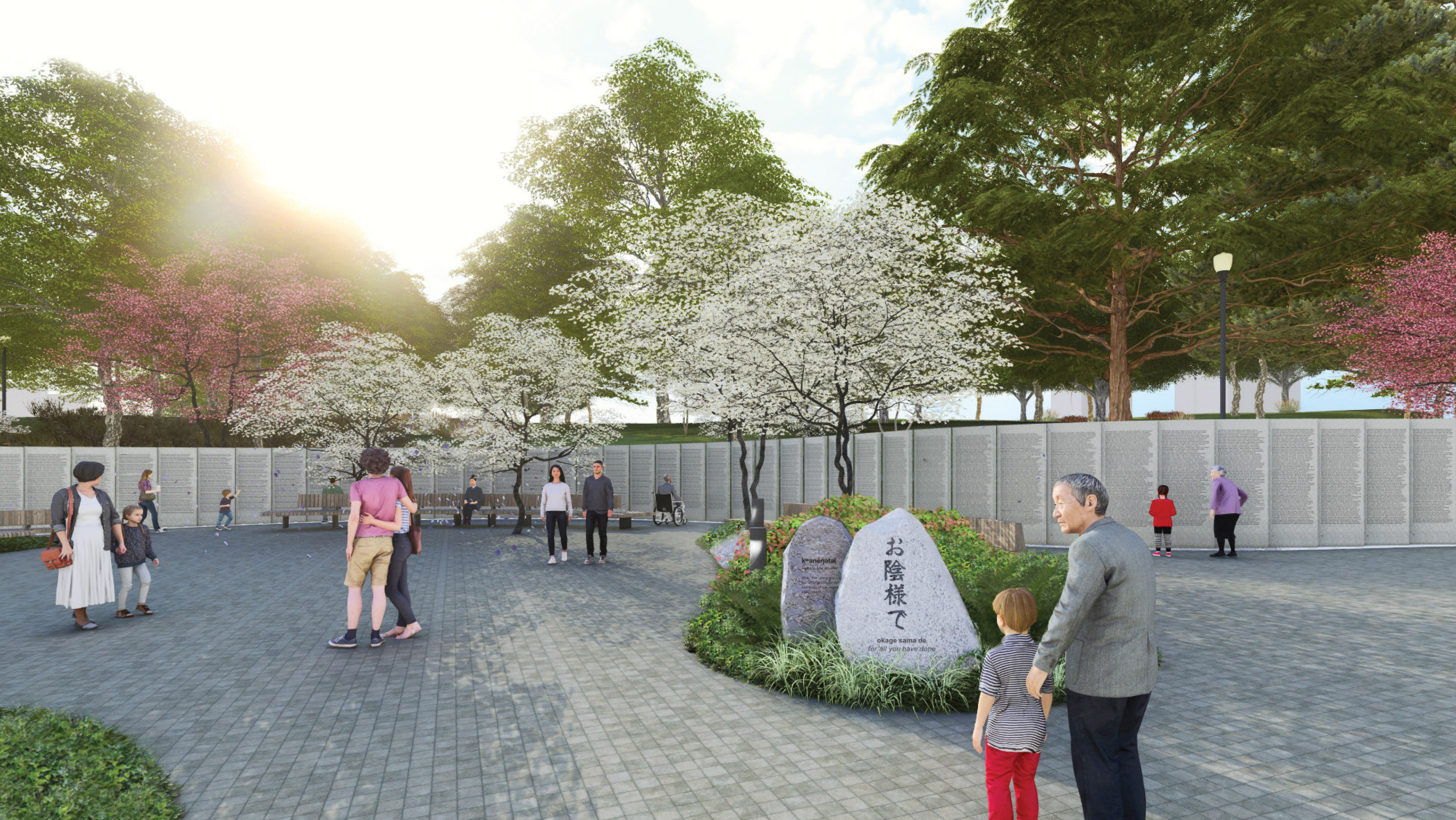
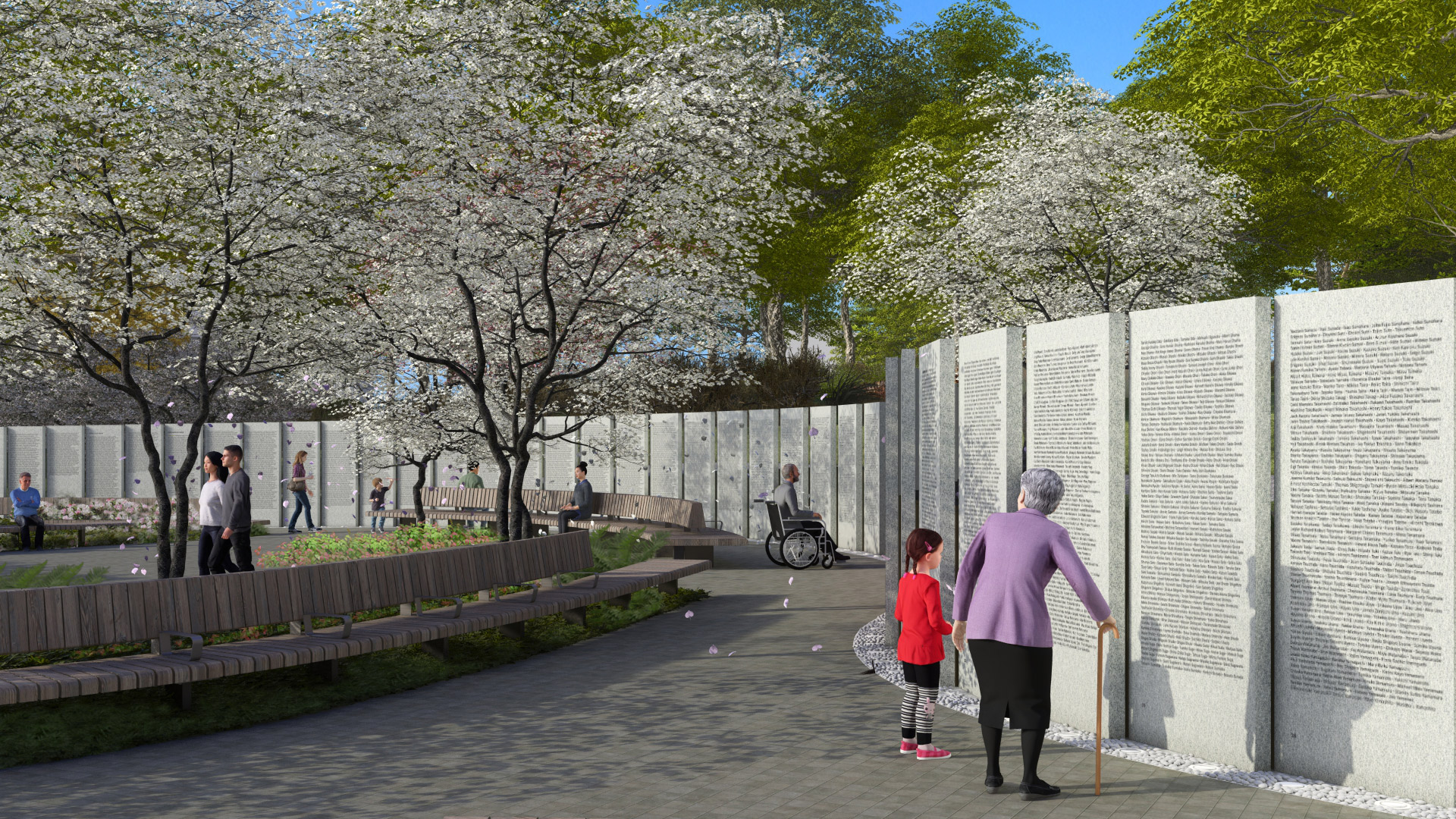
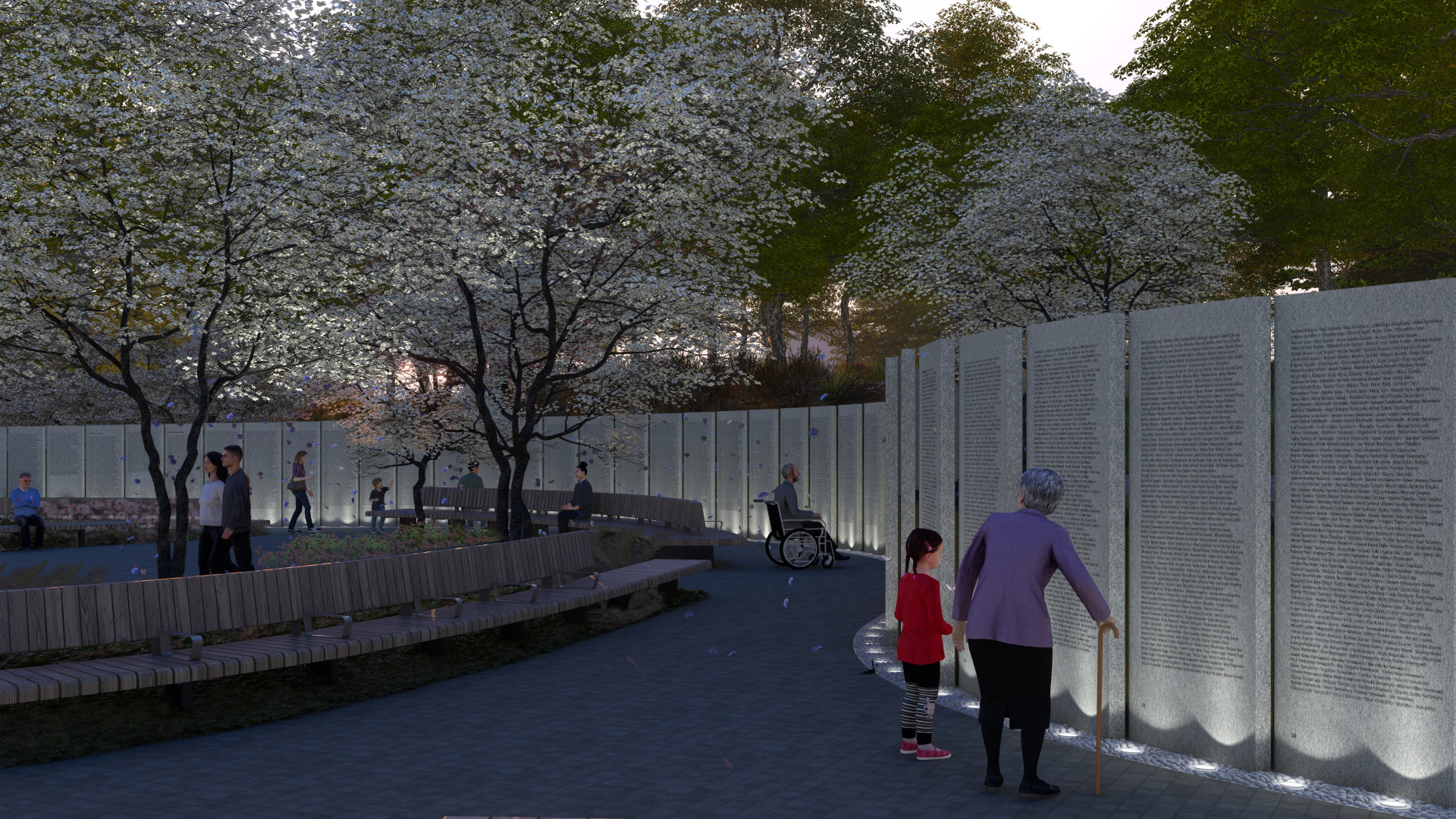
The park’s centrepiece will be a wall of names honouring the 22,000 people of Japanese descent who were displaced from their homes in B.C. during the 1940s. Most were born in Canada. The wall will also include the names of 3,000 children born after the uprooting. It will be set within a Japanese-inspired garden designed for quiet reflection and community gatherings.
Chandos Construction has been contracted to build the park, with KPMB Architects and PFS Studio as design consultants. The monument park is expected to be completed by fall 2026.
“We are grateful to government for recognizing the contributions of the many Japanese Canadians who helped shape this province. By honouring our people, most of whom have been lost to time, we reconnect their names to the communities we once called home, seeking healing across generations.”
— Susanne Tabata, CEO, Japanese Canadian Legacies Society
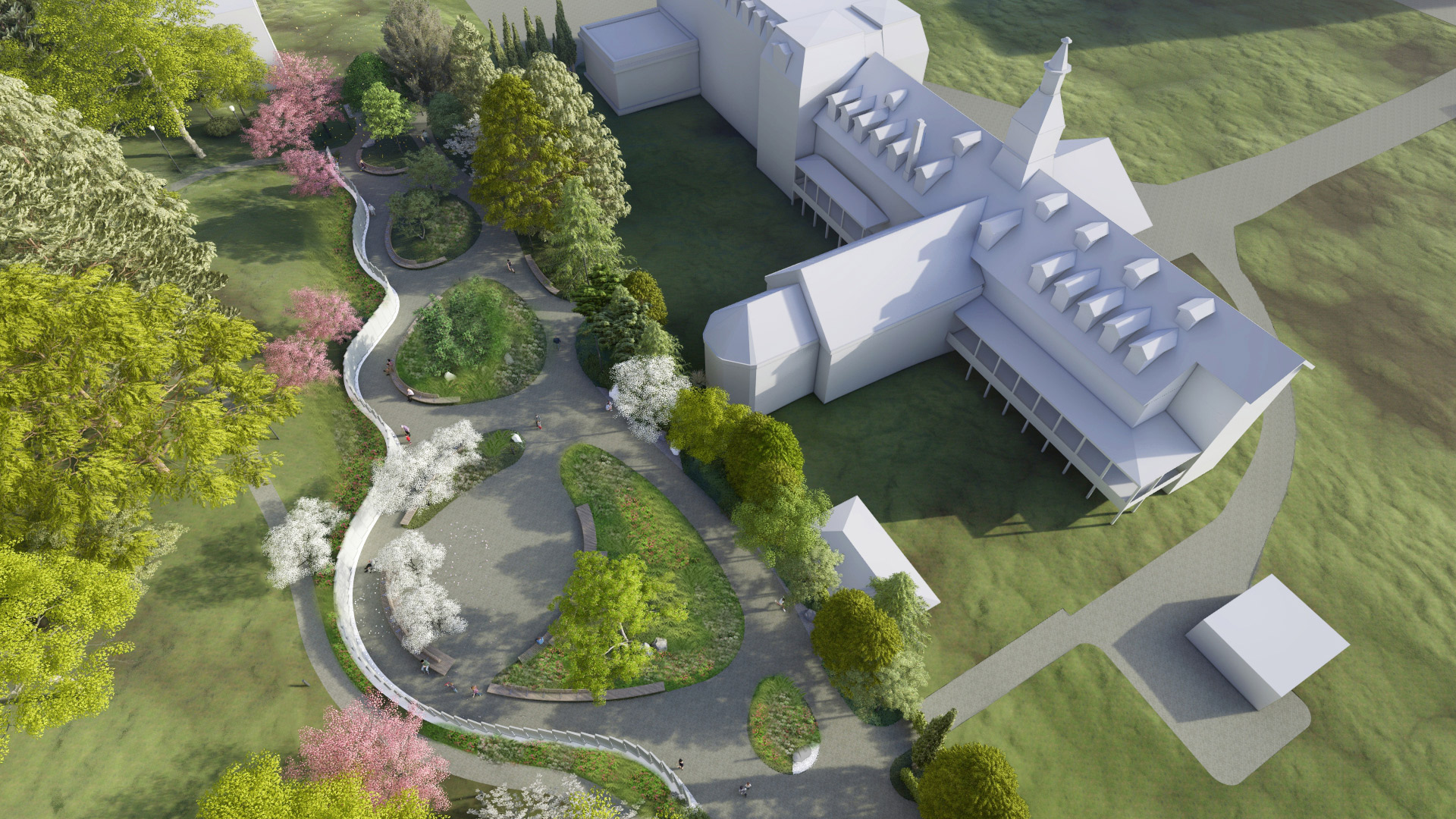
Artist's rendering of an aerial shot depicting the final site
On this page
- Background on Japanese Canadians in B.C.
- Construction timeline
- Why the monument park is in Victoria, B.C.
- Project funding
- Who the park is for
- Public consultation and engagement
- Environmental protection and habitat conservation
- Parking, traffic, and safety considerations
- Why the pathway is closed during construction
Background on Japanese Canadians in B.C.
Before 1942, Victoria and many other cities and towns along the west coast of B.C. were home to thriving Japanese Canadian communities. Japanese Canadians were deeply rooted in the province, working primarily in resource industries and owning farms and businesses that served communities across B.C.
Beginning in 1942, following Canada’s entry into the Pacific War, all Japanese Canadians living within 100 miles of the B.C. coast were permanently stripped of their homes, property, and businesses. They were displaced across the country or relocated to internment camps and other sites outside coastal B.C. Some were even exiled to Japan, even though most of those uprooted were born in B.C. No Japanese Canadian targeted by this policy has ever been found guilty of disloyalty to Canada.
Construction timeline
The park is expected to be completed by fall 2026.
Why the park is in Victoria, B.C.
Victoria was chosen as the site for this monument park in recognition of its long-standing connection to Japanese Canadian history and its role as the provincial capital.
The monument is located within a historic heritage precinct, close to where Japanese Canadian immigrants first settled in Victoria in the 1870s. Since that time, Japanese Canadians have been an integral part of the greater Victoria community.
The earliest Japanese immigrant to B.C. on record lived in a house next to the site where the monument park will stand. The first documented Japanese Canadian, Manzo Nagano, settled in Victoria, where he set up a business. His first wife, Tsuya, is buried in Ross Bay Cemetery.
Japanese Canadians also made lasting cultural contributions to the region. The Esquimalt Japanese Tea Garden, opened in 1907 by Harry Takata and Joe Kishida, was enjoyed by thousands of locals until 1942. Joe’s father, Isaburo Kishida, designed both the tea garden and the Japanese garden at Butchart Gardens in 1910.
Through landscape design, horticulture, and community life, Japanese immigrants brought their culture to Victoria and helped shape its identity. Their contributions also influenced garden traditions in the region and the work of the Royal Horticultural Society.
Project funding
This project is being supported through a funding initiative between the Province and the Japanese Canadian Legacies Society. The initiative was announced as part of the redress package in 2022.
The purpose of the park
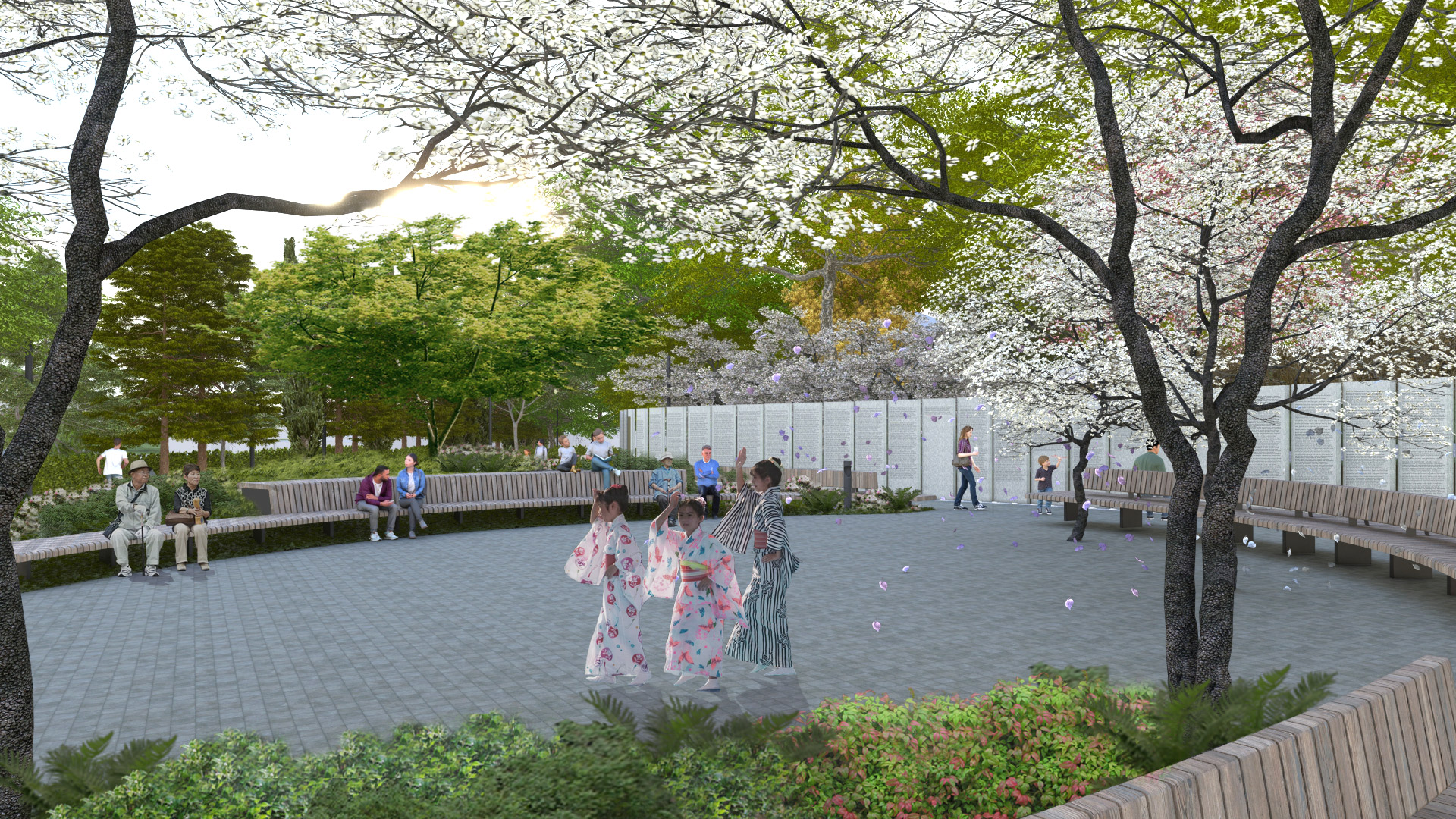
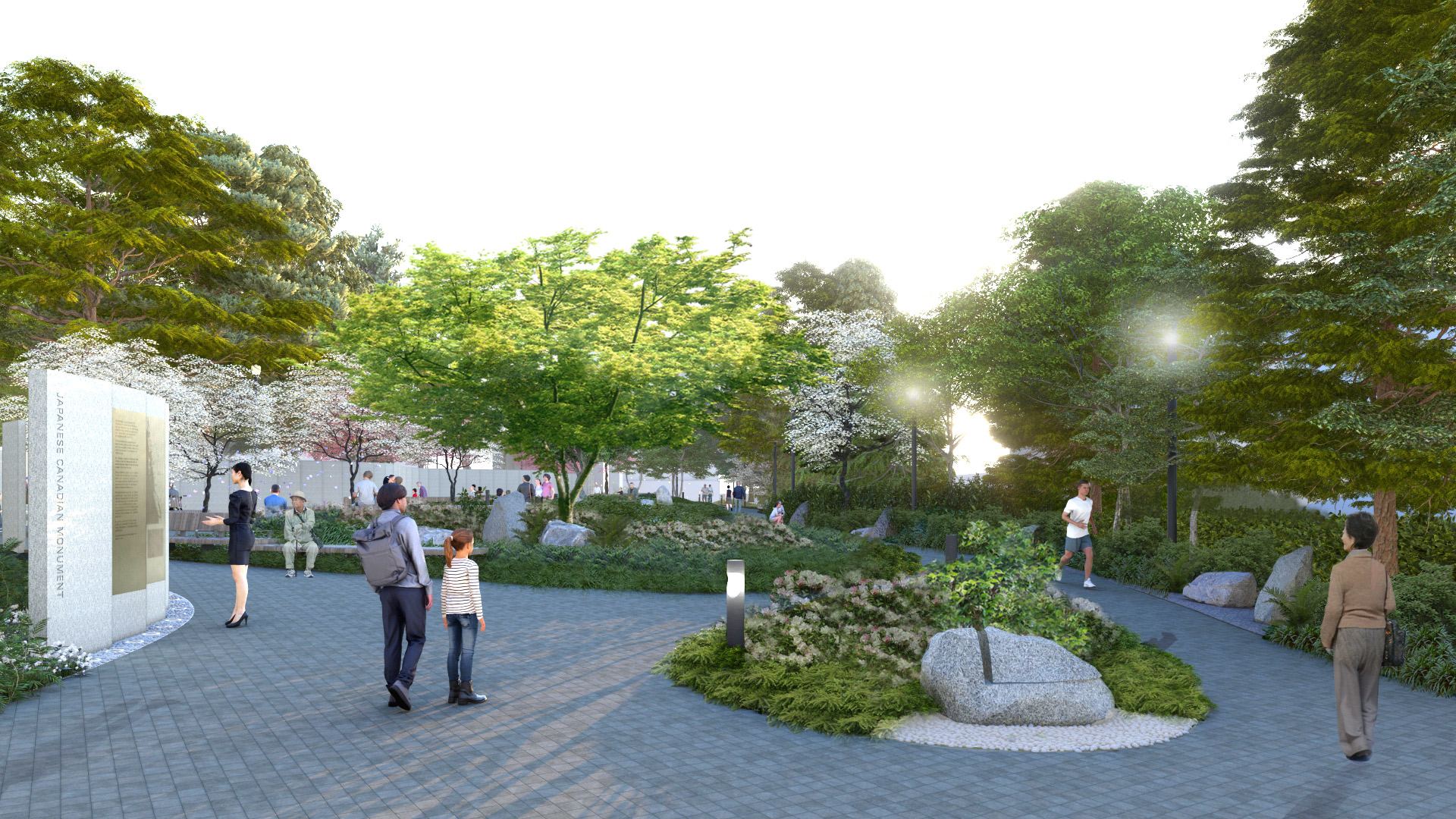
The park serves as a tribute to the Japanese Canadians who were uprooted and displaced in the 1940s. It will also be a public space for everyone to enjoy, with bench seating, Japanese garden elements, and low-impact planting. The design is intended to create a space of contemplation and inspiration for everyone.
The design includes space for small performances, such as poetry readings and music. Community groups will also be able to use the park for gatherings and events during warmer weather.
Public consultation and engagement
The Province engaged with the public during the planning process by:
- Sharing information about the design in May 2024
- Holding a public engagement event in March 2025
- Notifying local residents by mail in May 2024 and March 2025
- Issuing a news release to announce the start of construction in October 2025
Habitat protection and conservation
Measures are being taken to protect and conserve local habitats and environmentally sensitive areas:
- Invasive species within the area are being removed to help existing local vegetation thrive
- Additional native Garry Oak meadow species will be planted to enhance the site’s natural habitat
Parking, traffic, and safety considerations
Parking
Parking is managed by the City of Victoria.
The Province has asked the City to provide designated accessible parking for those who need it. The design includes a turnaround and drop-off area to improve traffic flow for residents and visitors on Academy Close East.
Traffic
The park is not expected to increase local traffic. Traffic may increase slightly during planned events, but only for a short time.
For more information, contact PDS.Info@gov.bc.ca.
Safety
Public safety is a key priority for the project. The design takes into consideration nighttime lighting and other measures to maximize safety.
The goal is to create a safe and peaceful space for everyone.
Closure of pathway during construction
It has been determined that there is no safe or practical way to keep the pathway open during this phase of construction.
Work is moving ahead as quickly as possible with the intention of reopening the pathway as soon as it is safe to do so.
Additional articles
Subscribe
Enter your email address to subscribe to updates of this page.