
Major projects in B.C. delivered faster
 Last updated on September 18, 2026
Learn more about B.C.’s accelerated clean energy, critical mineral, mining and natural gas projects.
On this page
Driving growth through major projects
B.C. is moving major projects forward faster to create good jobs, grow our economy, and secure our future as Canada’s economic engine.
We’re speeding up permits and approvals to get shovels in the ground sooner – to create benefits and opportunities for people in every part of B.C. during this time of global uncertainty.
These projects deliver clean energy, critical minerals and natural gas the world needs. They help build a stronger Canadian economy, reduce our reliance on the United States, and give B.C. a competitive edge globally. The projects also generate revenue to help deliver the hospitals, schools, homes and services we rely on.
Businesses and First Nations are working together – every major project moving forward today has First Nations as partners, supporters or investors.
This work is a part of Look West – a targeted plan to strengthen B.C. and Canada’s economic security in the face of global conflict and uncertainty. The proposed projects represent:
 41 major projects including 18 initial priority projects announced in 2025
 Over 50,000 construction and long-term jobs in communities across B.C.
 $130 billion estimated in investment towards $200 billion goal by 2035
Major project map
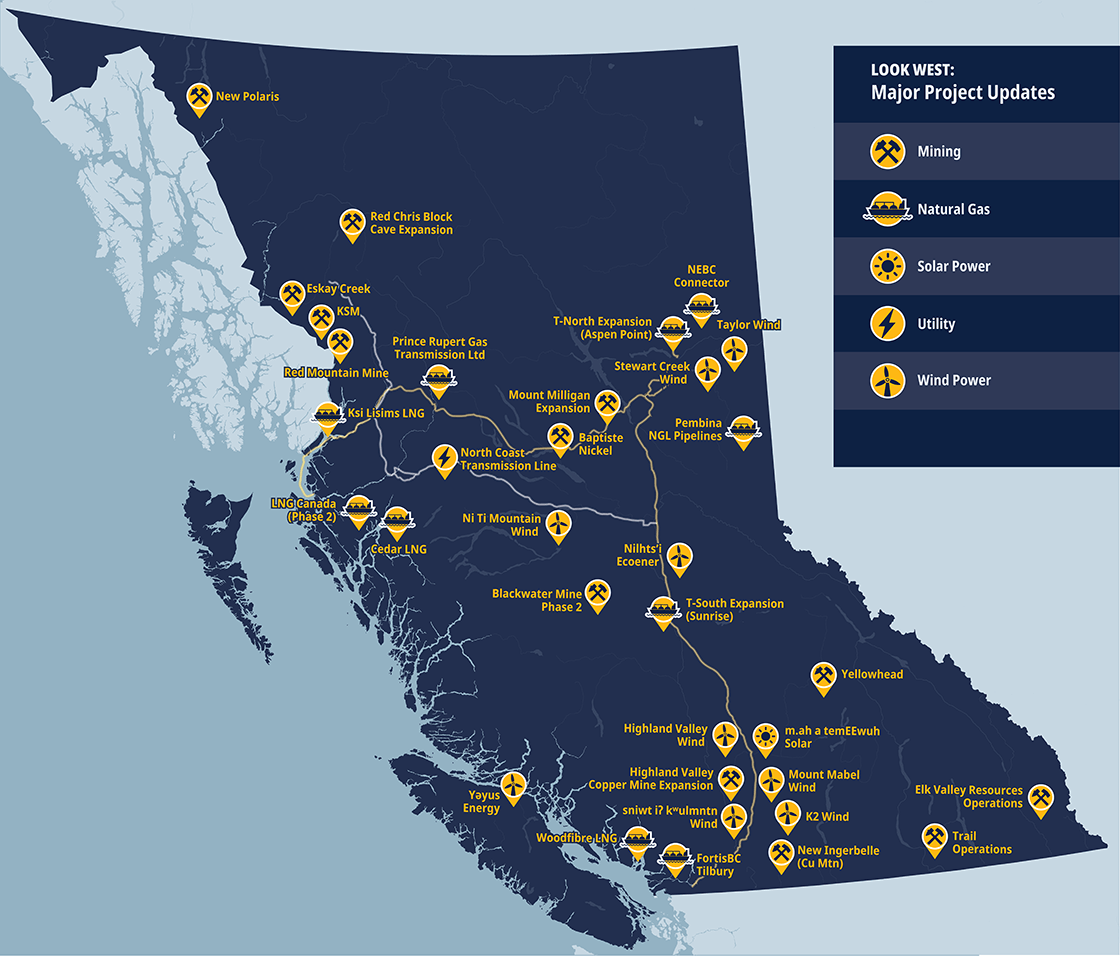
Major project list
Critical minerals and mining
- Baptiste Nickel Project
- Berg Copper Project
- Blackwater mine – Phase 2 Expansion
- Cariboo Gold
- Copper Mountain mine - New Ingerbelle Extension
- Eskay Creek mine
- Fording River Operations - Extension
- Greenhills Operations - Cougar 8/9
- Highland Valley Copper mine - Extension
- KSM mine
- Mount Milligan mine – 2035 Expansion
- New Polaris Project
- Red Chris mine – Block Cave Underground Expansion
- Red Mountain Project
- Trail Operations
- Yellowhead Copper Project
Natural gas
- Cedar LNG
- Enbridge T-North Expansion (Aspen Point)
- Enbridge T-South Expansion (Sunrise)
- FortisBC Tilbury LNG Phase 2
- Ksi Lisims LNG and Prince Rupert Gas Transmission Projects
- LNG Canada Phase 2
- NEBC Connector Pipeline: NorthRiver Midstream
- Pembina NGL Pipeline Birch-to-Taylor Expansion
- Pembina NGL Pipeline Taylor-to-Gordondale (Pouce Coupe) Expansion
- Woodfibre LNG
See definitions: Project status | Project location/economic regions
Clean energy projects
B.C. is a clean energy superpower. We’re expanding clean energy projects to deliver more low-cost electricity to power economic growth, attract investment, help businesses grow, and create good jobs.
Clean energy projects are moving forward faster through streamlined permitting, with the BC Energy Regulator serving as the main approver for renewable energy projects and transmission lines.
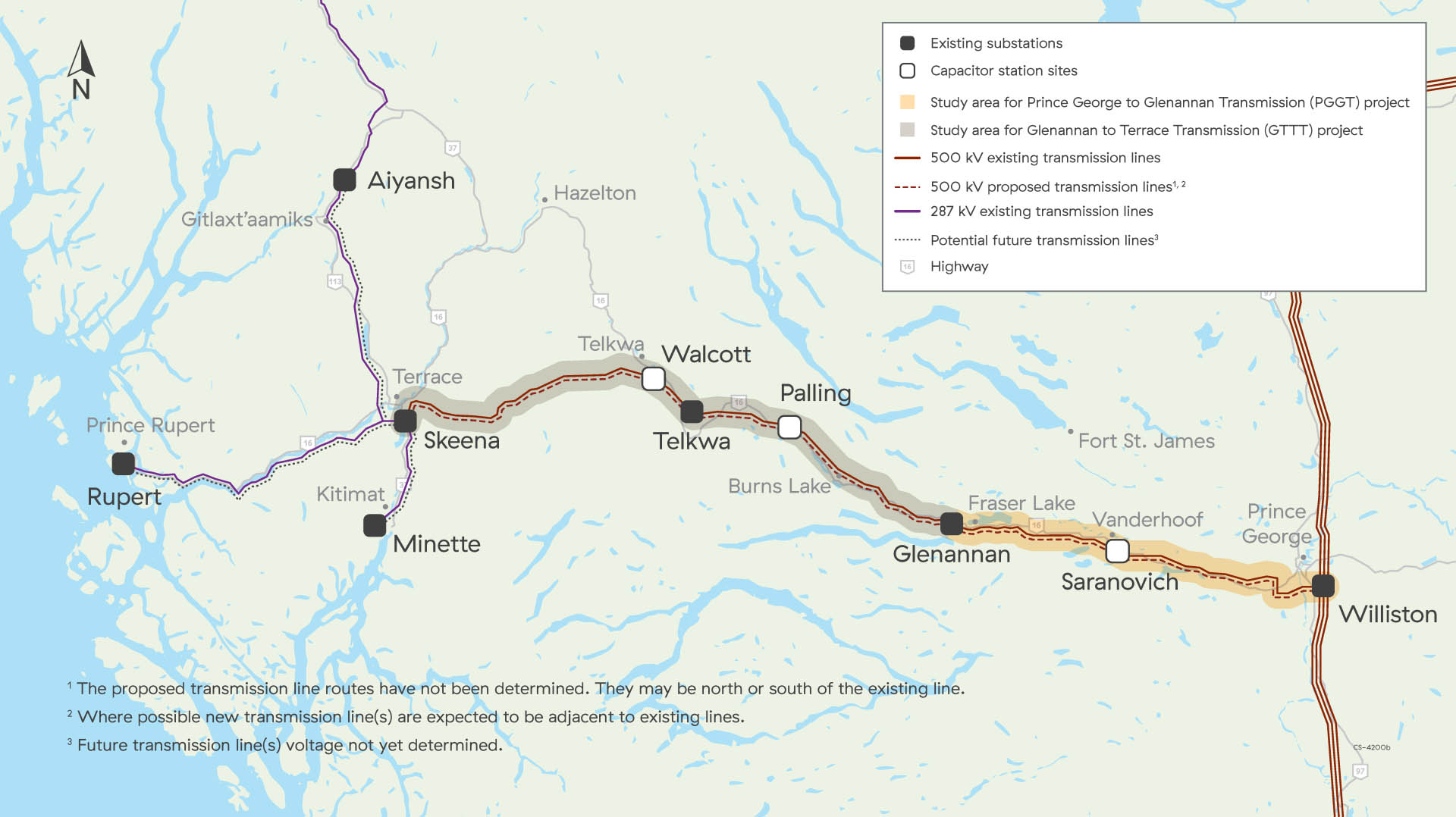
North Coast Transmission Line project map (Source: BC Energy Regulator)
 Location
Prince George to Terrace, North Coast
 Proponent
BC Hydro
 Project status
Phase 1 - Stage 5: Construction
Phase 2 - Stage 4: Tender/Pre-construction
 Jobs anticipated
During construction: 1,400 - 1,600
Once operational: N/A
Project description
Overview
The North Coast Transmission Line (NCTL) is a major 2,200-megawatt power project in northern B.C. It will twin the existing 340-kilometre transmission line between Prince George and Terrace. Future phases may extend the line north to Bob Quinn Lake, south to Kitimat, and west to Prince Rupert.
Benefits to people and community
NCTL will more than double electricity capacity in the North Coast region. This added power will help support the rapid growth in critical minerals, LNG, ports and other industrial projects in the area – creating about 9,700 full-time jobs for people in northern B.C. The project also includes agreements with First Nations to develop and construct certain sections.
Provincial and national impact
Demand for electricity in the North Coast is higher than what the current power system can support. NCTL will meet this demand and unlock economic growth by powering the development of new mines, port expansions and energy exports. This $6-billion project is expected to attract additional investment in projects that could contribute nearly $10 billion per year to GDP and generate about $950 million annually in provincial and municipal revenue to support public services.
Construction status
Construction of Phase 1 began in July 2026 and is expected to be completed by Fall 2030. Construction of Phase 2 is expected to begin in 2027 and completed by Winter 2032.
Priority project
The project is among B.C.’s 18 initial priority projects. It is being reviewed through a streamlined permitting process (PDF, 324KB) to speed up approvals, while maintaining high environmental standards. It was identified as a project of national importance and referred to the federal Major Projects Office. The Canada-British Columbia Co-operative Prosperity Agreement announced in July 2026 includes $3.9 billion in federal support commitments for the first two phases of the NCTL project.
Project website
- North Coast Transmission projects | BC Hydro
- North Coast Transmission Line | BC Energy Regulator
- NCTL Major Projects Office Submission | Canada.ca
Related News
- North Coast Transmission Line breaking ground to power economic growth (Sept. 3, 2026)
- B.C. secures landmark agreement to power decades of jobs, prosperity, growth (July 2, 2026)
- New legislation powers economy with clean energy, North Coast Transmission Line (Oct. 20, 2025)
- Regulatory package continues work of Energy Statutes Amendment Act (Dec. 8, 2025)
- B.C. streamlines permitting for renewable-energy projects (April 30, 2025)
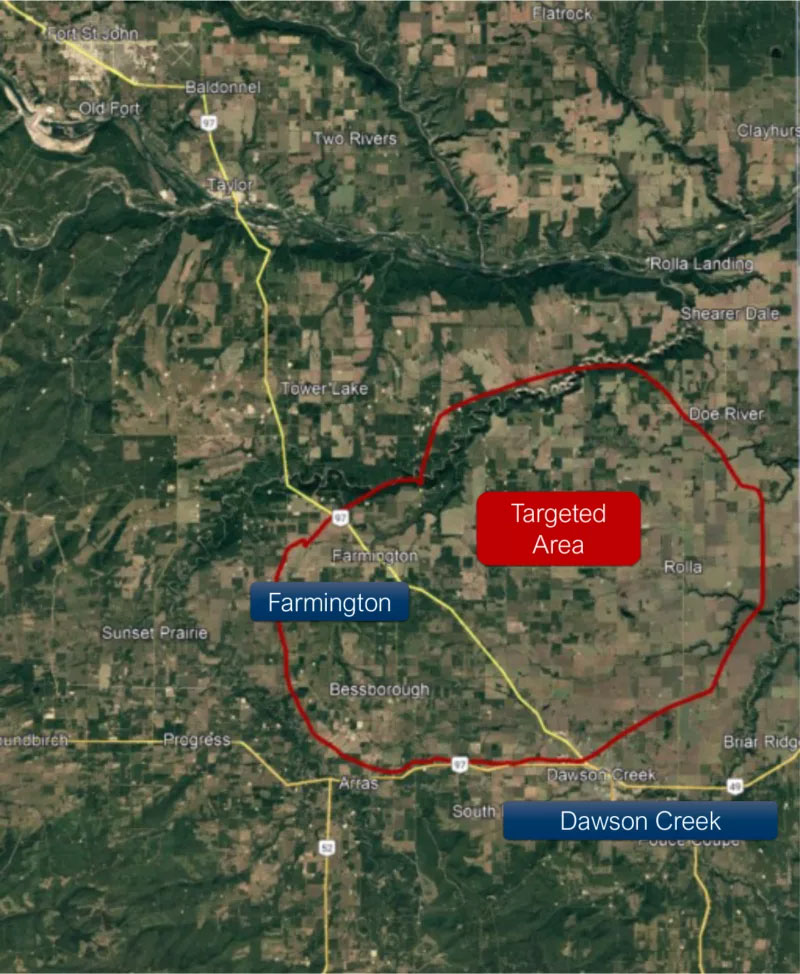
Bessie Wind project location (Source: Innergex Renewable Energy)
Location
Dawson Creek, Northeast
Proponent
Bessie Power General Partnership (West Moberly First Nations, Innergex Renewable Energy)
Project status
Stage 3: Permitting
Jobs anticipated
During construction: 250
Once operational: 5 - 10
Project description
Overview
The Bessie Wind Project is a 251-megawatt wind project primarily located on West Moberly First Nations territory, near Dawson Creek. It was selected through the 2025 Call for Power. It secured a 30‑year electricity purchase agreement with BC Hydro to deliver clean, renewable electricity to the provincial grid.
Benefits to people and community
West Moberly First Nations is the majority equity owner of the project. The project will also help create local jobs and business opportunities and support the local economy. It’s one of the four major wind projects announced as part of the 2025 Call for Power, which are expected to generate $4.3 billion in private investment and create 1,500 jobs.
Provincial and national impact
The project helps meet B.C.'s growing electricity demand, diversifies the province's energy mix, and reduces emissions to support Canada's net-zero grid goals.
Construction status
Construction is expected to begin in 2030, and reach commercial operations in 2032.
Project website
Related News
- Strong response to 2025 call for power, delivering clean, affordable energy (May 13, 2026)
- B.C. streamlines permitting for renewable-energy projects (April 30, 2025)
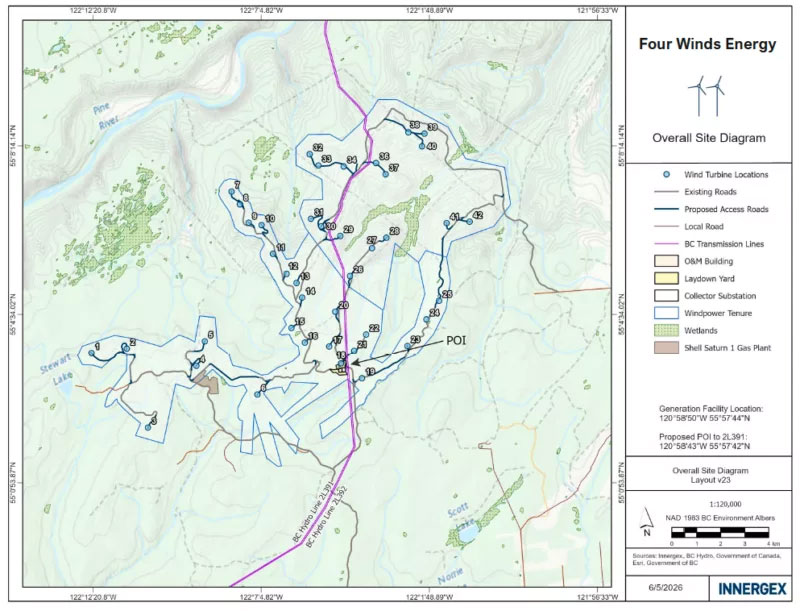
Four Winds Energy project map (Source: Innergex)
Location
Fort St. John, Northeast BC
Proponent
Stewart Creek Power Inc. (West Moberly First Nation, Innergex)
Project status
Stage 3: Permitting
Jobs anticipated
During construction: 200
Once operational: 10
Project description
Overview
The Four Winds Project is a 200-megawatt wind farm located near Fort St. John. It was selected through the 2024 Call for Power. It secured a 30‑year electricity purchase agreement with BC Hydro to deliver clean, renewable electricity to the provincial grid.
Benefits to people and community
It will produce enough clean electricity to power about 25,000 average homes each year. It will create good local jobs during development and construction, as well as long-term jobs to support operations. The Upper Nicola Band holds majority equity ownership, supporting economic participation and reconciliation.
Provincial and national impact
The project helps meet B.C.'s growing electricity demand, diversifies the province's energy mix, and reduces emissions to support Canada's net-zero grid goals — all at rates nearly 40% lower than the last clean-power call.
Construction status
Construction is expected to begin in Summer 2028, with operations expected in 2030.
Priority project
The project is among B.C.’s 18 initial priority projects. It is being reviewed through a streamlined permitting process (PDF, 324KB) to help speed up approvals, while maintaining high environmental standards.
Project website
Related News
- New wind projects will boost B.C.’s affordable clean-energy supply (Dec. 9, 2024)
- B.C. streamlines permitting for renewable-energy projects (April 30, 2025)
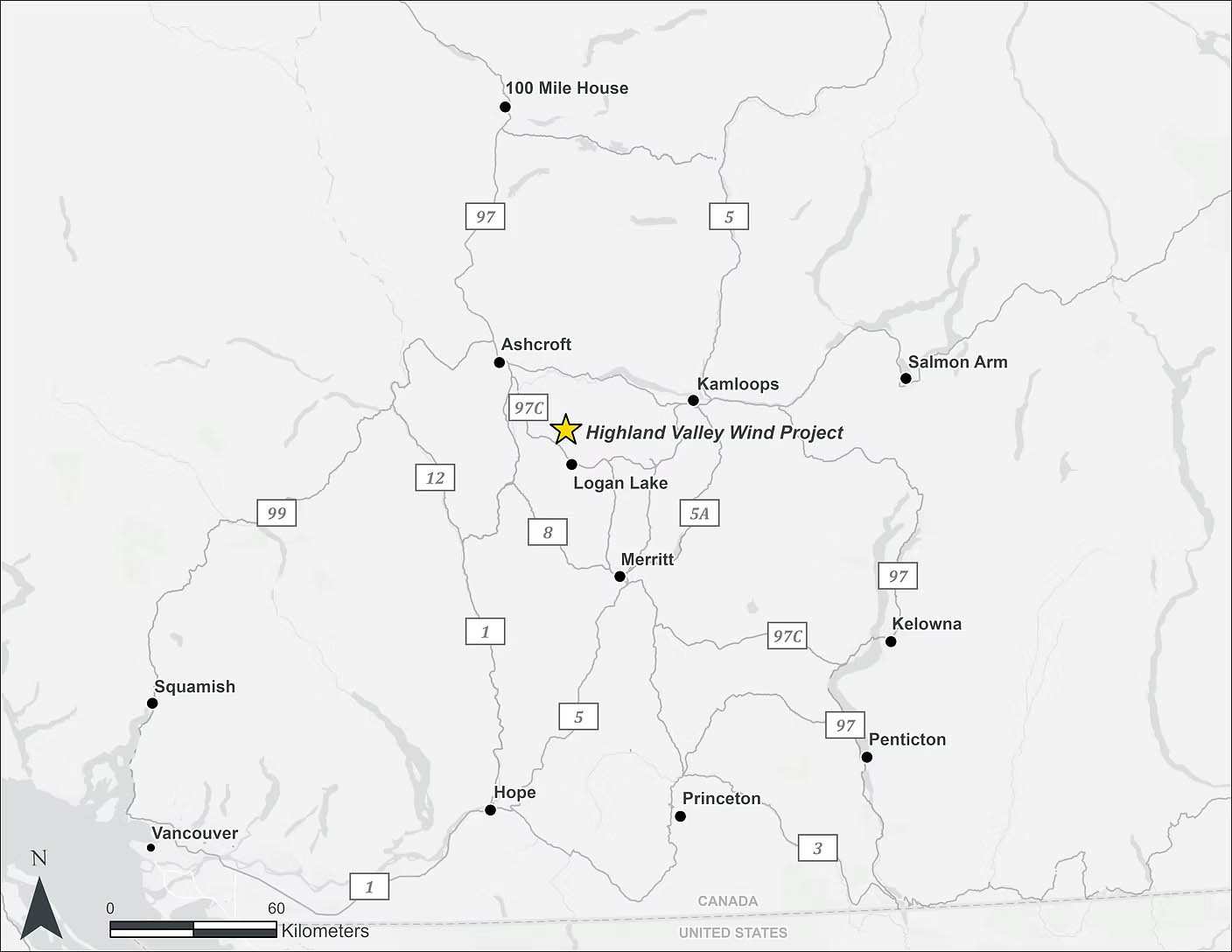
Highland Valley Wind project map (Source: Capstone)
Location
Logan Lake, Thompson-Okanagan
Proponent
Highland Valley Wind Inc. (Ashcroft Indian Band, Capstone)
Project status
Stage 3: Permitting
Jobs anticipated
During construction: 275
Once operational: TBC
Project description
Overview
The Highland Valley Wind Project is a 197-megawatt wind farm located about 18 kilometres west of Logan Lake. It was selected through the 2024 Call for Power. It secured a 30‑year electricity purchase agreement with BC Hydro to deliver clean, renewable electricity to the provincial grid.
Benefits to people and community
It will produce enough clean electricity to power more than 58,000 average homes each year. It will create good local jobs during development and construction, as well as long-term jobs to support operations. The Ashcroft Indian Band holds majority equity ownership, supporting economic participation and reconciliation.
Provincial and national impact
The project helps meet B.C.'s growing electricity demand, diversifies the province's energy mix, and reduces emissions to support Canada's net-zero grid goals — all at rates nearly 40% lower than the last clean-power call.
Construction status
Construction is expected to begin in 2028, with operations expected in 2031.
Priority project
The project is among B.C.’s 18 initial priority projects. It is being reviewed through a streamlined permitting process (PDF, 324KB) to help speed up approvals, while maintaining high environmental standards.
Project website
Related news
- New wind projects will boost B.C.’s affordable clean-energy supply (Dec. 9, 2024)
- B.C. streamlines permitting for renewable-energy projects (April 30, 2025)
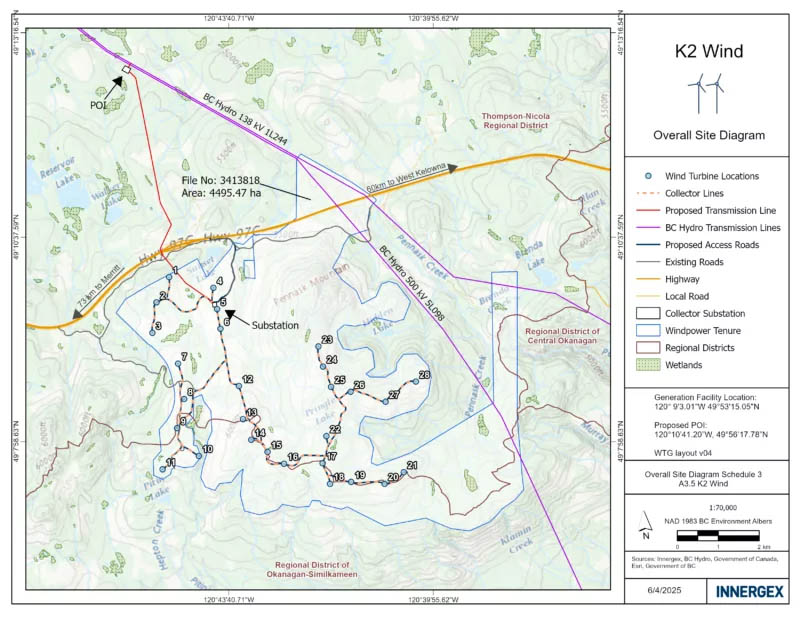
K2 Wind project map (Source: Innergex)
Location
Kelowna, Thompson-Okanagan
Proponent
K2 Wind Power Inc. (Westbank First Nation, Innergex)
Project status
Stage 3: Permitting
Jobs anticipated
During construction: 130
Once operational: 5
Project description
Overview
The K2 Wind Project is a 160-megawatt wind farm located about 33 kilometres west of Peachland. The project was selected through the 2024 Call for Power. It secured a 30-year electricity purchase agreement with BC Hydro to deliver clean, renewable electricity to the provincial grid.
Benefits to people and community
It will produce enough clean electricity to power about 40,000 average homes each year. It will create good local jobs during development and construction, as well as long-term jobs to support operations. Westbank First Nation holds majority equity ownership, supporting economic participation and reconciliation.
Provincial and national impact
The project helps meet B.C.'s growing electricity demand, diversifies the province's energy mix, and reduces emissions to support Canada's net-zero grid goals — all at rates nearly 40% lower than the last clean-power call.
Construction status
Construction is expected to begin in 2029, with operations to begin in 2031.
Priority project
The project is among B.C.’s 18 initial priority projects. It is being reviewed through a streamlined permitting process (PDF, 324KB) to help speed up approvals, while maintaining high environmental standards.
Project website
Related News
- New wind projects will boost B.C.’s affordable clean-energy supply (Dec. 9, 2024)
- B.C. streamlines permitting for renewable-energy projects (April 30, 2025)
Location
Logan Lake, Thompson-Okanagan
Proponent
Logan Lake (Oregon Jack Creek, BluEarth Renewables)
Project status
Stage 2: Consultation/Assessments
Jobs anticipated
During construction: 200
Once operational: 4 - 6
Project description
Overview
The m.ah a temEEwuh Solar Project (formerly ShTSaQU) is a 104-megawatt solar energy facility located about 5 kilometres north of the District of Logan Lake. The project was selected through the 2024 Call for Power. It secured a 30-year electricity purchase agreement with BC Hydro to deliver clean, renewable electricity to the provincial grid.
Benefits to people and community
It is expected to produce enough clean electricity to power about 20,000 average homes each year. It will create good local jobs during development and construction, as well as long-term jobs to support operations. Oregon Jack Creek holds equity ownership, supporting economic participation and reconciliation.
Provincial and national impact
The project would help meet B.C.'s growing electricity demand, diversifies the province's energy mix, and reduces emissions to support Canada's net-zero grid goals — all at rates nearly 40% lower than the last clean-power call.
Construction status
Construction is expected to begin in 2029.
Priority project
The project is among B.C.’s 18 initial priority projects. It is being reviewed through a streamlined permitting process (PDF, 324KB) to help speed up approvals, while maintaining high environmental standards.
Project website
Related News
- New wind projects will boost B.C.’s affordable clean-energy supply (Dec. 9, 2024)
- B.C. streamlines permitting for renewable-energy projects (April 30, 2025)
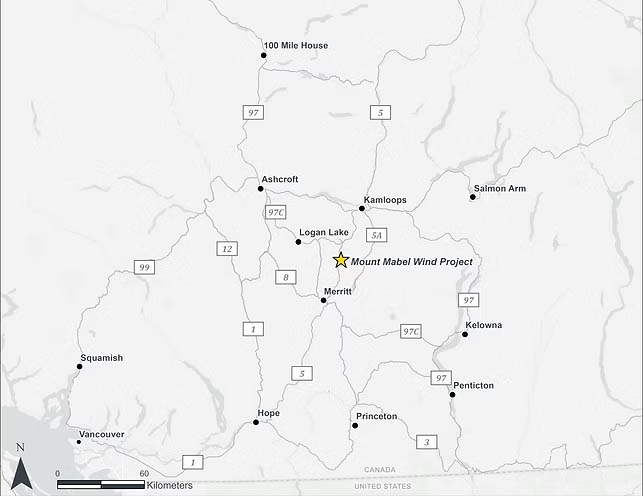
Mount Mabel project map (Source: Capstone)
Location
Logan Lake, Thompson-Okanagan
Proponent
Mount Mabel Wind Inc. (Lower Nicola Indian Band, Capstone)
Project status
Stage 3: Permitting
Jobs anticipated
During construction: 275
Once operational: N/A
Project description
Overview
The Mount Mabel Wind Project is a 143-megawatt wind farm located about 25 kilometres northeast of Merritt. It was selected through the 2024 Call for Power. It secured a 30‑year electricity purchase agreement with BC Hydro to deliver clean, renewable electricity to the provincial grid.
Benefits to people and community
It will produce enough clean electricity to power more than 41,000 average homes each year. It will create good local jobs during development and construction, as well as long‑term jobs to support operations. Lower Nicola Indian Band holds majority equity ownership, supporting economic participation and reconciliation.
Provincial and national impact
The project helps meet B.C.'s growing electricity demand, diversifies the province's energy mix, and reduces emissions to support Canada's net-zero grid goals — all at rates nearly 40% lower than the last clean-power call.
Construction status
Construction is expected to begin in 2028, with operations expected by 2031.
Priority project
The project is among B.C.’s 18 initial priority projects. It is being reviewed through a streamlined permitting process (PDF, 324KB) to help speed up approvals, while maintaining high environmental standards.
Project website
Related News
- New wind projects will boost B.C.’s affordable clean-energy supply (Dec. 9, 2024)
- B.C. streamlines permitting for renewable-energy projects (April 30, 2025)
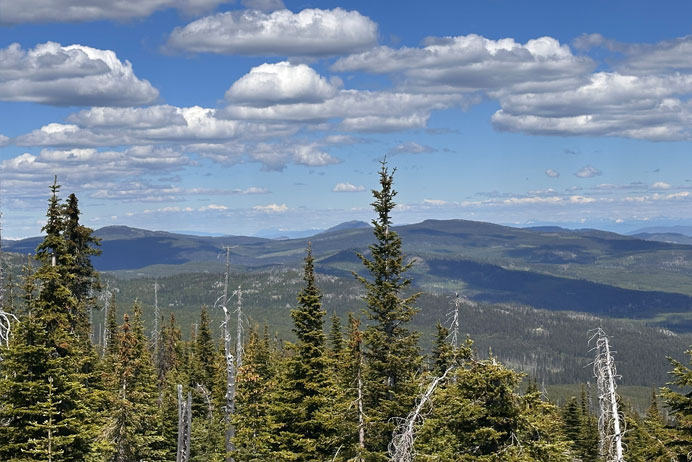
Nicola Wind (Source: Elemental Energy Renewables)
Location
West Kelowna, Thompson-Okanagan
Proponent
Nicola Wind Limited Partnership (Upper Nicola Band, Elemental Energy Renewables Inc.)
Project status
Stage 2: Consultation/Assessments
Jobs anticipated
During construction: TBC
Once operational: TBC
Project description
Overview
The Nicola Wind Project is set to be the largest wind farm in Canada, with a 496-megawatt capacity. It was selected through the 2025 Call for Power. The wind project secured a 30-year electricity purchase agreement with BC Hydro to deliver clean, renewable electricity to the provincial grid.
Benefits to people and community
The Upper Nicola Band is the majority equity owner of the project, which will help create sustainable local jobs and business opportunities and support the local economy. It’s one of the four major wind projects announced as part of the 2025 Call for Power which are expected to generate $4.3 billion in private investment and create 1,500 jobs.
Provincial and national impact
The project helps meet B.C.'s growing electricity demand, diversifies the province's energy mix, and reduces emissions to support Canada's net-zero grid goals.
Construction status
Construction is expected to begin in 2029, with operations expected to start in 2032.
Project website
Related News
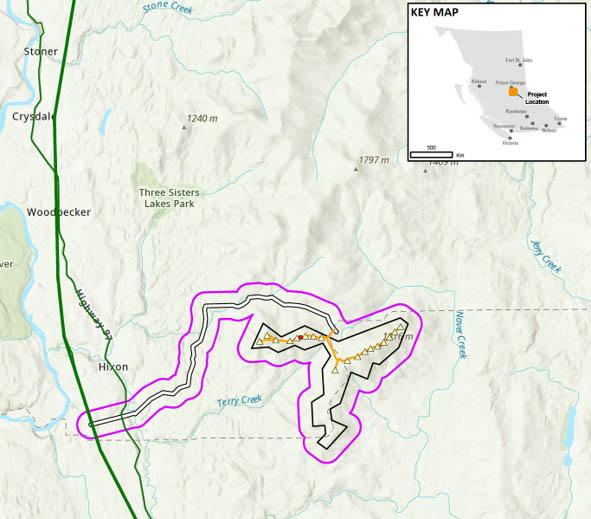
Nilhts’i Ecoener project map (Source: Lheidli T’enneh Ecoener)
Location
Prince George, Cariboo
Proponent
Nilhts'I Econer Energy Corp. (Lheidli T’enneh, Ecoener)
Project status
Stage 3: Permitting
Jobs anticipated
During construction: 100
Once operational: TBC
Project description
Overview
The Nilhts’i Ecoener Wind Project is a 140-megawatt wind farm located about 60 kilometres southeast of Prince George near the town of Hixon. It was selected through the 2024 Call for Power. It secured a 30‑year electricity purchase agreement with BC Hydro to deliver clean, renewable electricity to the provincial grid.
Benefits to people and community
It will produce enough clean electricity to power more than 31,000 average homes each year. It will create good local jobs during development and construction, as well as long‑term jobs to support operations. Lheidli T’enneh holds minority equity ownership, supporting economic participation and reconciliation.
Provincial and national impact
The project helps meet B.C.'s growing electricity demand, diversifies the province's energy mix, and reduces emissions to support Canada's net-zero grid goals — all at rates nearly 40% lower than the last clean-power call.
Construction status
Construction is expected to begin in 2029, with operations expected in 2031.
Priority project
The project is among B.C.’s 18 initial priority projects. It is being reviewed through a streamlined permitting process (PDF, 324KB) to help speed up approvals, while maintaining high environmental standards.
Project website
Related News
- New wind projects will boost B.C.’s affordable clean-energy supply (Dec. 9, 2024)
- B.C. streamlines permitting for renewable-energy projects (April 30, 2025)
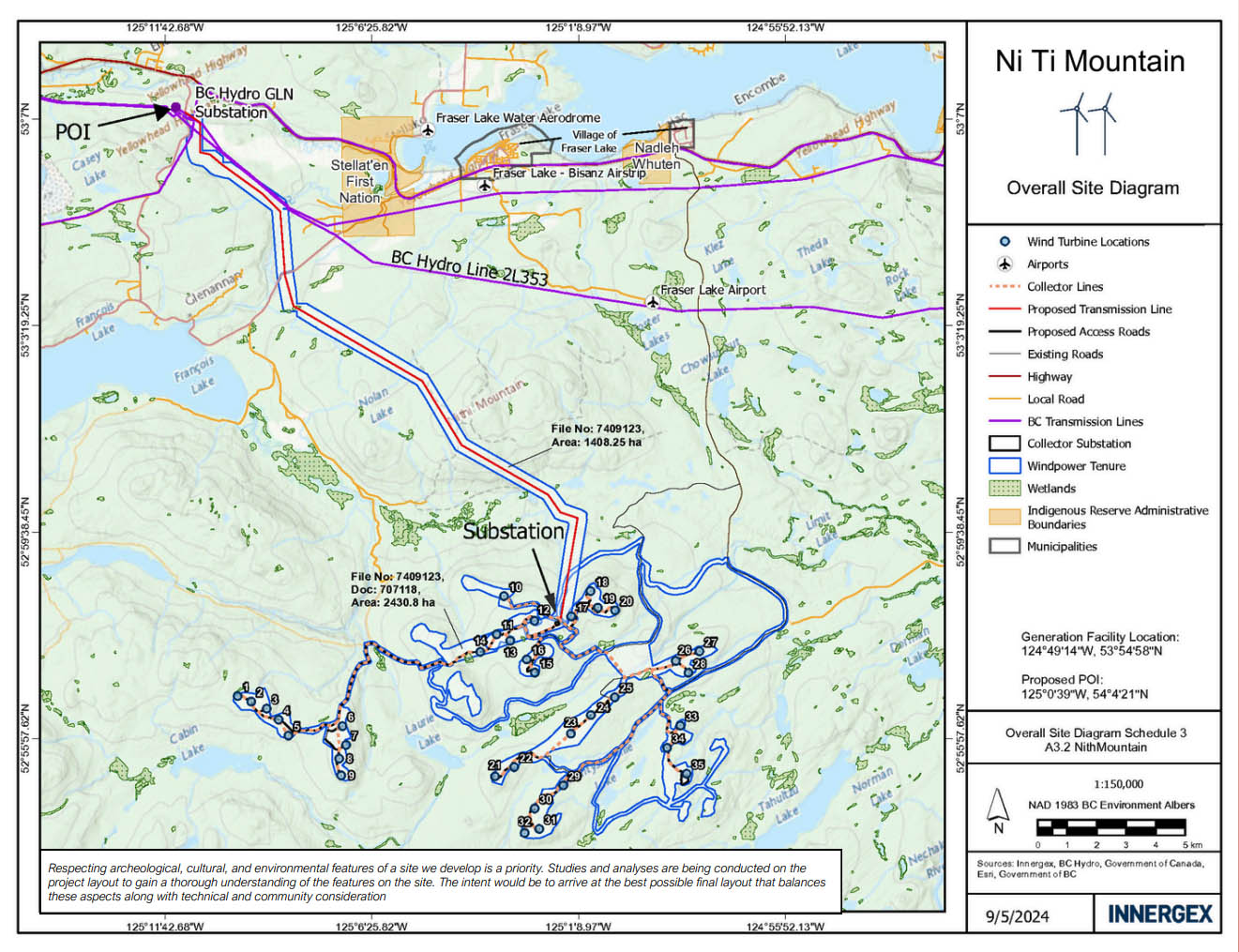
Ni Ti Mountain project map (Source: Innergex)
Location
Fraser Lake, Nechako
Proponent
General Partnership (Stellat’en First Nation, Innergex)
Project status
Stage 3: Permitting
Jobs anticipated
During construction: 200
Once operational: 8
Project description
Overview
The Ni Ti Mountain Wind Project (formerly Nithi) is a 200-megawatt wind farm located near Fraser Lake. It was selected through the 2024 Call for Power. It secured a 30‑year electricity purchase agreement with BC Hydro to deliver clean, renewable electricity to the provincial grid.
Benefits to people and community
It will produce enough clean electricity to power more than 60,000 average homes each year. It will create good local jobs during development and construction, as well as long‑term jobs to support operations. Stellat’en First Nation holds majority equity ownership, supporting economic participation and reconciliation.
Provincial and national impact
The project helps meet B.C.'s growing electricity demand, diversifies the province's energy mix, and reduces emissions to support Canada's net-zero grid goals — all at rates nearly 40% lower than the last clean-power call.
Construction status
Construction is expected to begin in Summer 2027, with operations expected in 2030.
Priority project
The project is among B.C.’s 18 initial priority projects. It is being reviewed through a streamlined permitting process (PDF, 324KB) to help speed up approvals, while maintaining high environmental standards.
Project website
Related News
- New wind projects will boost B.C.’s affordable clean-energy supply (Dec. 9, 2024)
- B.C. streamlines permitting for renewable-energy projects (April 30, 2025)
Location
Merritt, Thompson-Okanagan
Proponent
Elkhart Wind LP (Upper Nicola Band, Elemental Energy)
Project status
Stage 3: Permitting
Jobs anticipated
During construction: 100
Once operational: 10
Project description
Overview
The sniwt iʔ k̓ʷul̓mntn Wind Project (formerly Boulder Elkhart) is a 94-megawatt wind farm with 12-16 turbines located between Merritt and Kelowna. It was selected as part of the 2024 Call for Power. It secured a 30-year electricity purchase agreement with BC Hydro to deliver clean, renewable energy to the provincial grid.
Benefits to people and community
It will produce enough clean electricity to power about 25,000 average homes each year. It will create good local jobs during development and construction, as well as long-term jobs to support operations. The Upper Nicola Band holds majority equity ownership, supporting economic participation and reconciliation.
Provincial and national impact
The project helps meet B.C.'s growing electricity demand, diversifies the province's energy mix, and reduces emissions to support Canada's net-zero grid goals — all at rates nearly 40% lower than the last clean-power call.
Construction status
Construction expected to begin in Spring 2027, and operations targeted for Fall 2028.
Priority project
The project is among B.C.’s 18 initial priority projects. It is being reviewed through a streamlined permitting process (PDF, 324KB) to help speed up approvals, while maintaining high environmental standards.
Project website
Related News
- New wind projects will boost B.C.’s affordable clean-energy supply (Dec. 9, 2024)
- B.C. streamlines permitting for renewable-energy projects (April 30, 2025)
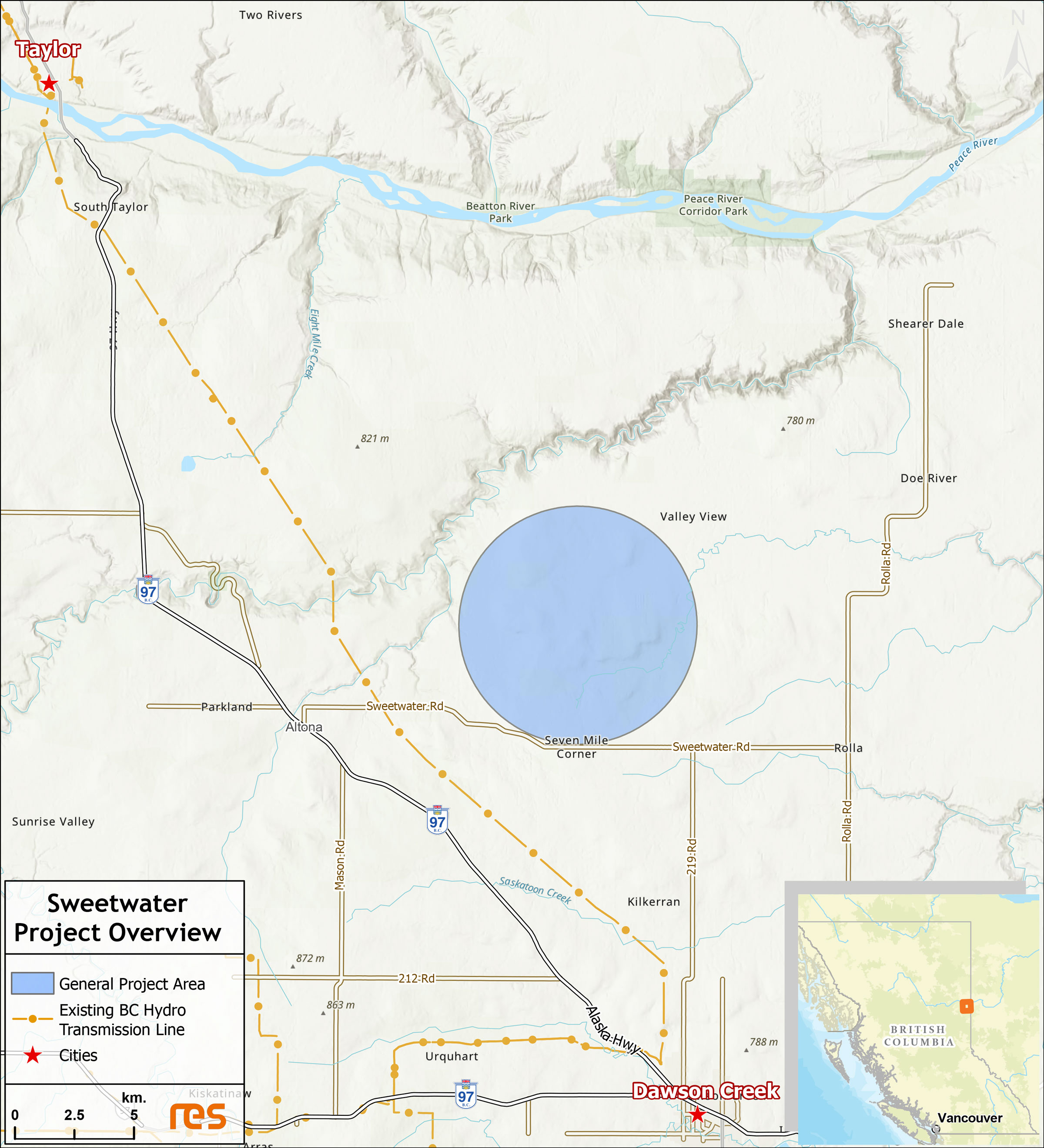
Sweetwater project overview (Source: Sweetwater Wind Project)
Location
Dawson Creek, Northeast
Proponent
Sweetwater Wind Inc. (West Moberly First Nations, Renewable Energy Systems)
Project status
Stage 2: Consultations / Assessments
Jobs anticipated
During construction: TBC
Once operational: TBC
Project description
Overview
The Sweetwater Wind Project is a 210-megawatt wind farm located near Dawson Creek. It was selected through the 2025 Call for Power. It secured a 30‑year electricity purchase agreement with BC Hydro to deliver clean, renewable electricity to the provincial grid.
Benefits to people and community
West Moberly First Nations is the majority equity owner of this project. It’s one of the four major wind projects selected through the 2025 Call for Power expected to generate $4.3 billion in private investment and create 1,500 jobs.
Provincial and national impact
The project helps meet B.C.'s growing electricity demand, diversifies the province's energy mix, and reduces emissions to support Canada's net-zero grid goals.
Construction status
Construction is expected to begin in Summer 2028, with operations expected in 2030.
Project website
Related News
- Strong response to 2025 call for power, delivering clean, affordable energy (May 13, 2026)
- B.C. streamlines permitting for renewable-energy projects (April 30, 2025)
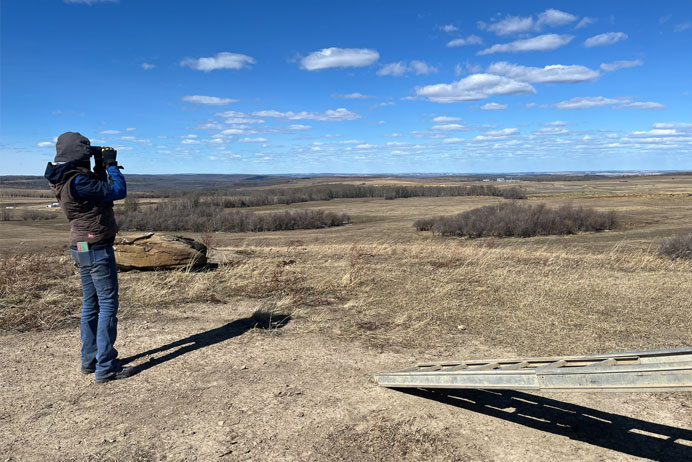
Taylor South (Source: EDF Power Solutions)
Location
Taylor, Northeast
Proponent
Taylor South Wind Project Inc. (Saulteau First Nations, EDF Power Solutions Canada)
Project status
Stage 2: Consultations / Assessments
Jobs anticipated
During construction: TBC
Once operational: TBC
Project description
Overview
The 200.6-megawatt Taylor South Wind Project is an expansion of the Taylor Wind project. It is being developed by the same partners, Saulteau First Nations and EDF Power Solutions Canada. It was selected through the 2025 Call for Power. The project secured a 30‑year electricity purchase agreement with BC Hydro to deliver clean, renewable electricity to the provincial grid.
Benefits to people and community
Saulteau First Nations is the majority equity owner of the project, which will create over 250 jobs through development, construction, and long-term operation activities. The project represents an overall investment of about $650 million, of which more than $150 million will be spent on key development and construction-related activities, supporting the local economy. It’s one of the four major wind projects announced as part of the 2025 Call for Power, which are expected to generate $4.3 billion in private investment and create 1,500 jobs.
Provincial and national impact
The project helps meet B.C.'s growing electricity demand, diversifies the province's energy mix, and reduces emissions to support Canada's net-zero grid goals.
Construction status
Construction is expected to begin in 2030, with operations expected in 2032.
Project website
Related News
- Strong response to 2025 call for power, delivering clean, affordable energy (May 13, 2026)
- B.C. streamlines permitting for renewable-energy projects (April 30, 2025)
Location
Taylor, Northeast
Proponent
Taylor Wind Project Inc. (Saulteau First Nations, EDF Renewables)
Project status
Stage 3: Permitting
Jobs anticipated
During construction: 150
Once operational: TBC
Project description
Overview
The Taylor Wind Project is a 40 turbine 200-megawatt wind farm located 10 kilometres south of the District of Taylor. It was selected through the 2024 Call for Power. It secured a 30‑year electricity purchase agreement with BC Hydro to deliver clean, renewable electricity to the provincial grid.
Benefits to people and community
It will produce enough clean electricity to power more than 60,000 average homes each year. It will create good local jobs during development and construction, as well as long‑term jobs to support operations. Saulteau First Nations holds majority equity ownership, supporting economic participation and reconciliation.
Provincial and national impact
The project helps meet B.C.'s growing electricity demand, diversifies the province's energy mix, and reduces emissions to support Canada's net-zero grid goals — all at rates nearly 40% lower than the last clean-power call.
Construction status
Construction is expected to begin in 2028, with operations expected in 2031.
Priority project
The project is among B.C.’s 18 initial priority projects. It is being reviewed through a streamlined permitting process (PDF, 324KB) to help speed up approvals, while maintaining high environmental standards.
Project website
Related News
- New wind projects will boost B.C.’s affordable clean-energy supply (Dec. 9, 2024)
- B.C. streamlines permitting for renewable-energy projects (April 30, 2025)
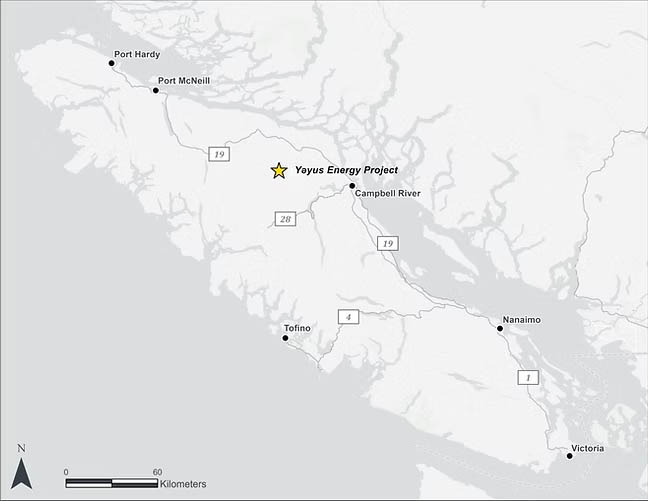
Yəyus Wind Project map (Source: Capstone)
Location
Campbell River, Vancouver Island/Coast
Proponent
Yəyus Energy (Wei Wai Kum First Nation, Capstone Infrastructure)
Project status
Stage 3: Permitting
Jobs anticipated
During construction: 275
Once operational: TBC
Project description
Overview
The Yəyus Energy Project (formerly Brewster) is a 30 turbine 197-megawatt wind farm located 40km northwest of Campbell. It was selected through the 2024 Call for Power. It secured a 30‑year electricity purchase agreement with BC Hydro to deliver clean, renewable electricity to the provincial grid.
Benefits to people and community
It will produce enough clean electricity to power more than 56,000 average homes each year. It will create good local jobs during development and construction, as well as long‑term jobs to support operations. Wei Wai Kum First Nation holds majority equity ownership, supporting economic participation and reconciliation.
Provincial and national impact
The project helps meet B.C.'s growing electricity demand, diversifies the province's energy mix, and reduces emissions to support Canada's net-zero grid goals — all at rates nearly 40% lower than the last clean-power call.
Construction status
Construction is expected to begin in 2028, with operations expected in 2031.
Priority project
The project is among B.C.’s 18 initial priority projects. It is being reviewed through a streamlined permitting process (PDF, 324KB) to help speed up approvals, while maintaining high environmental standards.
Project website
Related News
- New wind projects will boost B.C.’s affordable clean-energy supply (Dec. 9, 2024)
- B.C. streamlines permitting for renewable-energy projects (April 30, 2025)
Critical minerals and mining projects
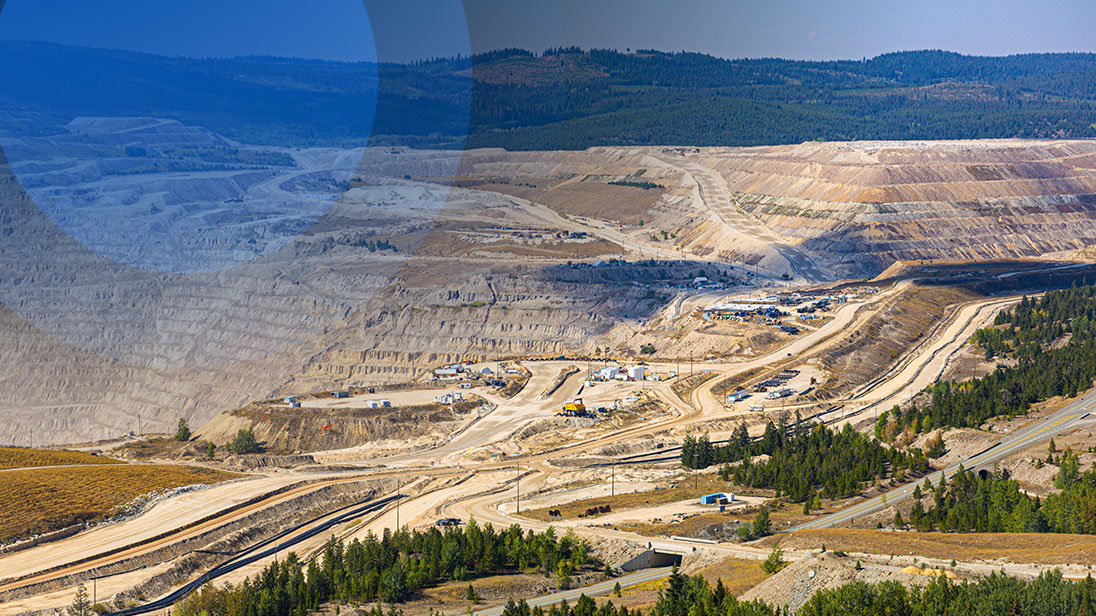
B.C. has the critical minerals Canada and the world needs. We’re expanding the sector to grow our role in global supply chains and drive economic growth – especially in northwestern B.C.
We’re boosting mineral exploration through new fixed permitting timelines. We’re also helping responsible mining projects move from planning to construction faster by speeding up approvals and reducing delays.
This will support thousands of high-paying jobs, while protecting our lands and waters.
Location
Fort St. James area, Nechako
Proponent
FPX Nickel Corporation
Project status
Stage 2: Consultation/Assessments
Jobs anticipated
During construction: 1,500
Once operational: 1,000
Project description
Overview
The Baptiste Nickel Project is a proposed open-pit nickel mine 80 kms northwest of Fort St. James with a 28-year mine life. Using BC Hydro clean electricity and energy efficient equipment and processing methods, Baptiste would be one of the lowest-carbon nickel producers in the world.
Benefits to people and community
If approved, the project is expected to bring long-term economic opportunity to central B.C. It was the first project included in B.C.'s Critical Minerals Office concierge service.
Provincial and national impact
The project represents an investment of approximately $2.9 billion. The project would increase Canada's annual nickel production by almost 50%. Nickel is an essential critical mineral for electric vehicle batteries and clean energy technologies. The project would strengthen B.C.’s position in the EV battery supply-chain and support Canada in becoming a major producer of high-quality minerals for lithium-ion batteries for EVs and for use in defense applications.
Construction status
The provincial and federal environmental assessment process began in January 2026. If approved, construction is expected to commence in 2031, and operations expected to begin in 2034.
Project website
Related News
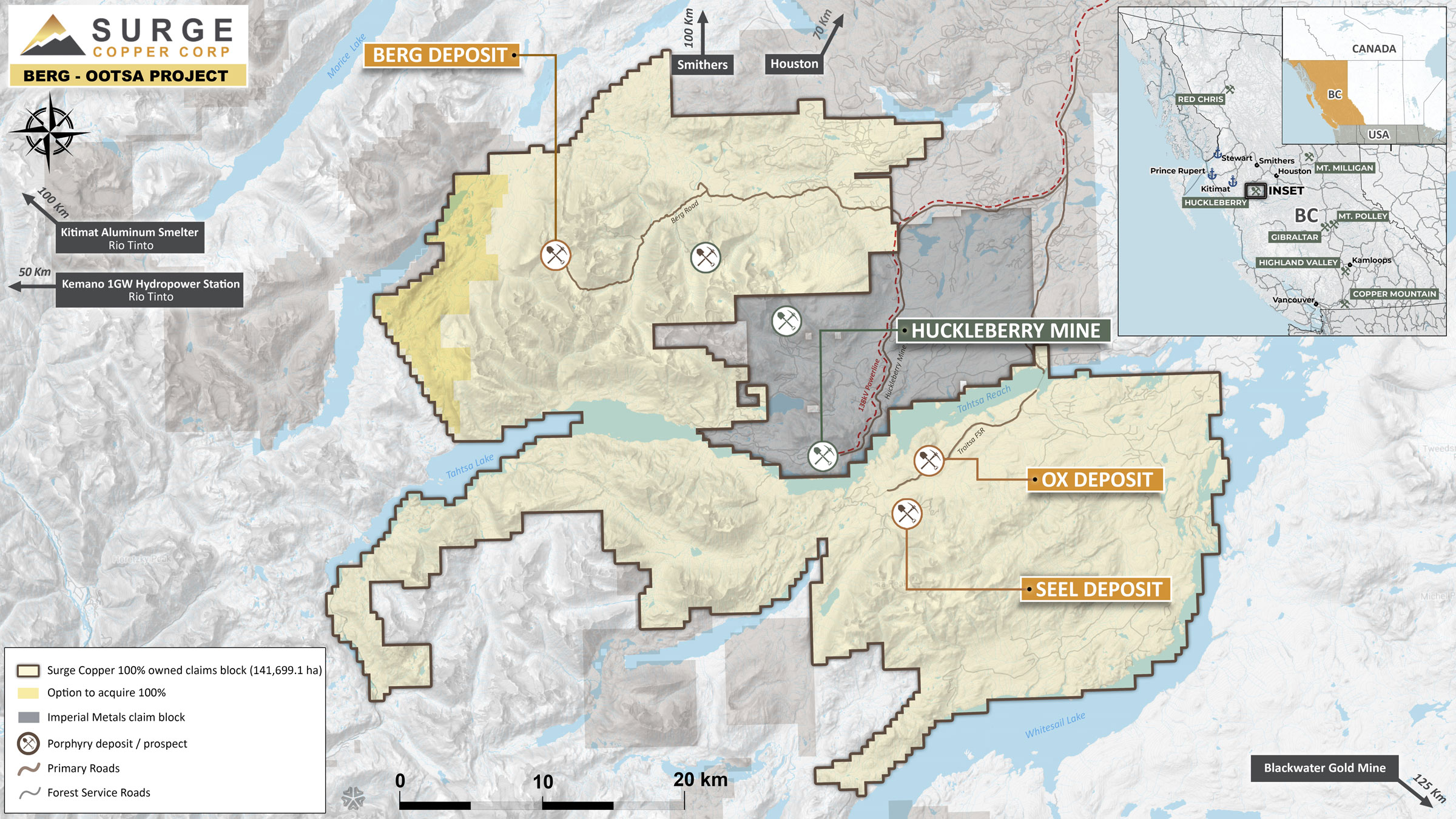
Berg project location (Source: Surge Copper Corp)
Location
Houston, Nechako
Proponent
Surge Copper
Project status
Stage 2: Consultation/Assessments
Jobs anticipated
During construction: 1,650
Once operational: 550
Project description
Overview
The Berg Copper Project is a proposed open-pit copper and molybdenum mine located about 85 km southwest of Houston in the Skeena region, within the Wet'suwet'en Yintah territory. The project would be the second largest copper producer in Canada, behind Highland Valley Copper (also in B.C.), and one of the top 10 molybdenum producers in the world. The mine would also target precious metals like silver and gold. Over its proposed 28-year mine life, it is expected to process 176 million pounds of copper, 21 million pounds of molybdenum, and 3 million ounces of silver.
Benefits to people and community
The mine represents a $4.7 billion investment and will bring hundreds of jobs to the local community over its life. Surge Copper is working together with First Nations and local communities that would be impacted by this project to help guide reclamation planning and long-term vision for the site. Early engagement is currently underway with Wet'suwet'en Hereditary Chiefs and Houses, Wet'suwet'en First Nation, Witset First Nation, Cheslatta Carrier Nation, Skin Tyee First Nation, and Nee Tahi Buhn First Nation.
Provincial and national impact
The mine was identified as one of the projects to advance through B.C.’s Critical Mineral Office. It helps ensure communities, First Nations and project proponents have clearer information and stronger alignment as projects move into environmental assessment and permitting. Over the mine’s proposed 28-year life, it could generate about $20.9 million to $98 million per year in mineral tax.
Construction status
The Project has advanced to the pre-feasibility study stage.
Project website
Related News
Location
Nearest town, Vanderhoof
Proponent
Artemis Gold Inc.
Project status
Stage 5: Construction
Jobs anticipated
During construction: 1,500
Once operational: 300
Project description
Overview
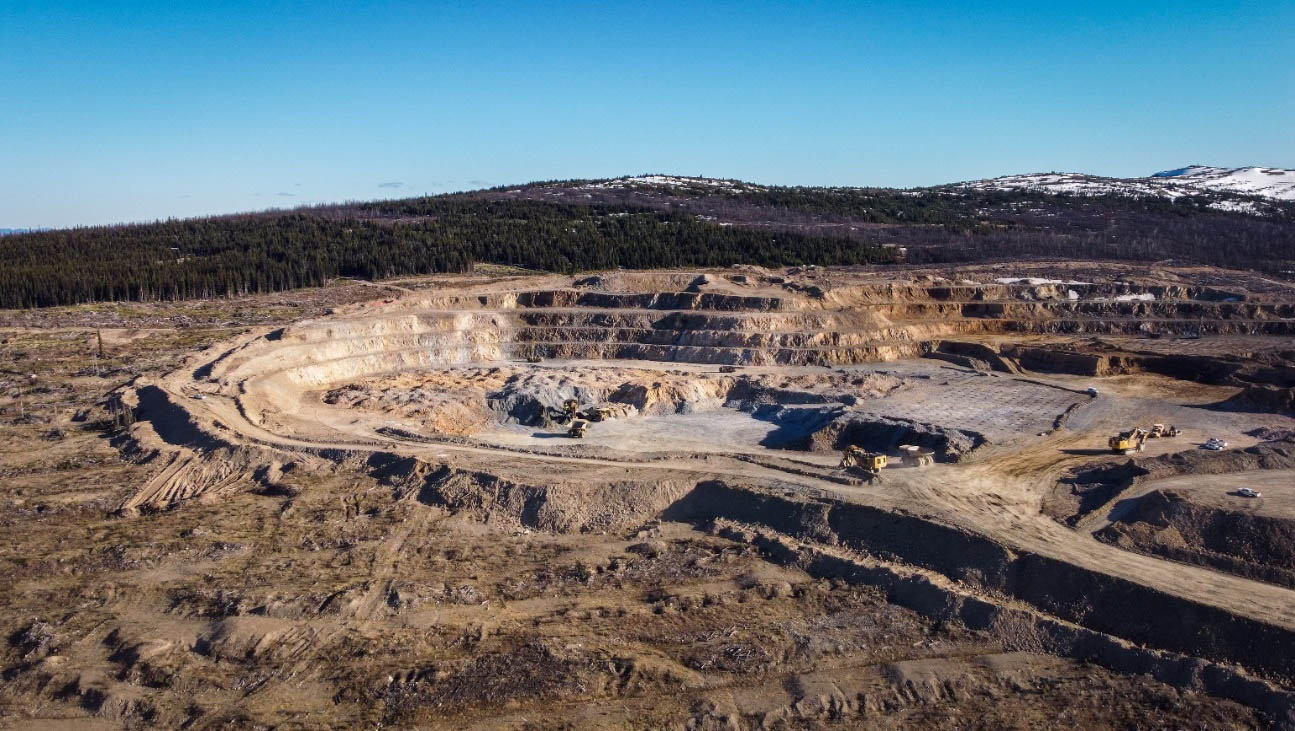
Blackwater Mine Phase 2 Expansion is a significant addition to the Blackwater gold mine. It will nearly triple processing capacity, making Blackwater one of Canada's three largest single gold mines.
Benefits to people and community
Phase 2 represents a $1.44 billion investment and hundreds of new jobs. The mine currently employs 900 people, a majority from local communities. The expansion will add 300 jobs. The mine is located within the territories of Lhoosk'uz Dené Nation and Ulkatcho First Nation, who have been engaged in all aspects of Blackwater mine development. The Nations have participation agreements and share mineral tax revenue with the Province.
Provincial and national impact
Phase 2 increases annual gold production to over 500,000 ounces for the first 10 years. Over the mine's 22-year life, it could generate on average about $34 million to $177 million per year in mineral tax. Powered by BC Hydro's clean electricity, Blackwater is one of the lowest-emission gold mines in the world.
Construction status
Phase 1 operational; Phase 2 under construction. Artemis Gold approved Phase 2 in December 2025. Early works began in January 2026, with major construction scheduled for later in 2026. Phase 2 is expected to be complete by late 2028.
Project website
Related News
- Minister’s statement on official opening of Blackwater Mine (May 30, 2025)
- Blackwater Mine moves forward, creating jobs, economic opportunities (March 9, 2023)
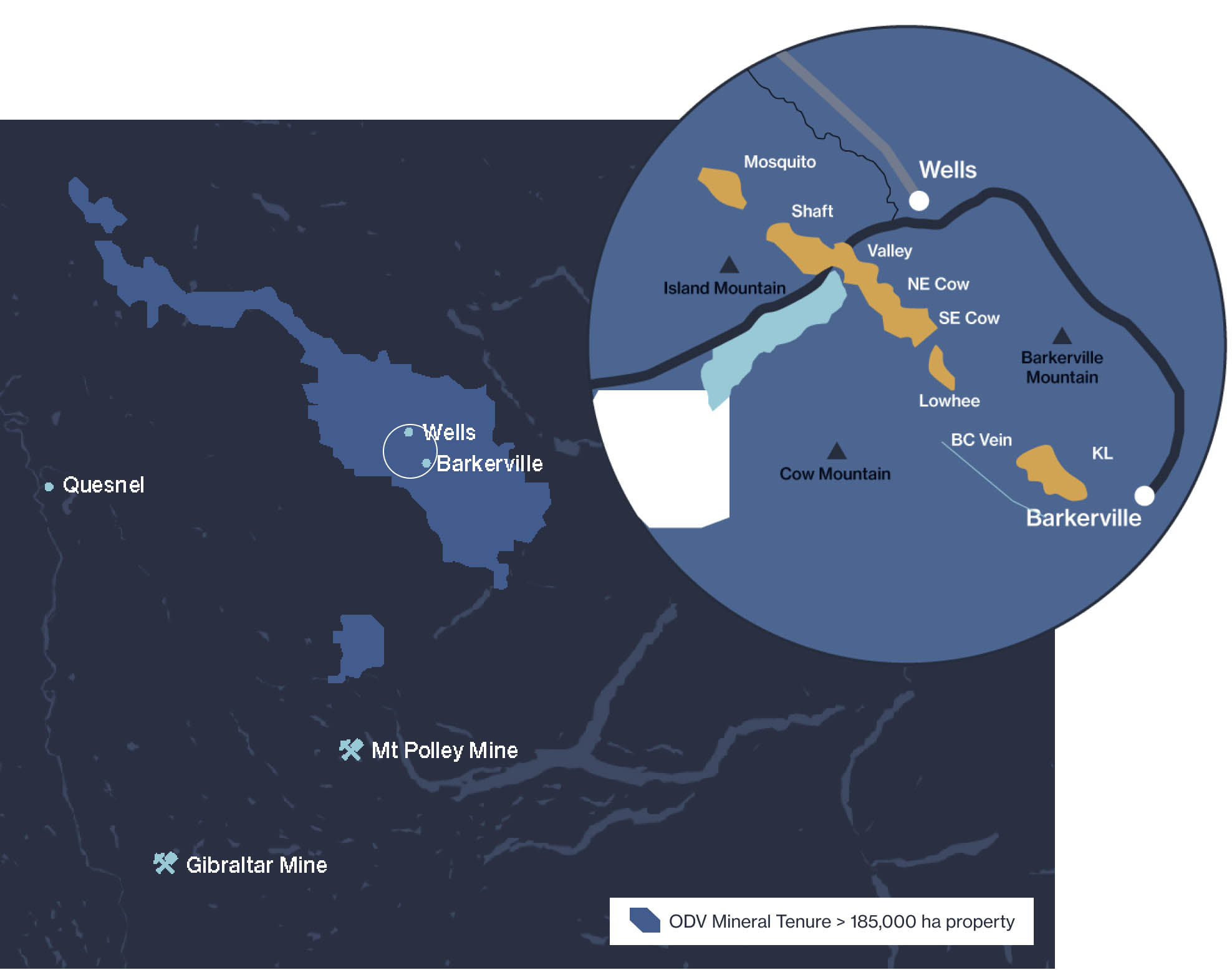
Cariboo Gold Mine project map (Source: Osisko Gold)
Location
Wells and Quesnel, Cariboo
Proponent
Osisko Development
Project status
Stage 5: Construction
Jobs anticipated
During construction: 613
Once operational: 525
Project description
Overview
The Cariboo Gold Mine is an approved new underground gold mine, currently under construction in B.C.’s Cariboo Regional District. The project has two main locations - the Mine Site Complex, at the edge of Wells, B.C., and the QR Mill Site, southeast of Quesnel, B.C. With a minimal above-ground footprint, it aims to be a Canadian leader in sustainability, innovation and technology. The project’s above-ground footprint at its two main locations has been planned to maximize the usage of land used by previous mining projects, minimizing impact on the land.
Benefits to people and community
The project will see an investment of $1.03 billion. It will create hundreds of well-paying, long-term jobs, support local businesses, and contribute to economic diversification. Provincial approval processes included extensive consultation with Lhtako Dené, Xatśūll and Williams Lake First Nations.
Provincial and national impact
The Cariboo Gold Mine will strengthen B.C.'s mining sector and could generate about $9.7 million to $40 million in average annual mineral tax once operational.
Construction status
In September 2026, the mine received its final investment decision and is currently under construction.
Project website
Related News
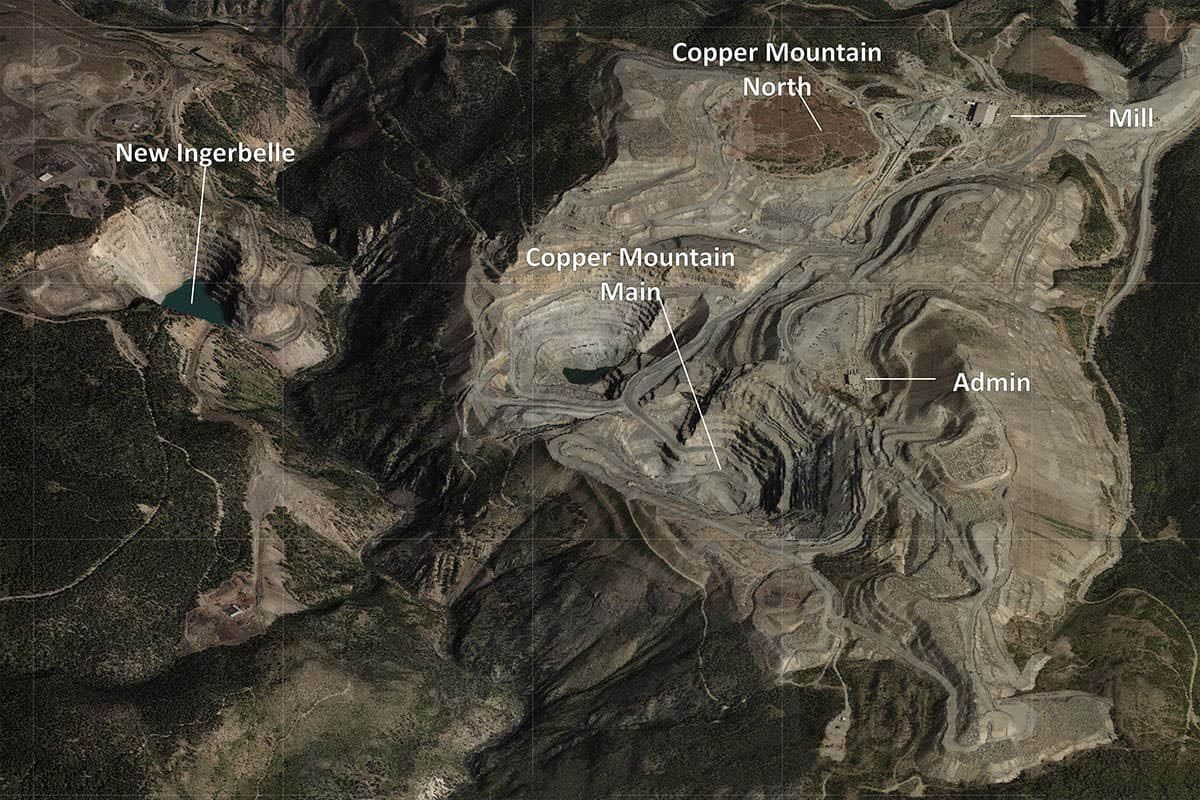
New Ingerbelle project map (Source: Hudbay Minerals)
Location
Princeton Area, Thompson-Okanagan
Proponent
Hudbay Minerals
Project status
Stage 5: Construction
Jobs anticipated
During construction: N/A
Once operational: 800
Project description
Overview
The Copper Mountain Mine New Ingerbelle Extension is a three-phase expansion of the existing Copper Mountain open-pit copper-gold mine. It extends the life of the mine by approximately 12 years to beyond 2040. The extension will result in an estimated additional 165.5 million tonnes of ore reserves.
Benefits to people and community
The expansion supports hundreds of jobs, with most workers living locally in Princeton and the Similkameen Valley. Hudbay has Participation Agreements with the Upper and Lower Similkameen Indian Bands, and the Province has an Economic and Community Development Agreement with both Nations.
Provincial and national impact
With an investment of $285 million, the mine is projected to produce 750,000 tonnes of copper, 900,000 ounces of gold and 5.5 million ounces of silver over its extended life. It could generate an estimated $6.9 million to $32 million in average annual mineral tax once operational. It would support long term jobs and regional economic stability. B.C. contributes approximately 50% of Canada’s copper production.
Construction status
The expansion project received its permits in February 2026 and is currently in construction stage.
Project website
Related News
- Province approves Copper Mountain mine expansion (Feb. 23, 2026)
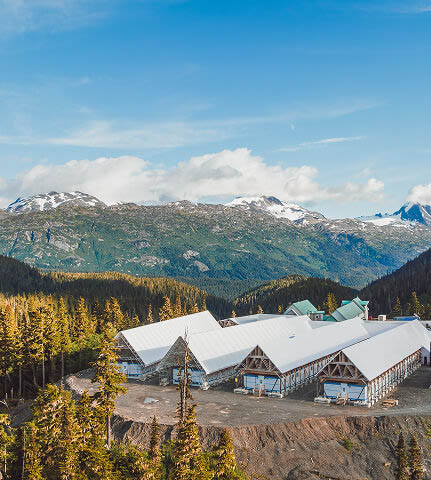
Eskay Creek Mine (Source: Skeena Resources Ltd.)
Location
Stewart area, Nechako
Proponent
Skeena Gold+Silver
Project status
Stage 5: Construction
Jobs anticipated
During construction: 1,500
Once operational: 950
Project description
Overview
Eskay Creek mine revitalization is a permitted open-pit gold and silver mine in northwestern B.C. about 250 kilometres northwest of Stewart. The project will revitalize the former Eskay Creek underground mine site and has capacity to process approximately 3.7 million tonnes per year of gold- and silver-bearing ore over 13 years.
Benefits to people and community
The mine will create thousands of jobs and support local families and communities in the northwest. The reopening of Eskay Creek Mine marks the first regulatory process under a Section 7 agreement negotiated under the Environmental Assessment Act and the Declaration Act.
Provincial and national impact
The mine is expected to generate $23.2 million to $130 million in average annual mineral tax over the life of the mine. The project strengthens B.C.'s critical minerals capacity and supports the province's role as Canada's gateway to global markets.
Construction status
The project received its permits in January 2026. The project is currently under construction.
Priority project
Among B.C.'s 18 initial priority projects selected to go through an accelerated approval process.
Project website
Related News
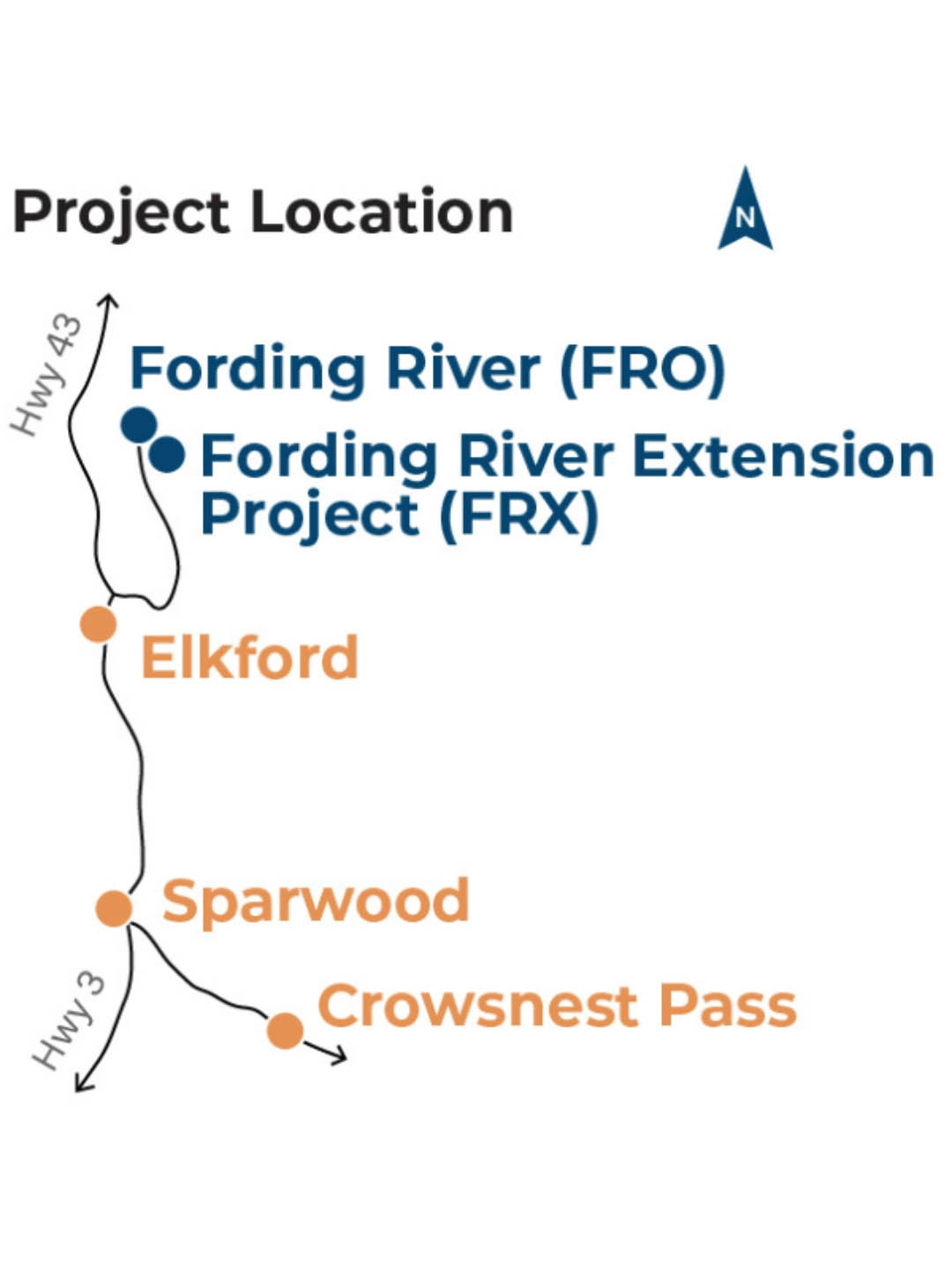
Fording River project map (Source: Glencore)
Location
Elk Valley, Kootenay
Proponent
Elk Valley Resources (EVR)
Project status
Stage 2: Consultation/Assessments
Jobs anticipated
During construction: 400
Once operational: 1,500
Project description
Overview
The Fording River Operations - Extension Project would extend the life of the existing Fording River Operations metallurgical coal mine by approximately 35 years. The proposed project plans to use existing equipment and infrastructure, reducing the footprint of new activities. It would maintain the product rate of approximately 10 million metric tonnes of coal per year, intended to be used for steel manufacturing, a key input for construction, transportation and clean energy infrastructure.
Benefits to people and community
If approved, the Extension Project would maintain thousands of existing jobs, sustaining livelihoods for workers and families across the Elk Valley. There is also an Economic and Community Development Agreement (ECDA) between the Province and the Ktunaxa Nation for this project.
Provincial and national impact
With $1 billion investment, the Extension Project would continue Fording River Operations contributions to the provincial and national economies. In 2024, Fording River Operations provided $216 million in labour income and $1.5 billion to suppliers in Canada. EVR is one of the world’s largest seaborne exporters of steelmaking coal.
Construction status
Currently in the application and development environmental assessment, the project is advancing through a modified combined environmental assessment and permit application and review process that is intended to reduce duplication and improve efficiency. B.C. and Canada are also working to align the environmental assessment and permitting processes. If approved, construction would be expected to begin in 2028.
Project website
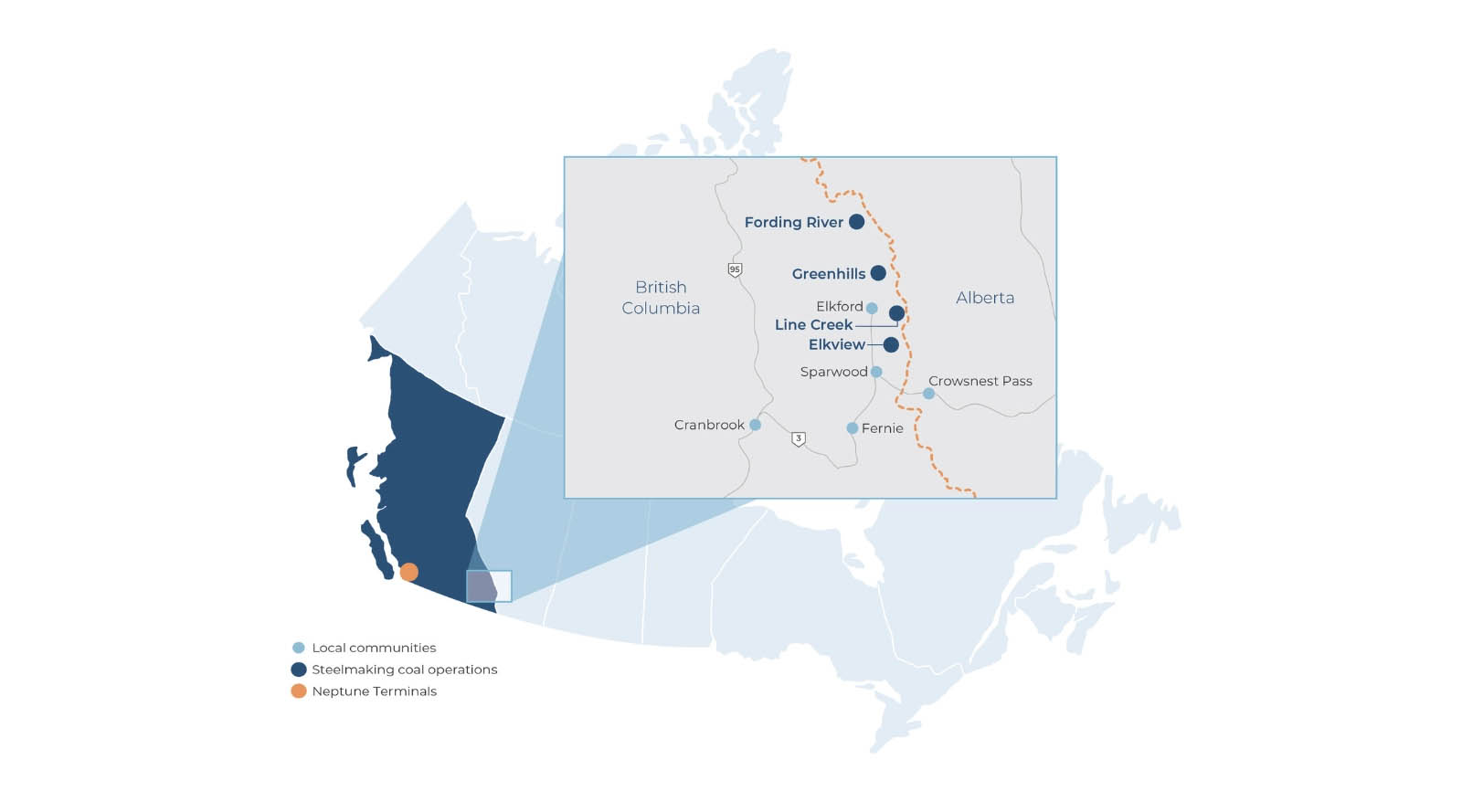
Elk Valley operations map (Source: Glencore)
Location
Greenhills, Kootenay
Proponent
Elk Valley Resources (EVR)
Project status
Stage 1: Planning
Jobs anticipated
During construction: N/A
Once operational: 925
Project description
Overview
Cougar Phase 8/9 is an expansion of the existing Greenhills Operations metallurgical coal mine near Elkford, in Southeast B.C. Two new pits (Phase 8 and 9) would extend the mine life by approximately 12 years to 2045. Much of the proposed project footprint is within existing mine boundaries, with approximately 115 hectares anticipated outside the existing mine boundary.
Benefits to people and community
The expansion would maintain hundreds of existing jobs, sustaining livelihoods for workers and families in the Elk Valley. EVR has an Impact Benefit Agreement with the Ktunaxa Nation, and an Economic and Community Development Agreement is in place between the Province and the Ktunaxa Nation.
Provincial and national impact
Greenhills Operations produces approximately 6 million metric tonnes of high-quality steelmaking coal annually. Steelmaking coal is a key input for steel production used in construction, transportation and clean energy infrastructure. EVR is one of the world’s largest seaborne exporters of steelmaking coal.
Construction status
The project is currently in planning stage, and a combined environmental assessment and permit process is expected to commence in September 2027. These decisions are expected by late 2028 and, if approved, construction expected to begin in early 2029.
Project website
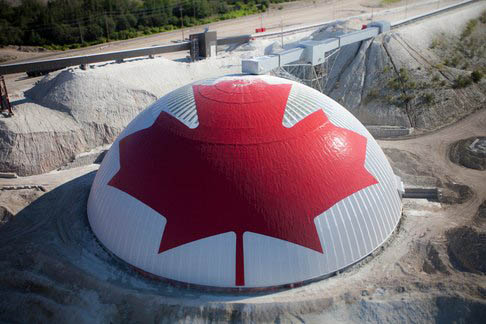
Highland Valley Copper Mine (Source: Teck Resources)
Location
Logan Lake, Thompson-Okanagan
Proponent
Teck Resources
Project status
Stage 5: Construction
Jobs anticipated
During construction: 2,900
Once operational: 1,500
Project description
Overview
The Highland Valley Copper Mine Extension will allow operations at Canada's largest copper mine to continue for an additional 18 years, through the mid-2040’s. The extension represents an estimated $2.25 billion capital investment — the largest critical minerals investment in B.C. history. It is expected to generate 132,000 tonnes of copper per year over the life of the mine.
Benefits to people and community
The expansion will create good local jobs, adding 200 more permanent jobs, bringing the total jobs to over 1,500. The project is expected to create approximately 2,900 additional jobs during the construction phase, supporting people in Logan Lake, Merritt, Kamloops, and surrounding communities. The project was developed in consultation with Nlaka'pamux Nations, and the Province has an Economic and Community Development Agreement (ECDA) mine revenue-sharing agreement with the Nations.
Provincial and national impact
The $2.25 billion extension will strengthen the critical minerals sector and is expected to generate an estimated $500 million in annual GDP, and $435 million in additional GDP during the construction phase of the project.
Construction status
Construction started in August 2025, with production target of 2028. The project was subject to a combined environmental assessment and permit process, which shaved as much as two years off the approvals process. The environmental assessment certificate and all permits were issued in June 2025.
Priority project
Among B.C.'s 18 initial priority projects selected to go through an accelerated approval process.
Project website
Related News
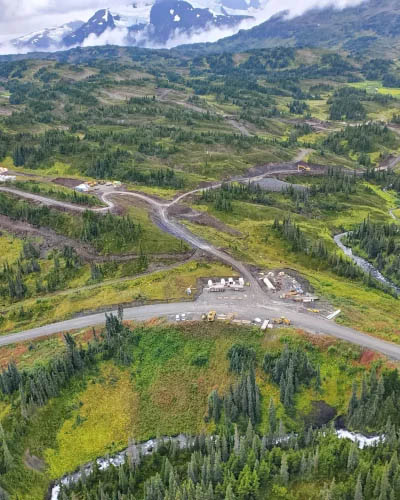
KSM Mining Project (Source: Seabridge Gold)
Location
Stewart area, North Coast
Proponent
Seabridge Gold
Project status
Stage 1: Planning
Jobs anticipated
During construction: 1,550
Once operational: 1,400
Project description
Overview
The Kerr-Sulpherets-Mitchell (KSM) mine is a proposed open pit mining project located 65 kms northwest of Stewart, B.C. The project represents one of the world's largest undeveloped gold-copper deposits, comprising the Kerr, Sulphurets, Mitchell and Iron Cap deposits. The mine would produce gold, copper, silver and molybdenum over a 52-year mine life. It has both provincial and federal environmental assessment approval.
Benefits to people and community
The project would bring in an investment of $8.64 billion. It would have a five-year construction period and would create jobs in northwest B.C. for generations. Seabridge Gold has started early-stage site infrastructure including roads, camps and a connection to BC Hydro's clean electricity grid.
Provincial and national impact
The project could generate $67.4 million to $369 million in average annual mineral tax over the life of the mine. Once operational, KSM would significantly increase Canada's annual gold and copper production, strengthening B.C.'s role as a leading supplier of critical minerals.
Construction status
Environmental assessment has been completed; the company has permitted limited early works construction.
Project website
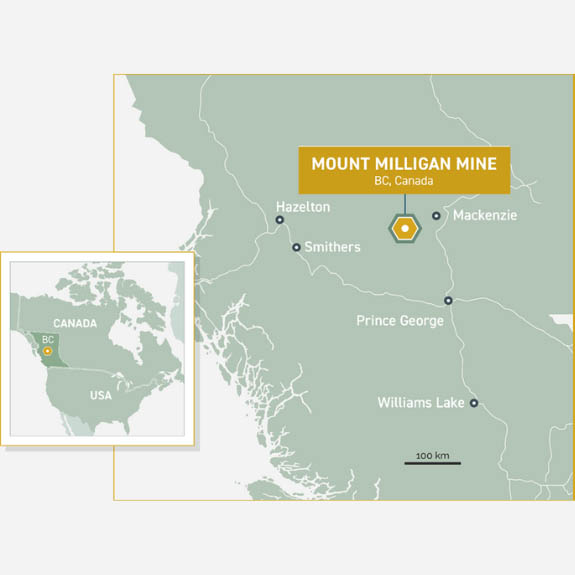
Mount Milligan Mine map (Source: Centerra Gold)
Location
Fort St. James area, Cariboo
Proponent
Centerra Gold Inc.
Project status
Stage 5: Construction
Jobs anticipated
During construction: N/A
Once operational: 1,000
Project description
Overview
The Mount Milligan 2035 Expansion extends the life of the operating mine by seven years to 2035. Amended environmental assessment certificate, Mines Act and Environmental Management Act permits were issued in January 2026 through a combined, single application, consultation and review process which cut provincial review times by more than half.
Benefits to people and community
The expansion supports 574 existing good jobs in northern B.C. and includes up to $400 million in projected capital spending. It will bring continued economic stability and opportunities for people and surrounding communities. The Province and the McLeod Lake, Takla Lake, and Nak-azdli Nations have an Economic and Community Development Agreement (ECDA) mine revenue-sharing agreement.
Provincial and national impact
The expansion is the third mining project to advance from B.C.'s original list of 18 priority projects. The expansion increases ore production from 60,000 to 66,500 tonnes per day, strengthening B.C.'s critical minerals capacity and role as Canada's economic engine. B.C. contributes nearly 50% of Canada’s copper production. The project could generate $1.7 million to $10.4 million in average annual mineral tax over the life of the mine.
Construction status
Construction started in 2026. The combined environmental assessment and permitting process took 10 months from application submission to decisions, representing a 60% decrease in overall timelines.
Priority project
Among B.C.'s 18 initial priority projects selected to go through an accelerated approval process.
Project website
Related News
- EAO approves Mt. Milligan copper-gold mine operations to continue to 2035 (Jan. 5, 2026)
- Mt. Milligan mine receives expansion permits (Jan. 21, 2026)
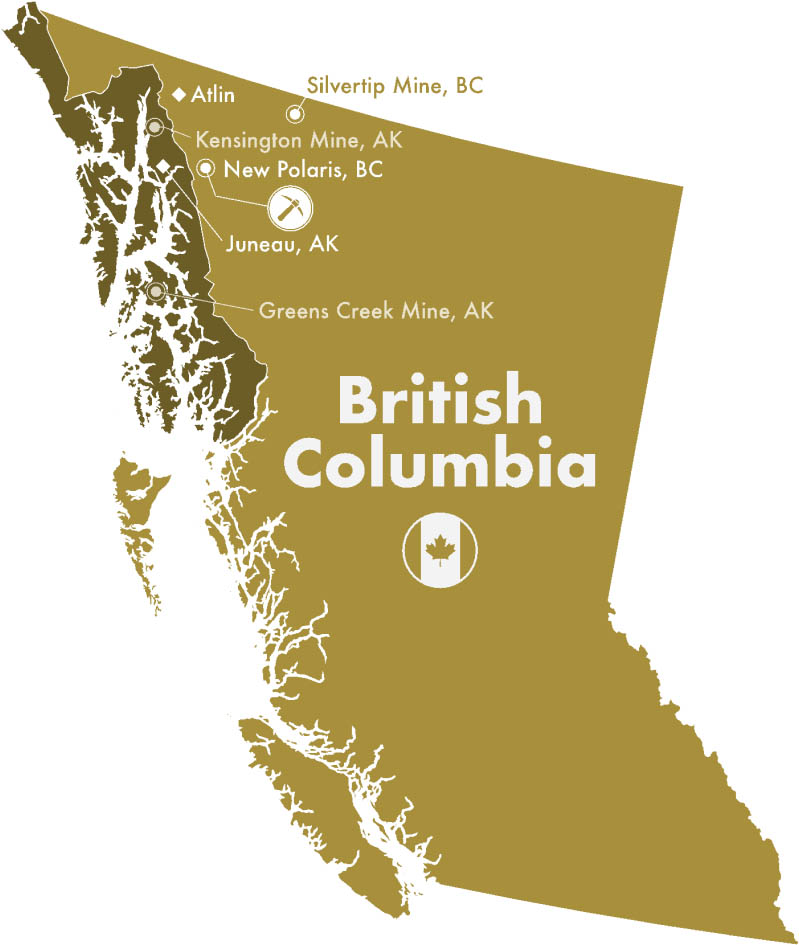
New Polaris project map (Source: Canagold Resources)
Location
Atlin, Nechako
Proponent
Canagold Resources
Project status
Stage 2: Consultation/Assessments
Jobs anticipated
During construction: 125
Once operational: 215
Project description
Overview
The New Polaris mine project would reactivate a former high-grade underground gold-antimony mine on the west bank of the Tulsequah River near the B.C.-Alaska border. The mine would produce 65,000 to 100,000 ounces of gold per year. Antimony — a critical mineral — adds strategic importance to the project and strengthens its long-term sustainability.
Benefits to people and community
If approved, the project is expected to support and create local jobs. Re-modeling, metallurgical testing and engineering of a portion of the gold resources is underway, which is necessary for a 65,000 opy high-grade underground gold mine. Canagold and Taku River Tlingit First Nation (TRTFN) have entered into an active collaboration agreement. The project lies within the TRTFN territory, about 60 kms northwest of Juneau, Alaska.
Provincial and national impact
The project includes a capital expenditure of up to $250 million and could generate estimated revenue of $5.5 - $27 million in average annual mineral tax once operational. New Polaris would produce over 800,000 ounces of gold over its mine life. The previous high-grade gold mine produced 232,000 ounces of gold during intermittent operations between 1938 and 1951.
Construction status
The project filed its environmental assessment application in March 2026, advancing the project into formal provincial review. A final investment decision and construction timeline is yet to be determined by Canagold.
Project website
Related News
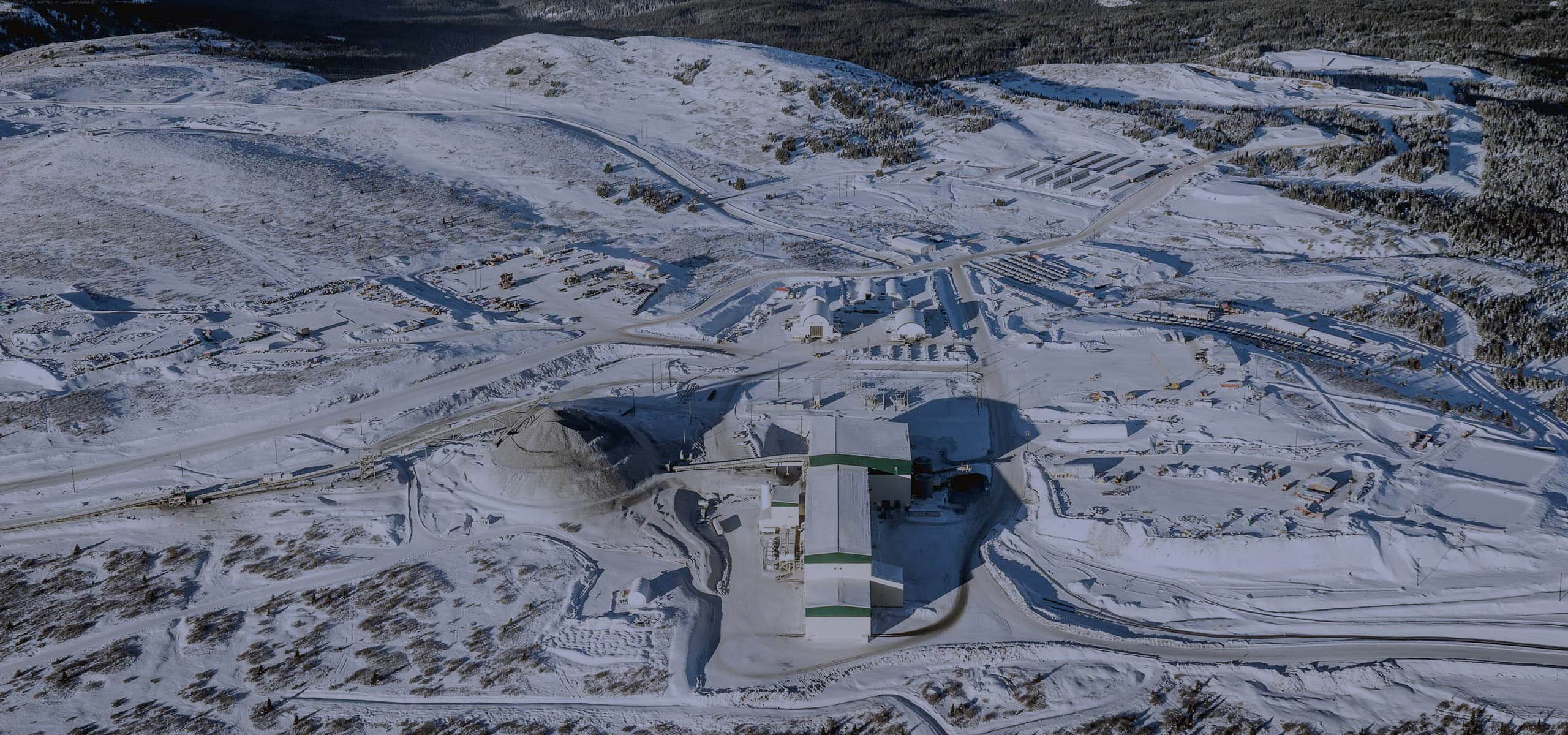
Red Chris Mine Project (Source: Newmont Corporation)
Location
Dease Lake, North Coast
Proponent
Newmont Corporation and Imperial Metals
Project status
Stage 4: Tender/Pre-construction
Jobs anticipated
During construction: 1,800
Once operational: 1,500
Project description
Overview
Red Chris mine is an operating open-pit copper and gold mine. Newmont is proposing to transition the mine to an underground block cave mine. It is located approximately 18 kilometres southeast of Iskut, B.C. The expansion extends the mine's life to 2038, increase production capacity, and expand the on-site work camp.
Benefits to people and community
The expansion will create approximately 1,800 jobs during peak construction and protect the existing 1,500 permanent jobs. It will reduce greenhouse gas emissions by over 70% when operational. Newmont works in close collaboration with the Tahltan Nation and generates approximately $100 million annually for the Tahltan Nation Development Corporation. This project also had a Section 7 agreement under the Declaration on the Rights of Indigenous Peoples Act and the Environmental Assessment Act, with Tahltan Nation.
Provincial and national impact
With $3 billion in estimated capital investment, the expansion will increase Canada's annual copper production by more than 15% and is expected to produce 11 million tonnes annually until 2038. It is one of four B.C. projects on the federal government's Major Projects Office list. The mine is a part of the proposed Northwest Critical Conservation Corridor. It could generate $18 million to $85 million in average annual mineral tax over the life of the mine.
Construction status
The expansion project received all provincial approvals in June 2026 following a streamlined regulatory process. It is currently awaiting a final investment decision later in 2026.
Priority project
Among B.C.’s 18 initial priority projects selected to go through an accelerated provincial approval process. Identified as a project of national importance and referred to the federal Major Projects Office.
Project website
Related News
- B.C. approves Red Chris mine expansion (June 19, 2026)
- Premier, ministers travel to Ottawa to move major projects forward (Sept 17, 2025)
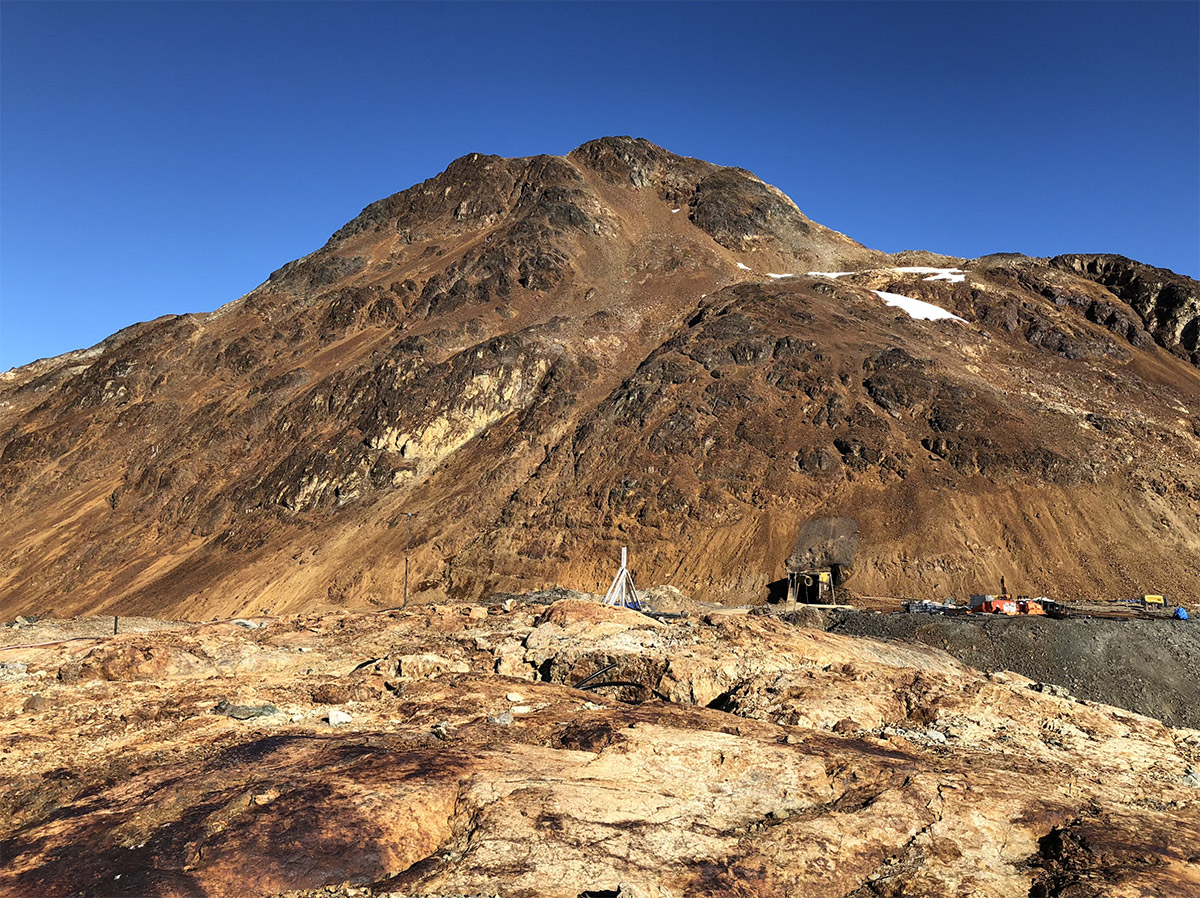
Red Mountain mine (Source: Cambria Gold Mines)
Location
Stewart, North Coast
Proponent
Cambria Gold Mines
Project status
Stage 1: Planning
Jobs anticipated
During construction: 250
Once operational: 200
Project description
Overview
Red Mountain is a proposed high-grade underground gold project located approximately 15 km northeast of Stewart within Nisga’a Nation Treaty Lands. Once at surface, mined material is proposed to be processed at the neighbouring Premier Mine, also owned by Cambria.
Benefits to people and community
Basing operations out of Stewart BC, the company will likely be the largest local employer. With 250 jobs anticipated during construction and 200 on-going jobs for operations, the project will support skills training, employment, and long-term economic opportunities for local communities.
Provincial and national impact
With $135 million in capital investments, the re-start of the mine would re-invigorate a historic gold and silver mining region, using innovative technologies and working closely with local communities. The project is located in the proposed Northwest Critical Conservation Corridor. It could generate $3.3 million to $19 million in average annual mineral tax over the life of the mine.
Construction status
The project will require an amendment to its existing Environmental Assessment Certificate and new permits. Current development is focused on access road construction, and further refining the mine plan prior to commencing the regulatory approvals process.
Project website
Location
Near Trail, Kootenay
Proponent
Teck Resources
Project status
Stage 2: Consultation/Assessments
Jobs anticipated
During construction: 450
Once operational: 106
Project description
Overview
Trail Operations is a proposed upgrade to Teck’s Trail Smelter and Refining Complex, which is one of the world's largest fully integrated zinc and lead smelting operations. It will enhance critical minerals processing capacity, including expanding production of strategic metals like germanium, gallium, and antimony essential for defence and advanced technology.
Benefits to people and community
The facility is one of the region's largest employers. Trail Operations generates nearly $2.5 billion in annual revenue and anchors the local economy of Trail and the West Kootenay region.
Provincial and national impact
With capital investment of 850 million, the facility is a globally significant supplier of germanium. It will strengthen B.C.'s role in the critical minerals supply chains, particularly for North America and will help meet national defence priorities.
Construction status
The project is under consideration and will proceed, if applicable, through the usual review and approval mechanisms.
Project website
Location
Vavenby area, Thompson-Okanagan
Proponent
Taseko Mines
Project status
Stage 2: Consultation/Assessments
Jobs anticipated
During construction: 3,030
Once operational: 525
Project description
Overview
The Yellowhead Copper mine is a proposed open-pit copper mine with a production capacity of 90,000 tonnes of ore per day over a 25-year mine life. The project would produce copper concentrate with payable amounts of gold and silver, shipped via rail to the Port of Vancouver for export to international markets. It is located about 150 kms northeast of Kamloops, British Columbia, near the community of Vavenby.
Benefits to people and community
If approved, the project would bring construction and permanent jobs to the community. The Province and Simpcw First Nation have started negotiations on a section 7 agreement for co-ordinated and efficient assessments of the proposed mine.
Provincial and national impact
With an estimated capital expenditure of $1.985 billion and the ability to generate an estimated revenue of $11.9 million to $62 million in average annual mineral tax once operational, the project would increase Canada's annual copper production. Copper is a critical mineral essential for electrical transmission, wind turbines, solar cells and batteries.
Construction status
Currently in the environmental assessment process planning phase.
Project website
Related News
Natural gas projects
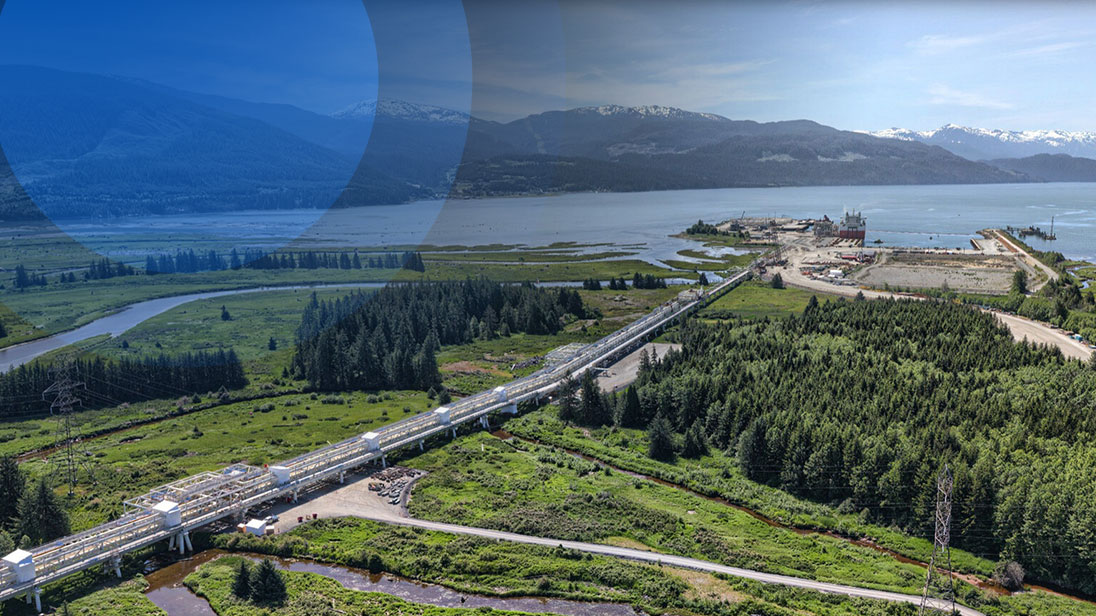
Global demand for liquified natural gas (LNG) is growing. B.C. has a large, secure supply with one of the largest natural gas fields in North America.
B.C. is helping deliver cleaner fuels to the world. We’re working to expand production and reach new global markets to diversify trade and reduce reliance on the United States.
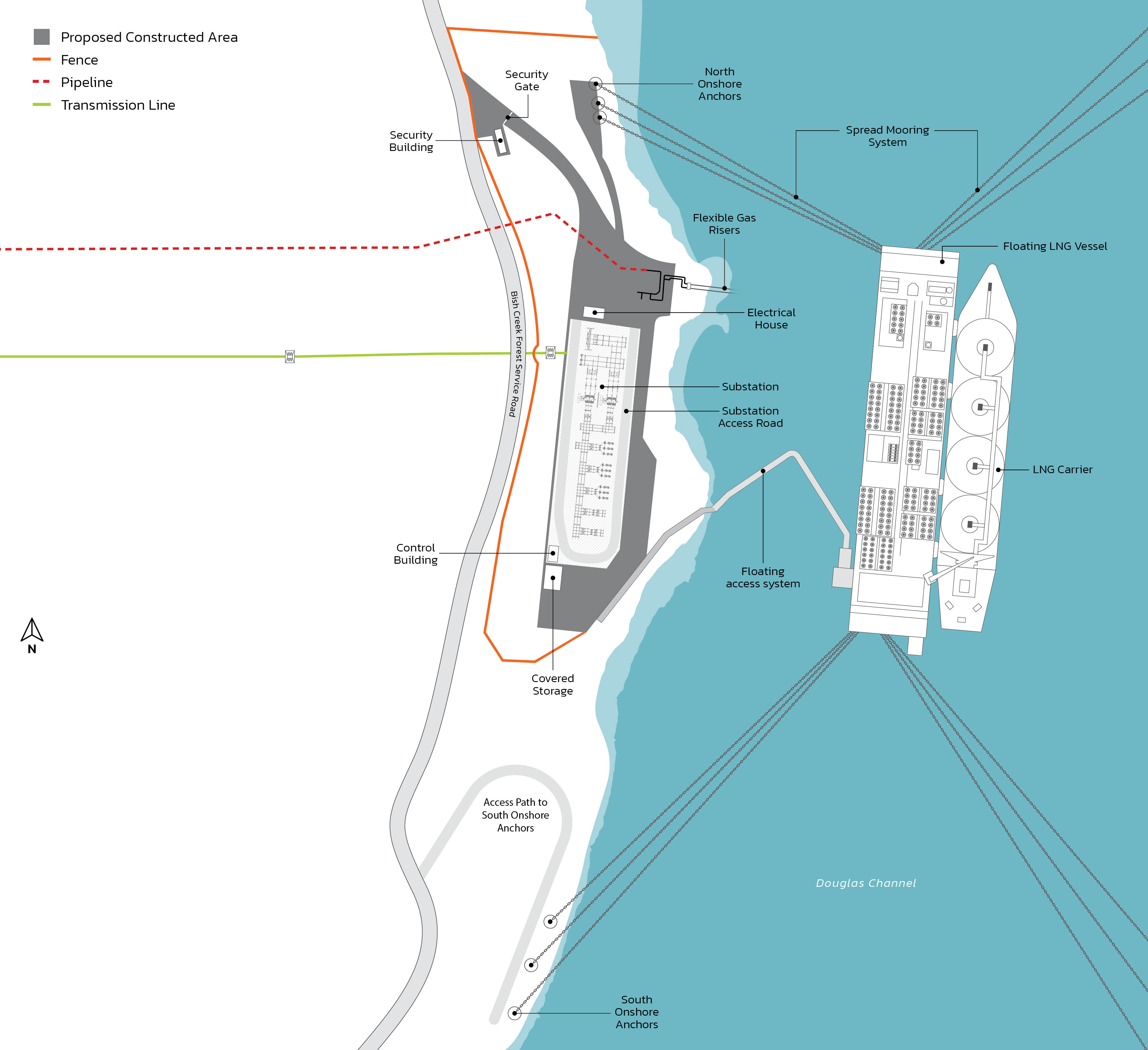
Cedar LNG marine terminal (Source: Cedar LNG)
Location
Kitimat, North Coast
Proponent
Facility: Haisla Nation & Pembina Pipeline Corporation
Pipeline: TC Energy
Project status
Stage 5: Construction
Jobs anticipated
During construction: 500
Once operational: 100
Project description
Overview
Cedar LNG is a floating liquefied natural gas (LNG) terminal located near Kitimat within the territory of Haisla Nation and led by Haisla Nation. The facility will be powered by BC Hydro's clean electricity – making it one of the lowest-emitting LNG projects in the world. As the world’s first Indigenous majority-owned LNG facility, Cedar LNG will create family-supporting good jobs and support a strong future in local communities and throughout the North.
Benefits to people and community
The Province and Haisla Nation are working together to further enhance the project’s environmental performance and lower emissions to near zero by 2030. This is supported by a $200-million provincial contribution agreement for electrification infrastructure.
Provincial and national impact
The project includes a capital investment of $4 billion and is expected to produce 3.3 million tonnes of LNG annually, which will be exported to Asia-Pacific markets. Cedar LNG not only strengthens the province’s position in energy trade but also opens doors for the Canadian economy.
Construction status
Construction is underway, with operations expected to begin in late 2028. The project received its final investment decision (FID) in June 2024.
Priority project
Among B.C.'s 18 initial priority projects, it was reviewed through a streamlined process to help speed up approvals.
Project website
Related News
- B.C., Haisla Nation take action to power Cedar LNG with renewable electricity (July 29, 2025)
- Minister’s statement on Haisla Nation investment decision for Cedar LNG (June 25, 2024)
- B.C., Haisla move forward on historic development project, commit to reduce emissions (March 14, 2023)
- Provincial environmental assessment certificate granted for Cedar LNG (March 14, 2023)
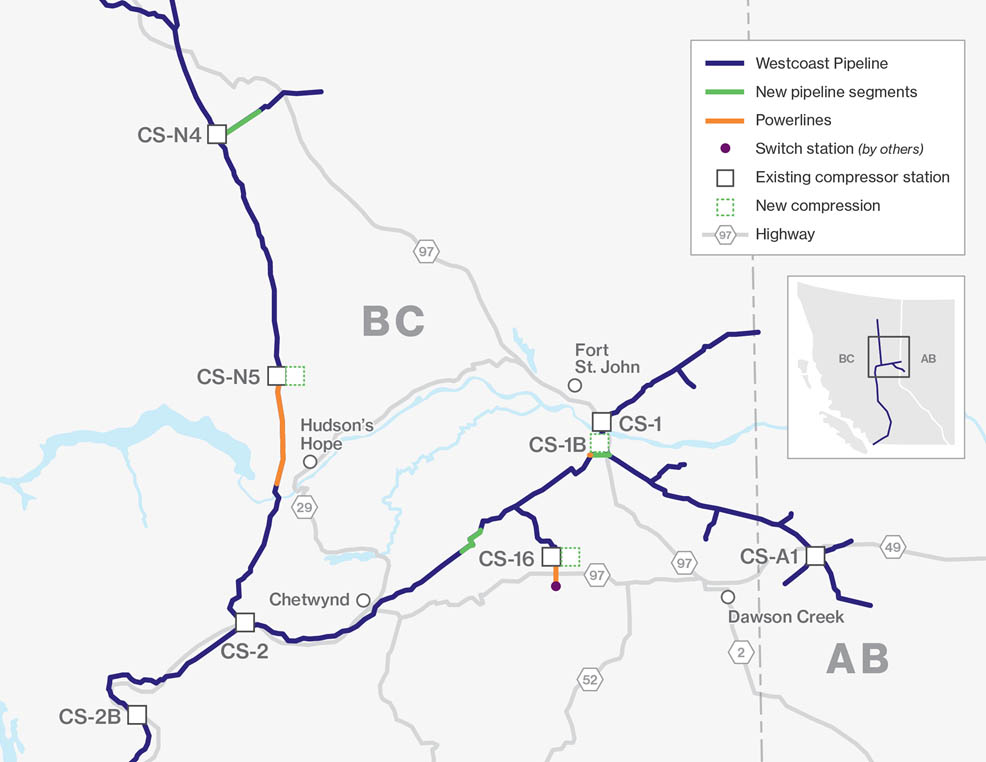
Aspen Point project map (Source: Enbridge)
Location
Fort St. John area, Northeast
Proponent
Westcoast Energy (an Enbridge affiliate)
Project status
Stage 5: Construction
Jobs anticipated
During construction: 300
Once operational: N/A
Project description
Overview
The Enbridge T-North Aspen Point Expansion Program expands the northern section of the T-North natural gas pipeline system’s Westcoast connector. The project adds 18 km of new pipeline and 535 million cubic feet per day of transportation capacity, supporting growing demand and Westcoast LNG exports.
Benefits to people and community
The project represents a $1.2-billion investment and is directly employing over 300 people during construction, with a peak workforce of up to 475. The project is focusing on bringing jobs to the local communities, contracting local businesses and supporting economic activity in the Peace River region.
Provincial and national impact
The expansion strengthens B.C.’s access to natural gas markets and supports the province's role as Canada’s export gateway. New electric-driven compressors reduce greenhouse gas emissions, supporting a cleaner energy future.
Construction status
Construction started in April 2025, expected to be in service late 2026. The project received its final investment decision in May 2025.
Priority project
Among B.C.'s 18 initial priority projects selected to go through an accelerated approval process.
Project website
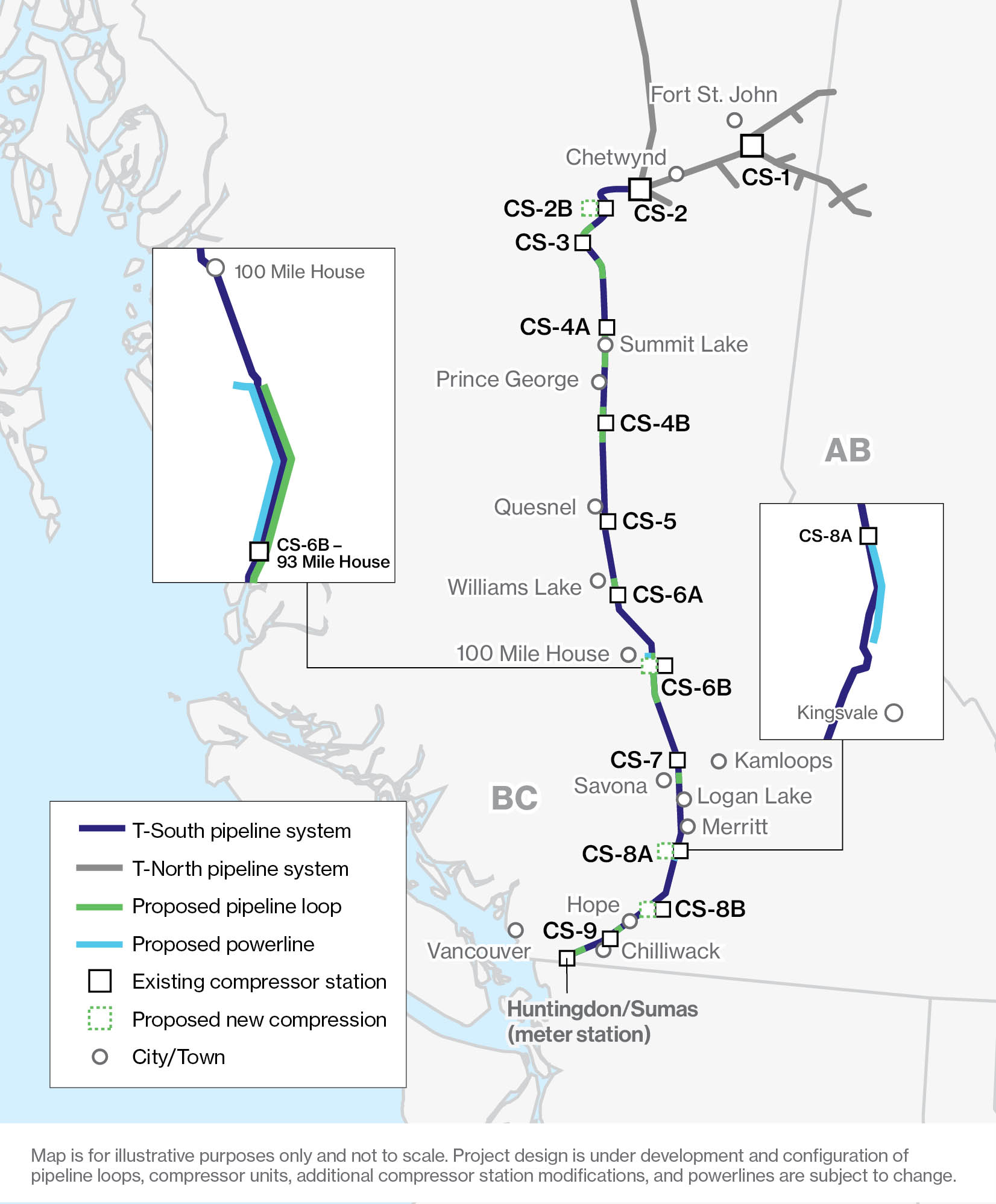
Sunrise project map (Source: Enbridge)
Location
Provincial
Proponent
Westcoast Energy (an Enbridge affiliate)
Project status
Stage 5: Construction
Jobs anticipated
During construction: 2,500
Once operational: N/A
Project description
Overview
The Enbridge T-South Sunrise Expansion Project adds 139 kilometres of pipeline and 300 million cubic feet per day of natural gas transportation to the southern section of B.C.’s Westcoast pipeline system (T-South).
Benefits to people and community
The project represents a $4-billion investment. It is expected to create thousands of jobs during peak construction, supporting jobs and local economic activity in communities along the route.
Provincial and national impact
Sunrise Expansion strengthens B.C.’s role as Canada’s export gateway for natural gas. The pipeline is expected to generate over $700 million in federal and provincial tax revenue, and municipal property tax revenues in B.C. amounting to over $8 million. New electric-driven compressors will reduce emissions, and the expanded system will support energy security for homes, businesses and hospitals across B.C. and the U.S. Pacific Northwest.
Construction status
For priority energy projects, the Ministry of Energy and Climate Solutions works collaboratively with permitting agencies to streamline (where possible) some of the regulatory processes. The project received federal approval in April 2026, and started construction in July 2026.
Project website
Related news
- Construction begins on the Sunrise Expansion Program in B.C. | Enbridge (July 20, 2026)
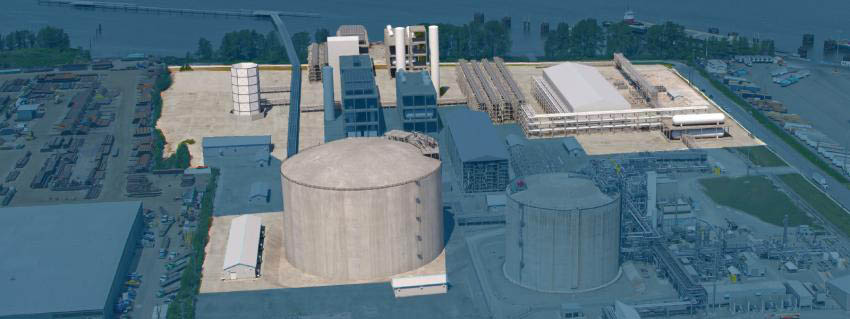
Rendering of proposed Tilbury Phase 2 LNG Expansion project (Source: FortisBC)
Location
Tilbury Island, Delta, Mainland-Southwest
Proponent
FortisBC
Project status
Stage 2: Consultation/Assessments
Jobs anticipated
During construction: 1,210
Once operational: TBC
Project description
Overview
FortisBC's Tilbury LNG Phase 2 is a proposed expansion of the existing Tilbury liquefied natural gas (LNG) facility in Delta with a new storage tank (142,400 cubic metres), additional liquefaction capacity of up to 2.5 million tonnes per year and supporting infrastructure. The Tilbury facility has been operating for over 50 years, and the expansion is expected to be net-zero once operational.
Benefits to people and community
The existing Tilbury LNG facility plays a key role in B.C.’s Lower Mainland’s gas system by producing and storing LNG for use during peak demand periods. If approved, the Phase 2 Expansion project would continue to strengthen the gas supply system while creating jobs and building relationships with local community. In 2022, xʷməθkʷəy̓əm (Musqueam) Indian Band and FortisBC signed an agreement to work together on developing a world-leading LNG facility with sustainable economic outcomes for Musqueam Peoples and the region.
Provincial and national impact
The expansion would strengthen the Lower Mainland gas system and its ability to meet growing demand for LNG, particularly during peak periods like cold winter days.
Construction status
The environmental assessment is currently underway, with a decision expected before the end of 2026. A final investment decision and construction start are pending the outcome of the assessment process.
Project website
Related News
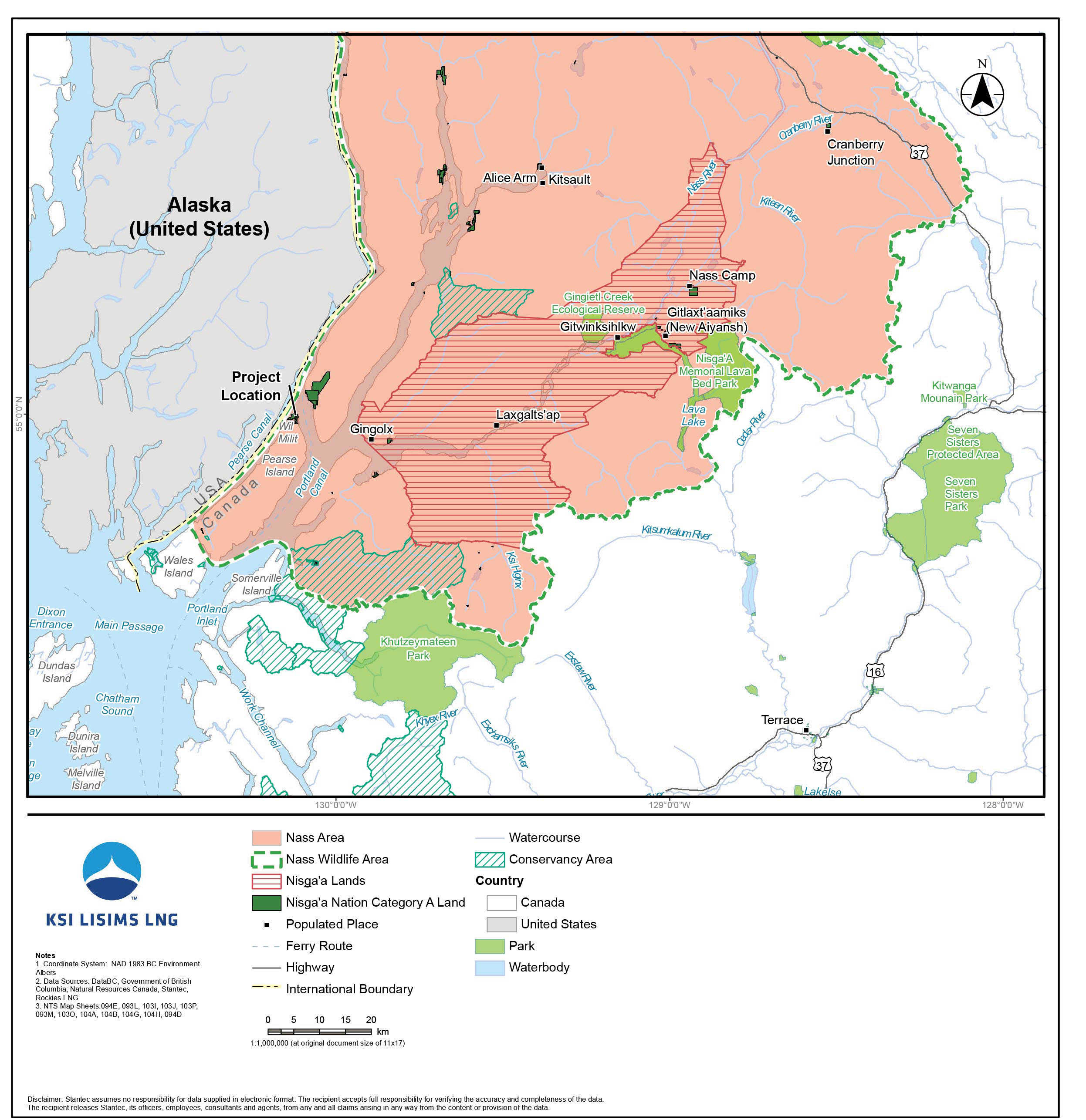
Ksi Lisims project map (Source: Ksi Lisims LNG)
Location
Pearce Island, North Coast
Proponent
Nisga’a Nation, Rockies LNG, Western LNG
Project status
Stage 4: Tender/Pre-construction
Jobs anticipated
During construction: 9,375 (800 at Ksi Lisims and 8,575 at PRGT)
Once operational: 253 (150 - 250 at Ksi Lisims and 23 at PRGT)
Project description
Overview
Ksi Lisims LNG is a proposed floating liquefied natural gas (LNG) facility on Nisga'a Nation’s Territory, which will be serviced with natural gas through the new approximately 800 km long Prince Rupert Gas Transmission pipeline, running from Chetwynd to Pearse Island. The Ksi Lisims facility is designed to be one of the world's lowest-emission LNG facilities. Once operational, it will be one of B.C.’s largest LNG exporters, comparable in scale to LNG Canada Phase 1.
Benefits to people and community
The project is led by the Nisga'a Nation and balances environmental protection with creation of opportunities for training, education and long-term careers for people in northwest B.C.
Provincial and national impact
Ksi Lisims LNG will export an estimated 12 million tonnes of LNG annually to Asia-Pacific markets, diversifying Canada's trade relationships. Ksi Lisims and PRGT, together, are expected to attract $30 billion in investments and contribute up to $16.8 billion in GDP to the Canadian economy over 30 years. Ksi Lisims LNG also signed an MoU with BC Hydro so that the project can be connected to the North Coast Transmission Line and powered by clean energy, enabling it to supply reliable, low-carbon energy, giving B.C. a competitive advantage over other jurisdictions. The project is required to be net-zero ready by 2030.
Construction status
The final investment decision (FID) from partners on Ksi Lisims is expected in 2026, and construction is expected to begin in 2027. Both projects have environmental assessment certificates in place.
Priority project
Identified as a project of national importance and referred to the federal Major Projects Office to complete approvals quickly.
Project website
Related News
- Taking steps to power North Coast growth, clean energy (Jan. 20, 2026)
- Ksi Lisims LNG advances with environmental certificate (Sept. 16, 2025)
- Environmental assessment certificate granted for Ksi Lisims LNG project (Sept. 15, 2025)
- Pipeline project determined to be substantially started (June 5, 2025)
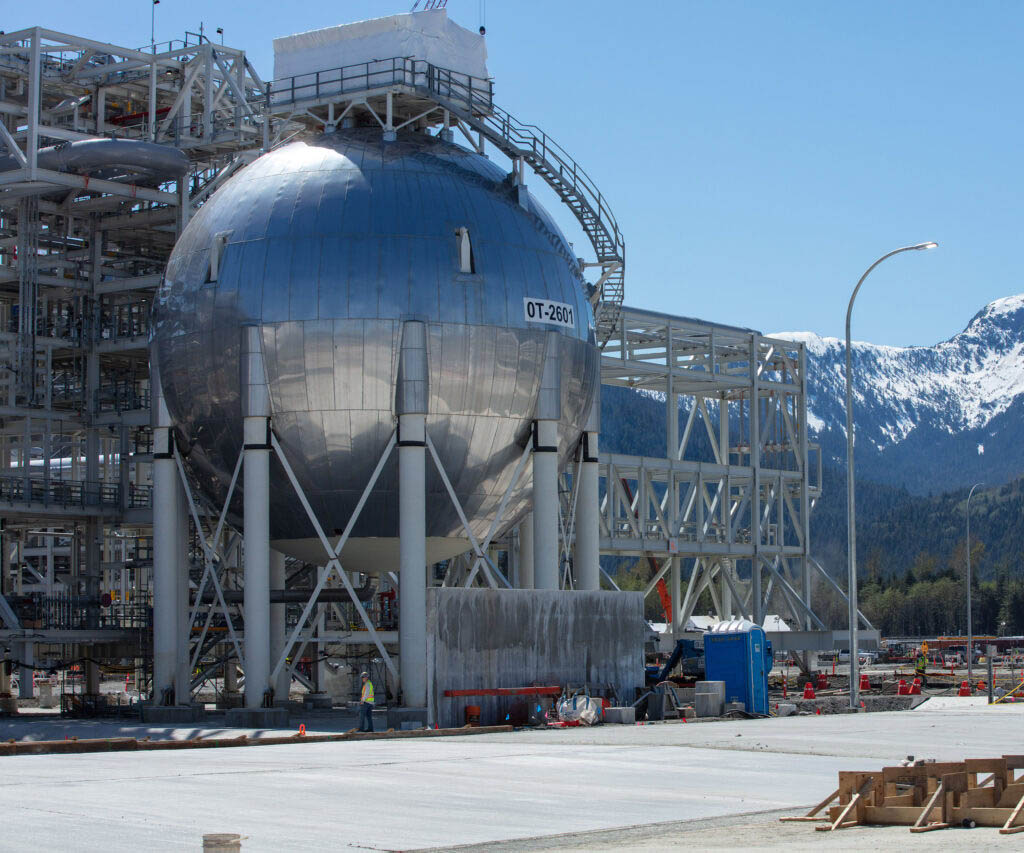
LNG Canada site (Source: LNG Canada)
Location
Kitimat, North Coast
Proponent
Facility: Shell, PETRONAS, PetroChina, Mitsubishi Corporation and KOGAS
Pipeline: Coastal GasLink (TC Energy)
Project status
Stage 4: Tender/Pre-construction
Jobs anticipated
During construction: 3,500 - 4,000
Once operational: 60 - 90
Project description
Overview
LNG Canada Phase 2 would double the production at Canada's first large-scale LNG export facility to 28 million tonnes per year, making it one of the world's largest facilities of its kind. Phase 1 is already operational and exporting to Asian markets, with the 50th shipment completed in February 2026.
Benefits to people and community
LNG Canada Phase 1 has been a key driver of economic growth across B.C. — during construction, the value of contracts awarded to B.C.-based businesses exceeded $5.8 billion, including more than $4.9 billion to Indigenous-owned and local businesses.
Provincial and national impact
LNG Canada Phase 2 is expected to attract significant private-sector capital. Emissions are projected to be 35% lower than the world's best-performing LNG facilities and 60% lower than the global average, strengthening B.C.'s position as a low-carbon energy exporter.
Construction status
The final investment decision for the project is expected by late 2026 to early 2027, with construction beginning in 2027. An environmental assessment certificate is in place, and all additional authorizations are being reviewed though a streamlined process to speed up decisions.
Priority project
Identified as a project of national importance and referred to the federal Major Projects Office to complete approvals quickly.
Project website
Related News
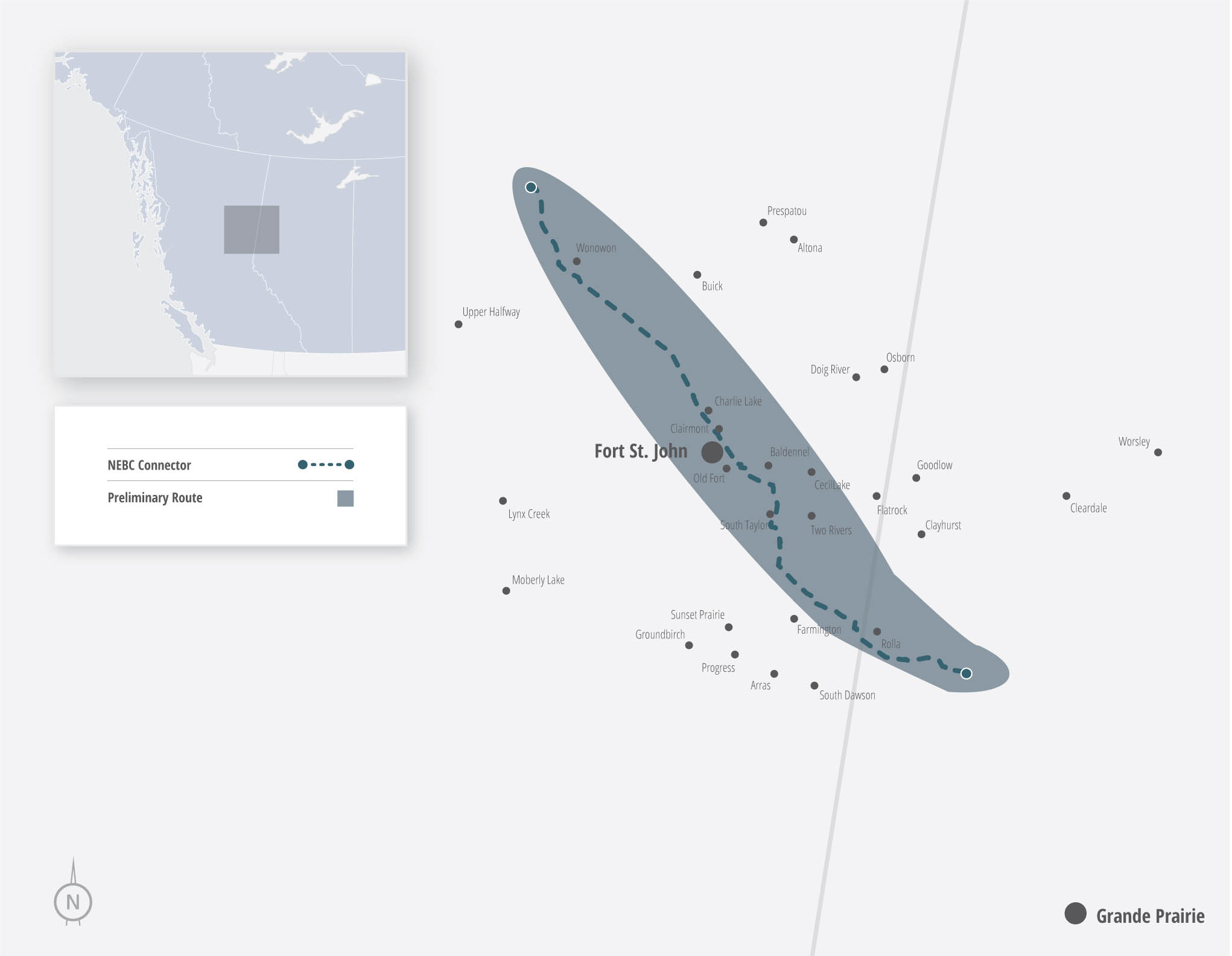
NEBC Connector project map (Source: NorthRiver Midstream)
Location
Fort St. John area, Northeast B.C.
Proponent
North River Midstream Inc.
Project status
Stage 4: Tender/Pre-construction
Jobs anticipated
During construction: 250
Once operational: N/A
Project description
Overview
The Northeast British Columbia (NEBC) Connector project consists of two parallel small diameter pipelines (between 8”-12”), over 200 kilometres in length, transporting natural gas liquids and condensate from northeastern B.C.’s Montney region to downstream markets in northwestern Alberta.
Benefits to people and community
The project represents a $500-million investment and is expected to directly employ over 250 people during construction. It will improve market access for B.C.’s natural gas liquids and condensate producers, reduce transportation emissions and costs, support economic growth and opportunity for people in the area.
Provincial and national impact
The NEBC Connector strengthens B.C.’s role as Canada's export gateway for natural gas products. It connects to Keyera's KAPS Zone 4 expansion pipeline, offering B.C.’s Montney producers a cost-effective transportation medium to Keyera’s liquids processing and storage hub in Fort Saskatchewan, Alberta.
Construction status
The project received positive final investment decision in June 2025, construction started in July 2025, and it is expected to be in service by 2027.
Priority project
Among B.C.'s 18 initial priority projects selected to go through an accelerated approval process.
Project website
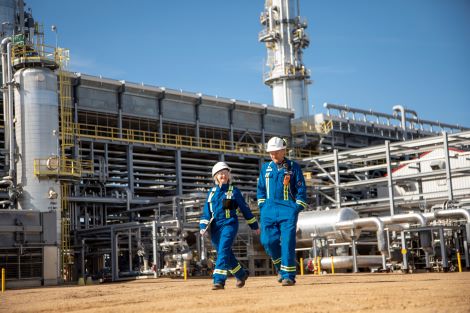
Pembina Pipeline Project
Location
Taylor, Northeast
Proponent
Pembina
Project status
Stage 5: Construction
Jobs anticipated
During construction: 230
Once operational: N/A
Project description
Overview
Pembina is building a natural gas liquids pipeline in northeast B.C.: the Birch-to-Taylor Expansion — a new 95-kilometre pipeline adding 120,000 barrels per day of propane-plus and condensate capacity.
Benefits to people and community
Pembina has highlighted strong collaboration with Indigenous and local communities, and the expansions support economic growth and opportunity for people in the Peace River region.
Provincial and national impact
The Birch-to-Taylor expansion represents approximately $310 million in capital investment and responds to growing natural gas liquids production from B.C.’s Montney region. It will strengthen B.C.'s role as a key energy supplier and support market access for producers across western Canada.
Construction status
Pembina made final investment decisions on the Birch-to-Taylor expansion in February 2026.
Project website
- Pembina update on Birch-to-Taylor Pipeline Project (February 2026)
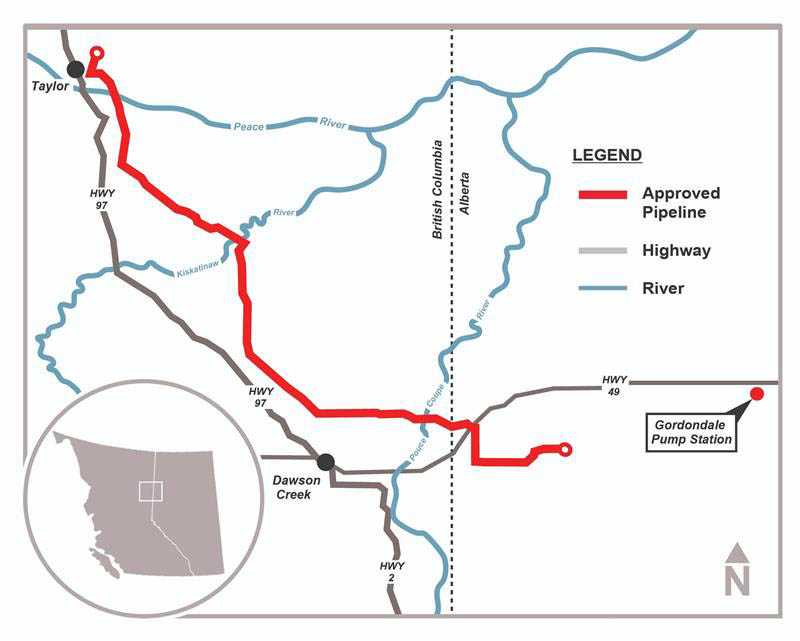
Taylor to Gordondale project map (Source: Pembina)
Location
Taylor, Northeast
Proponent
Pembina
Project status
Stage 4: Tender/Pre-construction
Jobs anticipated
During construction: 330
Once operational: N/A
Project description
Overview
Pembina is building a natural gas liquids pipeline in northeast B.C.: the Taylor-to-Gordondale pipeline, an 89-kilometre line connecting B.C. production to markets in Alberta.
Benefits to people and community
Pembina has highlighted strong collaboration with Indigenous and local communities, and the expansions support economic growth and opportunity for people in the Peace River region.
Provincial and national impact
The Taylor-to-Gordondale pipeline expansion represents approximately $341 million in capital investment and responds to growing natural gas liquids production from B.C.’s Montney region. It strengthens B.C.’s role as a key energy supplier and support market access for producers across western Canada.
Construction status
For priority energy projects, the Ministry of Energy and Climate Solutions works collaboratively with regulators and permitting agencies to streamline (where possible) some of the regulatory processes and resolve emerging issues. The Canada Energy Regulator issued approval for Taylor-to-Gordondale (Pouce Coupe) in February 2026.
Project website
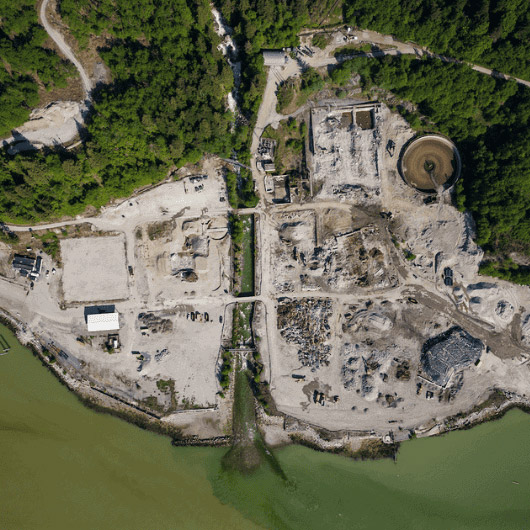
Woodfibre LNG (Source: Woodfibre LNG)
Location
Squamish area, Mainland/Southwest
Proponent
Pacific Energy Corporation, Enbridge
Project status
Stage 5: Construction
Jobs anticipated
During construction: 1,500
Once operational: 100
Project description
Overview
Woodfibre LNG is an LNG export facility being built near Squamish on Sḵwx̱wú7mesh Úxwumixw (Squamish Nation) territory. Using BC Hydro's clean energy, the facility aims to be the world's first net-zero LNG export facility — producing nine times fewer emissions than conventional facilities. The project will be supplied by the Woodfibre-Eagle Mountain pipeline and is anticipated to produce up to 2.1 million tonnes per year of natural gas that will be exported to markets across the Pacific.
Benefits to people and community
The project received a 25-year licence to export natural gas. Woodfibre LNG went through the first legally binding Indigenous-led environmental assessment in Canada, with Squamish Nation as the regulator. Benefit agreements with several First Nations are worth a combined value of more than $1 billion.
Provincial and national impact
Once operational, the project will play a significant role in securing Canada’s position in the energy trade market. Capital investment in the project of about $12 billion includes both the facility and the associated Eagle Mountain–Woodfibre Gas Pipeline. It is not only an important job-creating major project, but it will also support the local economy and communities. It is expected to generate tax revenue worth millions for the District of Squamish once operations begin.
Construction status
For priority energy projects, the Ministry of Energy and Climate Solutions works collaboratively with regulators and permitting agencies to streamline (where possible) some of the regulatory processes and resolve emerging issues. Construction started in 2016, peak construction ongoing in 2026 with 70% of the project now completed, and it is expected to be operational by 2027.
Project website
Related news
- EAO approves second floating workcamp for Woodfibre LNG project (Nov. 6, 2025)
- Minister’s statement on Woodfibre LNG decision (April 14, 2022)
Definitions
Projects status is identified in six stages.
- Stage 1: Planning – Includes preliminary feasibility studies and design and planning.
- Stage 2: Consultation/Assessments – Includes consultation with Indigenous peoples, public open houses, environmental assessments, and approvals for zoning.
- Stage 3: Permitting – Includes development and building permits, mines, water licenses and other information required before pre-construction.
- Stage 4: Tender/pre-construction – Includes construction tenders and building site preparations such as pre-loading, demolition and excavation.
- Stage 5: Construction – Construction is underway.
- Stage 6: Complete – Construction is complete.
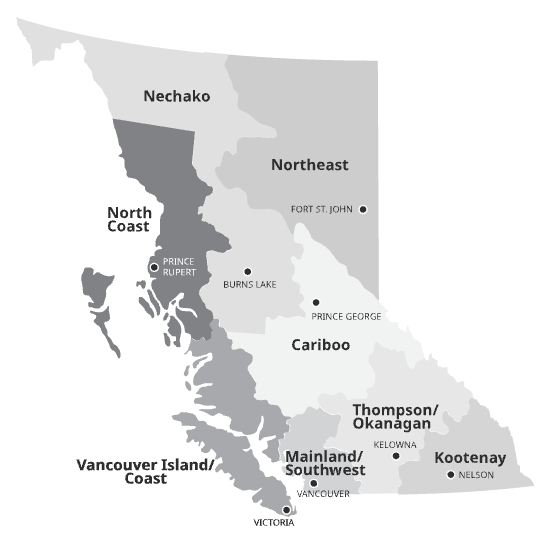
Project locations are listed according to the nearest population centre within the eight economic development regions in B.C.
- Vancouver Island/Coast
- Mainland/Southwest (Vancouver area)
- Thompson-Okanagan
- Kootenay
- Cariboo
- North Coast
- Nechako
- Northeast
Explore regions and major cities in B.C. | Trade and Invest BC
Get updates
Stay up to date on Look West and how we’re delivering major projects faster.
- Read Look West news releases
- Sign up to get Look West news as it happens
- Subscribe to get alerts when we update this page
- Follow us on social media:
Subscribe
Enter your email address to subscribe to updates of this page.